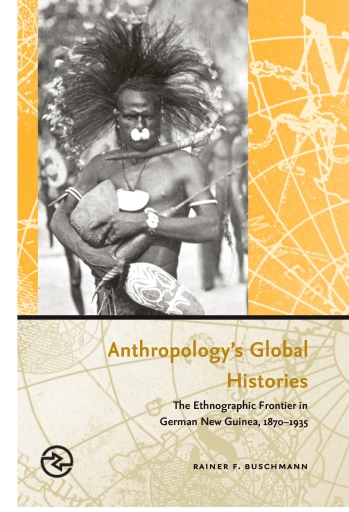
Anthropology’s Global Histories
Published by University of Hawaii Press
English
249 pages
2008
ISBN 9780824861476
Estimated reading time: 4 h 34 min
PDF
Buy at Association of University Presses - Tienda FILUNI
🇺🇸
 Bajalibros Argentina
🇦🇷
Visit store →
Bajalibros Argentina
🇦🇷
Visit store →
 Bajalibros Latam
🇺🇸
Visit store →
Bajalibros Latam
🇺🇸
Visit store →
 Bookshop Uruguay
🇺🇾
Visit store →
Bookshop Uruguay
🇺🇾
Visit store →
 Catademic
🇺🇸
Visit store →
Catademic
🇺🇸
Visit store →
Available at 13 bookshops
 Bajalibros Argentina
🇦🇷
Visit store →
Bajalibros Latam
🇺🇸
Visit store →
Bookshop Uruguay
🇺🇾
Visit store →
Catademic
🇺🇸
Visit store →
Bajalibros Argentina
🇦🇷
Visit store →
Bajalibros Latam
🇺🇸
Visit store →
Bookshop Uruguay
🇺🇾
Visit store →
Catademic
🇺🇸
Visit store →








About this book
Anthropologists and world historians make strange bedfellows. Although the latter frequently employ anthropological methods in their descriptions of cross-cultural exchanges, the former have raised substantial reservations about global approaches to history. Fearing loss of specificity, anthropologists object to the effacing qualities of techniques employed by world historians—this despite the fact that anthropology itself was a global, comparative enterprise in the nineteenth century.Rainer Buschmann here seeks to recover some of anthropology’s global flavor by viewing its history in Oceania through the notion of the ethnographic frontier—the furthermost limits of the anthropologically known regions of the Pacific. The colony of German New Guinea (1884–1914) presents an ideal example of just such a contact zone. Colonial administrators there were drawn to approaches partially inspired by anthropology. Anthropologists and museum officials exploited this interest by preparing large-scale expeditions to German New Guinea.
Buschmann explores the resulting interactions between German colonial officials, resident ethnographic collectors, and indigenous peoples, arguing that all were instrumental in the formation of anthropological theory. He shows how changes in collecting aims and methods helped shift ethnographic study away from its focus on material artifacts to a broader consideration of indigenous culture. He also shows how ethnological collecting, often a competitive affair, could become politicized and connect to national concerns. Finally, he places the German experience in the broader context of Euro-American anthropology.
Anthropology's Global Histories will interest students and scholars of anthropology, history, world history, and Pacific studies.
Availability
Anthropology’s Global Histories is available as PDF at 13 online bookshops. Bookshops carrying it include Association of University Presses - Tienda FILUNI, Bajalibros Argentina, Bajalibros Latam.
Genres
- Language
- English
Share
Frequently asked questions
- In what formats is Anthropology’s Global Histories available?
- Anthropology’s Global Histories is available as PDF at 13 online bookshops.
- Where can I buy Anthropology’s Global Histories?
- You can buy Anthropology’s Global Histories at Association of University Presses - Tienda FILUNI, Bajalibros Argentina, Bajalibros Latam. Compare every option in the list on this page.
- How long does it take to read Anthropology’s Global Histories?
- At an average reading pace, Anthropology’s Global Histories takes about 4 h 34 min to read (249 pages).
Ratings & reviews
No ratings yet. Be the first to review this book.
Sign in to rate and review this book.