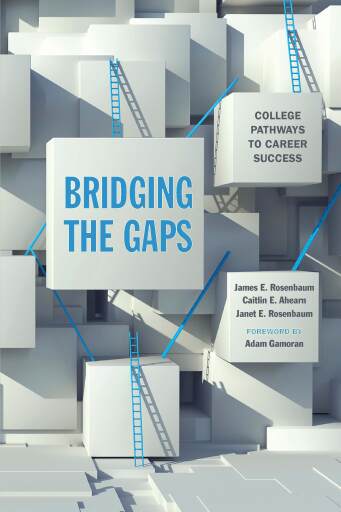
Bridging the Gaps
By Rosenbaum, James E., Ahearn, Caitlin E., Rosenbaum, Janet E., Rosenbaum, Janet
Published by Russell Sage Foundation
English
2017
ISBN 9781610448680
eBook
Buy at Association of University Presses - Tienda FILUNI
🇺🇸
Catademic
🇺🇸
Visit store →
Bajalibros Latam
🇺🇸
Visit store →
Association of University Presses - Tienda FILUNI
🇺🇸
Visit store →

Ebooks Librería Antártica
🇨🇱
Visit store →
Ebooks Agustin
🇪🇸
Visit store →
Bajalibros Argentina
🇦🇷
Visit store →
Sanborns Ebooks
🇲🇽
Visit store →
ebooks Libreria del GAM
🇨🇱
Visit store →
Bookshop Uruguay
🇺🇾
Visit store →
ebookskitapenas
🇬🇹
Visit store →
Ebooks Yenny - El Ateneo
🇦🇷
Visit store →
Crisol Ebooks
🇵🇪
Visit store →
Available at 12 bookshops
Catademic
🇺🇸
Visit store →
Association of University Presses - Tienda FILUNI
🇺🇸
Visit store →

Ebooks Librería Antártica
🇨🇱
Visit store →
Ebooks Agustin
🇪🇸
Visit store →
Sanborns Ebooks
🇲🇽
Visit store →
ebooks Libreria del GAM
🇨🇱
Visit store →
ebookskitapenas
🇬🇹
Visit store →
Ebooks Yenny - El Ateneo
🇦🇷
Visit store →
Crisol Ebooks
🇵🇪
Visit store →
About this book
College-for-all has become the new American dream. Most high school students today express a desire to attend college, and 90% of on-time high school graduates enroll in higher education in the eight years following high school. Yet, degree completion rates remain low for non-traditional students—students who are older, low-income, or have poor academic achievement—even at community colleges that endeavor to serve them. What can colleges do to reduce dropouts? In <i>Bridging the Gaps</i>, education scholars James Rosenbaum, Caitlin Ahearn, and Janet Rosenbaum argue that when institutions focus only on bachelor’s degrees and traditional college procedures, they ignore other pathways to educational and career success. Using multiple longitudinal studies, the authors evaluate the shortcomings and successes of community colleges and investigate how these institutions can promote alternatives to BAs and traditional college procedures to increase graduation rates and improve job payoffs.<br> <br> The authors find that sub-baccalaureate credentials—associate degrees and college certificates—can improve employment outcomes. Young adults who complete these credentials have higher employment rates, earnings, autonomy, career opportunities, and job satisfaction than those who enroll but do not complete credentials. Sub-BA credentials can be completed at community college in less time than bachelor’s degrees, making them an affordable option for many low-income students.<br> <br> <i>Bridging the Gaps</i> shows that when community colleges overemphasize bachelor’s degrees, they tend to funnel resources into remedial programs, and try to get low-performing students on track for a BA. Yet, remedial programs have inconsistent success rates and can create unrealistic expectations, leading struggling students to drop out before completing any degree. The authors show that colleges can devise procedures that reduce remedial placements and help students discover unseen abilities, attain valued credentials, get good jobs, and progress on degree ladders to higher credentials.<br> <br> To turn college-for-all into a reality, community college students must be aware of their multiple credential and career options. <i>Bridging the Gaps</i> shows how colleges can create new pathways for non-traditional students to achieve success in their schooling and careers.<br>
- Language
- English
Share
You might also like
Patrimonio en construcción
Macarena Ibarra
Pedagogia histórico-crítica, quadragésimo ano
Saviani, Dermeval
Ampliando Olhar: Altas Habilidades/Superdotação
Antunes, Cristiane Corina
Teorias e abordagens pedagógicas
Filatro, Andrea
Dirección universitaria y buenas prácticas de gestión
González Campo, Carlos Hernán
Procurarse sentido en la ciudad contemporánea
Gómez Zúñiga, Rocío