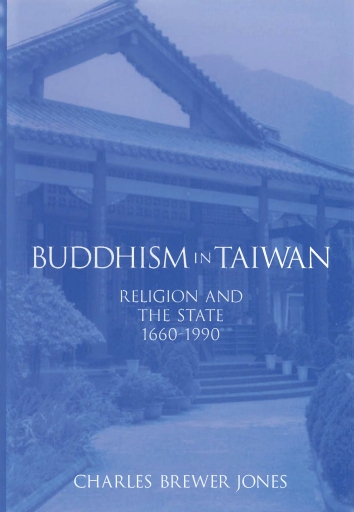
Buddhism in Taiwan
Published by University of Hawaii Press
English
281 pages
1999
ISBN 9780824861704
Estimated reading time: 5 h 9 min
PDF
Buy at Crisol Ebooks
🇵🇪
 Association of University Presses - Tienda FILUNI
🇺🇸
Visit store →
Association of University Presses - Tienda FILUNI
🇺🇸
Visit store →
 Bajalibros Argentina
🇦🇷
Visit store →
Bajalibros Argentina
🇦🇷
Visit store →
 Bajalibros Latam
🇺🇸
Visit store →
Bajalibros Latam
🇺🇸
Visit store →
 Bookshop Uruguay
🇺🇾
Visit store →
Bookshop Uruguay
🇺🇾
Visit store →
 Catademic
🇺🇸
Visit store →
Catademic
🇺🇸
Visit store →
Available at 13 bookshops
Association of University Presses - Tienda FILUNI
🇺🇸
Visit store →
Bajalibros Argentina
🇦🇷
Visit store →
Bajalibros Latam
🇺🇸
Visit store →
Bookshop Uruguay
🇺🇾
Visit store →
Catademic
🇺🇸
Visit store →








About this book
Buddhism in Taiwan is the first work in a Western language to examine the institutional and political history of Chinese Buddhism in Taiwan. Tracing Buddhism's development on the island from Qing times through the late 1980s, it seeks to shed light on the ways in which changing social circumstances have impacted Buddhist thought and practice.
It looks in particular at a number of significant changes that modernization has brought: the decline in clerical ordinations, the increasing prominence of nuns within the monastic order, the enhanced role of the laity, alterations in the content of lay precepts, the abandonment of funerals as a major source of income, the monastic order's loss of special recognition from the government, and the founding of large, international organizations.
Charles Jones begins his survey with the earliest mention of Buddhism in Taiwan in historical records from the Qing dynasty (1644-1911) and continues through the formation of pan-Taiwan Buddhist organizations during the Japanese occupation (1895-1945). A review of the role of the Buddhist Association of the Republic of China (BAROC) follows, and the volume concludes with the rise of large independent Buddhist movements that fully emerged after the end of martial law and the removal of restrictions of civic organizations in the late 1980s. Jones provides a careful and balanced review of primary and secondary sources and translations of government and Buddhist documents, extensive bibliographies of major figures, detailed histories of prominent temples, and an exhaustive summary of recent Taiwanese scholarship.
Buddhism in Taiwan promises to be a classic in the field of modern Chinese Buddhism. Scholars of the religion, history, political science, sociology, and anthropology of Taiwan will find its systematic and thorough approach stimulating as well as highly informative.
Availability
Buddhism in Taiwan is available as PDF at 13 online bookshops. Bookshops carrying it include Association of University Presses - Tienda FILUNI, Bajalibros Argentina, Bajalibros Latam.
Genres
- Language
- English
Share
Frequently asked questions
- In what formats is Buddhism in Taiwan available?
- Buddhism in Taiwan is available as PDF at 13 online bookshops.
- Where can I buy Buddhism in Taiwan?
- You can buy Buddhism in Taiwan at Association of University Presses - Tienda FILUNI, Bajalibros Argentina, Bajalibros Latam. Compare every option in the list on this page.
- How long does it take to read Buddhism in Taiwan?
- At an average reading pace, Buddhism in Taiwan takes about 5 h 9 min to read (281 pages).
Ratings & reviews
No ratings yet. Be the first to review this book.
Sign in to rate and review this book.