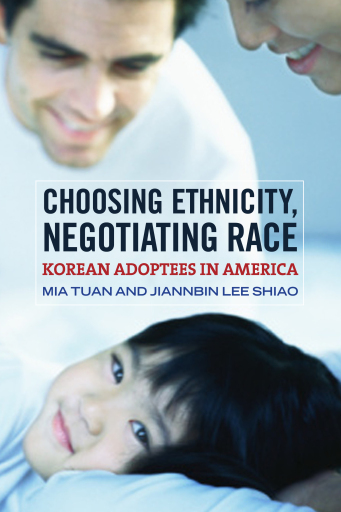
Choosing Ethnicity, Negotiating Race
By Tuan, Mia, Shiao, Jiannbin Lee
Published by Russell Sage Foundation
English
2011
ISBN 9781610447065
eBook
Buy at Catademic
🇺🇸
Catademic
🇺🇸
Visit store →
Bajalibros Latam
🇺🇸
Visit store →
Association of University Presses - Tienda FILUNI
🇺🇸
Visit store →

Ebooks Librería Antártica
🇨🇱
Visit store →
Ebooks Agustin
🇪🇸
Visit store →
Bajalibros Argentina
🇦🇷
Visit store →

Sanborns Ebooks
🇲🇽
Visit store →
ebooks Libreria del GAM
🇺🇾
Visit store →
Bookshop Uruguay
🇺🇾
Visit store →

ebookskitapenas
🇬🇹
Visit store →
Ebooks Yenny - El Ateneo
🇦🇷
Visit store →
Crisol Ebooks
🇨🇴
Visit store →
Available at 12 bookshops
Catademic
🇺🇸
Visit store →
Association of University Presses - Tienda FILUNI
🇺🇸
Visit store →
Ebooks Librería Antártica
🇨🇱
Visit store →
Ebooks Agustin
🇪🇸
Visit store →
Sanborns Ebooks
🇲🇽
Visit store →
ebooks Libreria del GAM
🇺🇾
Visit store →
ebookskitapenas
🇬🇹
Visit store →
Ebooks Yenny - El Ateneo
🇦🇷
Visit store →
Crisol Ebooks
🇨🇴
Visit store →
About this book
<div>Transnational adoption was once a rarity in the United States, but Americans have been choosing to adopt children from abroad with increasing frequency since the mid-twentieth century. Korean adoptees make up the largest share of international adoptions—25 percent of all children adopted from outside the United States—but they remain understudied among Asian American groups. What kind of identities do adoptees develop as members of American families and in a cultural climate that often views them as foreigners? Choosing Ethnicity, Negotiating Race is the only study of this unique population to collect in-depth interviews with a multigenerational, random sample of adult Korean adoptees. The book examines how Korean adoptees form their social identities and compares them to native-born Asian Americans who are not adopted. How do American stereotypes influence the ways Korean adoptees identify themselves? Does the need to explore a Korean cultural identity—or the absence of this need—shift according to life stage or circumstance? In Choosing Ethnicity, Negotiating Race, sixty-one adult Korean adoptees—representing different genders, social classes, and communities—reflect on early childhood, young adulthood, their current lives, and how they experience others' perceptions of them. The authors find that most adoptees do not identify themselves strongly in ethnic terms, although they will at times identify as Korean or Asian American in order to deflect questions from outsiders about their cultural backgrounds. Indeed, Korean adoptees are far less likely than their non-adopted Asian American peers to explore their ethnic backgrounds by joining ethnic organizations or social networks. Adoptees who do not explore their ethnic identity early in life are less likely ever to do so—citing such causes as general aversion, lack of opportunity, or the personal insignificance of race, ethnicity, and adoption in their lives. Nonetheless, the choice of many adoptees not to identify as Korean or Asian American does not diminish the salience of racial stereotypes in their lives. Korean adoptees must continually navigate society's assumptions about Asian Americans regardless of whether they chose to identify ethnically. Choosing Ethnicity, Negotiating Race is a crucial examination of this little-studied American population and will make informative reading for adoptive families, adoption agencies, and policymakers. The authors demonstrate that while race is a social construct, its influence on daily life is real. This book provides an insightful analysis of how potent this influence can be—for transnational adoptees and all Americans.</div>
- Language
- English
Share
You might also like
Política y movimientos sociales en Chile. Antecedentes y proyecciones del estallido social de Octubre de 2019
Varios autores, Manuel Antonio Garretón Merino (coordinador)
O Labirinto das Ilusões: Consolidação e Crise da Social-Democracia Tardia Brasileira
Deo, Anderson
Levantones. Historias reales de desaparecidos y víctimas del narco
Valdez Cárdenas, Javier
¿La Comunidad Andina de Naciones, cuál integración económica regional?
Prado, María Mercedes
Factores de riesgo-protección asociados al ejercicio de la prostitución en niñas vinculadas a proceso de reeducación en la ciudadela María Micaela
F Quevedo, Johana Paola
Tercerización laboral en Colombia: precarización, configuración normativa y límites jurídicos
Rodríguez Rodríguez, Luisa Fernanda