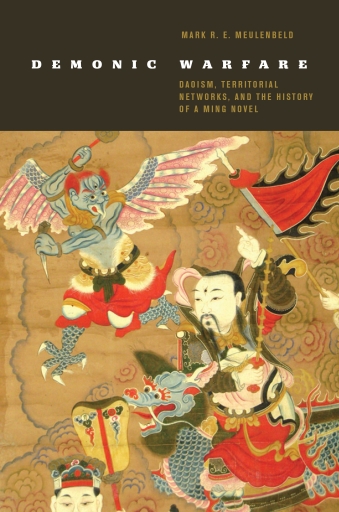
Demonic Warfare
Published by University of Hawaii Press
English
290 pages
2015
ISBN 9780824838454
PDF
Buy at Bajalibros Latam
🇺🇸
Catademic
🇺🇸
Visit store →
UN
University of Hawaiʻi Press
🇺🇸
Visit store →
Bajalibros Latam
🇺🇸
Visit store →
Association of University Presses - Tienda FILUNI
🇺🇸
Visit store →

Ebooks Librería Antártica
🇨🇱
Visit store →
Ebooks Agustin
🇪🇸
Visit store →
Bajalibros Argentina
🇦🇷
Visit store →

Sanborns Ebooks
🇲🇽
Visit store →
ebooks Libreria del GAM
🇺🇾
Visit store →
Bookshop Uruguay
🇺🇾
Visit store →

ebookskitapenas
🇬🇹
Visit store →
Ebooks Yenny - El Ateneo
🇦🇷
Visit store →
Crisol Ebooks
🇨🇴
Visit store →
Available at 13 bookshops
Catademic
🇺🇸
Visit store →
UN
University of Hawaiʻi Press
🇺🇸
Visit store →
Association of University Presses - Tienda FILUNI
🇺🇸
Visit store →
Ebooks Librería Antártica
🇨🇱
Visit store →
Ebooks Agustin
🇪🇸
Visit store →
Sanborns Ebooks
🇲🇽
Visit store →
ebooks Libreria del GAM
🇺🇾
Visit store →
ebookskitapenas
🇬🇹
Visit store →
Ebooks Yenny - El Ateneo
🇦🇷
Visit store →
Crisol Ebooks
🇨🇴
Visit store →
About this book
<p>Revealing the fundamental continuities that exist between vernacular fiction and exorcist, martial rituals in the vernacular language, Mark Meulenbeld argues that a specific type of Daoist exorcism helped shape vernacular novels in the late Ming dynasty (1368–1644). Focusing on the once famous novel <i>Fengshen yanyi</i> ("Canonization of the Gods"), the author maps out the general ritual structure and divine protagonists that it borrows from much older systems of Daoist exorcism.<br><br>By exploring how the novel reflects the specific concerns of communities associated with <i>Fengshen yanyi</i> and its ideology, Meulenbeld is able to reconstruct the cultural sphere in which Daoist exorcist rituals informed late imperial "novels." He first looks at temple networks and their religious festivals. Organized by local communities for territorial protection, these networks featured martial narratives about the powerful and heroic deeds of the gods. He then shows that it is by means of dramatic practices like ritual, theatre, and temple processions that divine acts were embodied and brought to life. Much attention is given to local militias who embodied "demon soldiers" as part of their defensive strategies. Various Ming emperors actively sought the support of these local religious networks and even continued to invite Daoist ritualists so as to efficiently marshal the forces of local gods with their local demon soldiers into the official, imperial reserves of military power.<br><br>This unusual book establishes once and for all the importance of understanding the idealized realities of literary texts within a larger context of cultural practice and socio-political history. Of particular importance is the ongoing dialog with religious ideology that informs these different discourses. Meulenbeld's book makes a convincing case for the need to debunk the retrospective reading of China through the modern, secular Western categories of "literature," "society," and "politics." He shows that this disregard of religious dynamics has distorted our understanding of China and that "religion" cannot be conveniently isolated from scholarly analysis.</p>
Genres
- Language
- English
Share
You might also like
A Collection of Seven and Fifty approved Receipts Good against the Plague
W. J., Alessio, Piemontese
En reino extraño
Tomás Gómez, Fray
Economía política desde Estambul a Potosí
AAVV
La nobleza valenciana en la Edad Moderna
AAVV
L'incendie du Palais de Paris en 1618
Boutrays, Raoul
Paulus Hector Mair's Ars Athletica Volume I
Mair, Paulus Hector