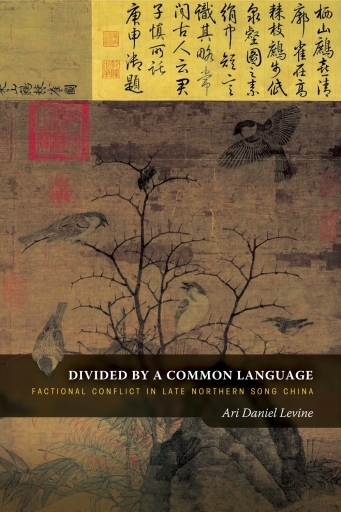
Divided by a Common Language
Published by University of Hawaii Press
English
292 pages
2008
ISBN 9780824862206
Estimated reading time: 5 h 21 min
PDF
Buy at ebooks Libreria del GAM
🇨🇱
 Association of University Presses - Tienda FILUNI
🇺🇸
Visit store →
Association of University Presses - Tienda FILUNI
🇺🇸
Visit store →
 Bajalibros Argentina
🇦🇷
Visit store →
Bajalibros Argentina
🇦🇷
Visit store →
 Bajalibros Latam
🇺🇸
Visit store →
Bajalibros Latam
🇺🇸
Visit store →
 Bookshop Uruguay
🇺🇾
Visit store →
Bookshop Uruguay
🇺🇾
Visit store →
 Catademic
🇺🇸
Visit store →
Catademic
🇺🇸
Visit store →
Available at 13 bookshops
Association of University Presses - Tienda FILUNI
🇺🇸
Visit store →
Bajalibros Argentina
🇦🇷
Visit store →
Bajalibros Latam
🇺🇸
Visit store →
Bookshop Uruguay
🇺🇾
Visit store →
Catademic
🇺🇸
Visit store →








About this book
Between 1044 and 1104, ideological disputes divided China’s sociopolitical elite, who organized into factions battling for control of the imperial government. Advocates and adversaries of state reform forged bureaucratic coalitions to implement their policy agendas and to promote like-minded colleagues. During this period, three emperors and two regents in turn patronized a new bureaucratic coalition that overturned the preceding ministerial regime and its policies. This ideological and political conflict escalated with every monarchical transition in a widening circle of retribution that began with limited purges and ended with extensive blacklists of the opposition.
Divided by a Common Language is the first English-language study to approach the political history of the late Northern Song in its entirety and the first to engage the issue of factionalism in Song political culture. Ari Daniel Levine explores the complex intersection of Chinese political, cultural, and intellectual history by examining the language that ministers and monarchs used to articulate conceptions of political authority. Despite their rancorous disputes over state policy, factionalists shared a common repertoire of political discourses and practices, which they used to promote their comrades and purge their adversaries. Conceiving of factions in similar ways, ministers sought monarchical approval of their schemes, employing rhetoric that imagined the imperial court as the ultimate source of ethical and political authority.
Factionalists used the same polarizing rhetoric to vilify their opponents—who rejected their exclusive claims to authority as well as their ideological program—as treacherous and disloyal. They pressured emperors and regents to identify the malign factions that were spreading at court and expel them from the metropolitan bureaucracy before they undermined the dynastic polity. By analyzing theoretical essays, court memorials, and political debates from the period, Levine interrogates the intellectual assumptions and linguistic limitations that prevented Northern Song politicians from defending or even acknowledging the existence of factions. From the Northern Song to the Ming and Qing dynasties, this dominant discourse of authority continued to restrain members of China’s sociopolitical elite from articulating interests that acted independently from, or in opposition to, the dynastic polity.
Deeply grounded in both primary and secondary sources, Levine’s study is important for the clarity and fluidity with which it presents a critical period in the development of Chinese imperial history and government.
Availability
Divided by a Common Language is available as PDF at 13 online bookshops. Bookshops carrying it include Association of University Presses - Tienda FILUNI, Bajalibros Argentina, Bajalibros Latam.
Genres
- Language
- English
Share
Frequently asked questions
- In what formats is Divided by a Common Language available?
- Divided by a Common Language is available as PDF at 13 online bookshops.
- Where can I buy Divided by a Common Language?
- You can buy Divided by a Common Language at Association of University Presses - Tienda FILUNI, Bajalibros Argentina, Bajalibros Latam. Compare every option in the list on this page.
- How long does it take to read Divided by a Common Language?
- At an average reading pace, Divided by a Common Language takes about 5 h 21 min to read (292 pages).
Ratings & reviews
No ratings yet. Be the first to review this book.
Sign in to rate and review this book.