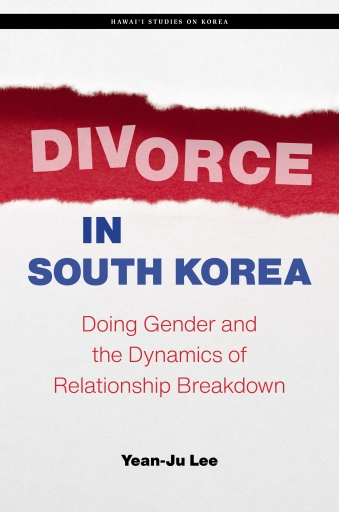
Divorce in South Korea
By Lee, Yean-Ju
Published by University of Hawaii Press
English
2020
ISBN 9780824882969
eBook
Buy at Catademic
🇺🇸
Catademic
🇺🇸
Visit store →
Bajalibros Latam
🇺🇸
Visit store →
Association of University Presses - Tienda FILUNI
🇺🇸
Visit store →

Ebooks Librería Antártica
🇨🇱
Visit store →
Ebooks Agustin
🇪🇸
Visit store →
Bajalibros Argentina
🇦🇷
Visit store →
Sanborns Ebooks
🇲🇽
Visit store →
ebooks Libreria del GAM
🇨🇱
Visit store →
Bookshop Uruguay
🇺🇾
Visit store →
ebookskitapenas
🇬🇹
Visit store →
Ebooks Yenny - El Ateneo
🇦🇷
Visit store →
Crisol Ebooks
🇵🇪
Visit store →
Available at 12 bookshops
Catademic
🇺🇸
Visit store →
Association of University Presses - Tienda FILUNI
🇺🇸
Visit store →

Ebooks Librería Antártica
🇨🇱
Visit store →
Ebooks Agustin
🇪🇸
Visit store →
Sanborns Ebooks
🇲🇽
Visit store →
ebooks Libreria del GAM
🇨🇱
Visit store →
ebookskitapenas
🇬🇹
Visit store →
Ebooks Yenny - El Ateneo
🇦🇷
Visit store →
Crisol Ebooks
🇵🇪
Visit store →
About this book
<p>It may sound logical that individualistic attitudes boost divorce. This book argues otherwise. Conservative norms of specialized gender roles serve as the root cause of marital dissolution. Those expectations that prescribe what men should do and what women should do help break down marital relationships. Data from South Korea suggest that lingering norms of gendered roles can threaten married persons’ self-identity and hence their marriages during the period of rapid structural changes.<br><br>The existing literature predicting divorce does not conceptually distinguish between the process of relationship breakdown and the act of ending a marriage, implicitly but heavily focusing on the latter while obscuring the former. In contemporary societies, however, the social and economic cost of divorce is sufficiently low—that is, stigma against divorce is minimal and economic survival after divorce is a nonissue—and leaving a marriage is no longer dictated by one’s being liberal or conservative or any particular characteristics. Thus, the right question to ask is not who leaves a marriage but why a marriage goes sour to begin with. <br><br>In Korea, a majority of divorces occur through mutual consent of the two spouses without any court procedure, but when one spouse files for divorce, the fault-based divorce litigation rules require the court to lay out the entire chronicle of relevant events occurring up to the legal action, often with the help of court investigators. As such, court rulings provide glimpses into the entire marital dynamics, including verbatim exchanges between the spouses. Lee argues that the typical process of relationship breakdown is related to married persons’ daily practices of verifying their gendered role identity.</p>
- Language
- English
Share
You might also like
Amores que suman, amores que restan
Amoedo, Pedro
¿Me quedo o me voy?
Díaz, Tere, Turrent, Manuel
Ni felices ni para siempre
Newman (pseudónimo de Borja Vilaseca), Clay
Separacion por las buenas
Boada, Juanita
No estás sola
Pont Sánchez, Mónica
Marriage and Divorce Laws of the World
Ringrose, Hyacinthe