
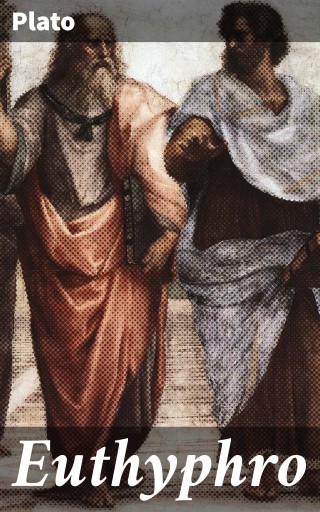
Euthyphro
By Plato
Published by Good Press
English
2019
ISBN 4057664146526
eBook
Buy at Bajalibros Latam
🇺🇸
 Bajalibros Latam
🇺🇸
Visit store →
Bajalibros Latam
🇺🇸
Visit store →
 LORANCHBOOKSTORE
🇺🇸
Visit store →
LORANCHBOOKSTORE
🇺🇸
Visit store →
 Libros Patagonia
🇨🇱
Visit store →
Libros Patagonia
🇨🇱
Visit store →
 Ebooks Librería Carlos Fuentes
🇲🇽
Visit store →
Ebooks Librería Carlos Fuentes
🇲🇽
Visit store →
 Ebooks Librería Antártica
🇨🇱
Visit store →
Ebooks Librería Antártica
🇨🇱
Visit store →
 Ebooks Happy Books
🇨🇴
Visit store →
Ebooks Happy Books
🇨🇴
Visit store →
 ebooks libreria española
🇪🇨
Visit store →
ebooks libreria española
🇪🇨
Visit store →
 Bajalibros Argentina
🇦🇷
Visit store →
Bajalibros Argentina
🇦🇷
Visit store →
 Alpha Books
🇨🇴
Visit store →
Alpha Books
🇨🇴
Visit store →
 Sanborns Ebooks
🇲🇽
Visit store →
Sanborns Ebooks
🇲🇽
Visit store →
 ebooks Libreria del GAM
🇨🇱
Visit store →
ebooks Libreria del GAM
🇨🇱
Visit store →
 Bookshop Uruguay
🇺🇾
Visit store →
Bookshop Uruguay
🇺🇾
Visit store →
 Ebooks Yenny - El Ateneo
🇦🇷
Visit store →
Ebooks Yenny - El Ateneo
🇦🇷
Visit store →
 Crisol Ebooks
🇵🇪
Visit store →
Crisol Ebooks
🇵🇪
Visit store →
Available at 14 bookshops
Bajalibros Latam
🇺🇸
Visit store →
LORANCHBOOKSTORE
🇺🇸
Visit store →
Libros Patagonia
🇨🇱
Visit store →
Ebooks Librería Carlos Fuentes
🇲🇽
Visit store →
Ebooks Librería Antártica
🇨🇱
Visit store →
Ebooks Happy Books
🇨🇴
Visit store →
ebooks libreria española
🇪🇨
Visit store →
Bajalibros Argentina
🇦🇷
Visit store →
Alpha Books
🇨🇴
Visit store →
Sanborns Ebooks
🇲🇽
Visit store →
ebooks Libreria del GAM
🇨🇱
Visit store →
Bookshop Uruguay
🇺🇾
Visit store →
Ebooks Yenny - El Ateneo
🇦🇷
Visit store →
Crisol Ebooks
🇵🇪
Visit store →
About this book
In "Euthyphro," Plato presents a profound dialogue between Socrates and Euthyphro, exploring the nature of piety and the essence of moral virtue amidst the chaotic religious landscape of ancient Athens. The text is characterized by its Socratic method of questioning, invoking rigorous philosophical inquiry that examines whether moral actions stem from divine approval or are intrinsically valuable. This dialogue not only interrogates the implications of piety and justice but also serves as an early articulation of ethical theory, reflecting the intellectual currents of classical antiquity at a time when philosophical reasoning began challenging traditional beliefs. Plato, a student of Socrates and the founder of the Academy in Athens, sought to distill the essence of ethical thought through his dialogues. Influenced by the Socratic method and his mentorship experiences, Plato aimed to provoke critical reflection on moral concepts, leading to deeper philosophical understanding. "Euthyphro" stands as part of a trilogy, connecting to themes of knowledge and ethics explored in later works, particularly in relation to Socrates's trial and moral philosophy. For readers fascinated by philosophy and ethics, "Euthyphro" is a compelling introduction to Socratic thought and the complexities of moral reasoning. Its enduring relevance encourages transformative conversations about duty, morality, and the divine, making it an essential read for anyone engaged in the exploration of ethical frameworks and philosophical discourse.
In this enriched edition, we have carefully created added value for your reading experience:
- A succinct Introduction situates the work's timeless appeal and themes.
- The Synopsis outlines the central plot, highlighting key developments without spoiling critical twists.
- A detailed Historical Context immerses you in the era's events and influences that shaped the writing.
- An Author Biography reveals milestones in the author's life, illuminating the personal insights behind the text.
- A thorough Analysis dissects symbols, motifs, and character arcs to unearth underlying meanings.
- Reflection questions prompt you to engage personally with the work's messages, connecting them to modern life.
- Hand‐picked Memorable Quotes shine a spotlight on moments of literary brilliance.
- Interactive footnotes clarify unusual references, historical allusions, and archaic phrases for an effortless, more informed read.
- Language
- English
Share
You might also like
The Characters of Theophrastus
Theophrastus
Plato: Complete Works
Plato
Laws
Plato
Theaetetus
Plato
Il Fedro
Plato
Yale Classics (Vol. 1)
Herodotus, Sappho, Homer, Hesiod, Alcaeus, Archilochus, Anacreon, Megara, Theognis of, Ceos, Simonides of, Bacchylides, Pindar, Aeschylus, Sophocles, Eurípides, Aristophanes, Thucydides, Plato, Aristotle, Lysias, Demosthenes, Apollonius, Callimachus, Theocritus, Plutarch, Epictetus, Murray, Gilbert