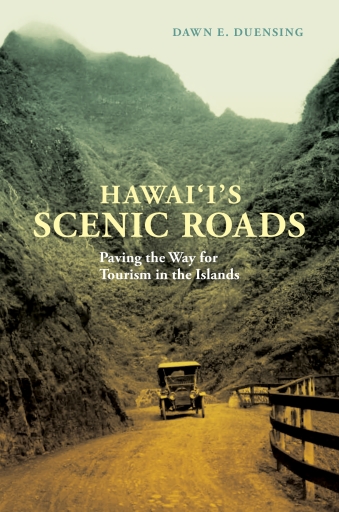
Hawai‘i’s Scenic Roads
Published by University of Hawaii Press
English
2015
ISBN 9780824854652
eBook
Buy at Association of University Presses - Tienda FILUNI
🇺🇸
Catademic
🇺🇸
Visit store →
Bajalibros Latam
🇺🇸
Visit store →
Association of University Presses - Tienda FILUNI
🇺🇸
Visit store →

Ebooks Librería Antártica
🇨🇱
Visit store →
Ebooks Agustin
🇪🇸
Visit store →
Bajalibros Argentina
🇦🇷
Visit store →

Sanborns Ebooks
🇲🇽
Visit store →
ebooks Libreria del GAM
🇺🇾
Visit store →
Bookshop Uruguay
🇺🇾
Visit store →

ebookskitapenas
🇬🇹
Visit store →
Ebooks Yenny - El Ateneo
🇦🇷
Visit store →
Crisol Ebooks
🇨🇴
Visit store →
Available at 12 bookshops
Catademic
🇺🇸
Visit store →
Association of University Presses - Tienda FILUNI
🇺🇸
Visit store →
Ebooks Librería Antártica
🇨🇱
Visit store →
Ebooks Agustin
🇪🇸
Visit store →
Sanborns Ebooks
🇲🇽
Visit store →
ebooks Libreria del GAM
🇺🇾
Visit store →
ebookskitapenas
🇬🇹
Visit store →
Ebooks Yenny - El Ateneo
🇦🇷
Visit store →
Crisol Ebooks
🇨🇴
Visit store →
About this book
<p><i>Hawai‘i's Scenic Roads</i> examines a century of overland transportation from the Kingdom's first constitutional government until World War II, discovering how roads in the world's most isolated archipelago rivaled those on the U.S. mainland. Building Hawai‘i's roads was no easy feat, as engineers confronted a unique combination of circumstances: extreme isolation, mountainous topography, torrential rains, deserts, volcanic eruptions, earthquakes, and on Haleakalā, freezing temperatures. <br><br>By investigating the politics and social processes that facilitated road projects, this study explains that foreign settlers wanted roads to "civilize" the Hawaiians and promote western economic development, specifically agriculture. Once sugar became the dominant driver in the economy, civic and political leaders turned their attention to constructing scenic roads. Viewed as "commercial enterprises," scenic byways became an essential factor in establishing tourism as Hawai‘i's "third crop" after sugar and pineapple. These thoroughfares also served as playgrounds for the islands' elite residents and wealthy visitors who could afford the luxury of carriage driving, and after 1900, motorcars. <br><br>Duensing's provocative analysis of the 1924 Hawai‘i Bill of Rights reveals that roads played a critical role in redefining the Territory of Hawai‘i's status within the United States. Politicians and civic leaders focused on highway funding to argue that Hawai‘i was an "integral part of the Union," thus entitled to be treated as if it were a state. By accepting this "Bill of Rights," Congress confirmed the territory's claim to access federal programs, especially highway aid. Washington's subsequent involvement in Hawaii increased, as did the islands' dependence on the national government. Federal money helped the territory weather the Great Depression as it became enmeshed in New Deal programs and philosophy. Although primarily an economic protest, the Hawai‘i Bill of Rights was a crucial stepping stone on the path to eventual statehood in 1959. <br><br>The core of this book is the intriguing tales of road projects that established the islands' most renowned scenic drives, including the Pali Highway, byways around Kīlauea Volcano, Haleakalā Highway, and the Hāna Belt Road. The author's unique approach provides a fascinating perspective for understanding Hawai‘i's social dynamics, as well as its political, environmental, and economic history.</p>
- Language
- English
Share
You might also like
Procesos de gestión de calidad en hostelería y turismo. HOTG0208
del Pozo Aguilar, José Francisco
Supervisión de las operaciones preliminares y técnicas de manipulación. HOTR0110
González Ruiz, Macarena
Diseño de Productos y servicios turísticos locales. HOTI0108
Ruano Pavón, Carmen
Preparación y cata de vinos y otras bebidas alcohólicas. HOTR0209
Pulido Lería, Cristina
Iniciar un negocio de transporte de mercancías
Kauffman, Elliott
Tecnologias gerenciais de restaurantes
Fonseca, Marcelo Traldi