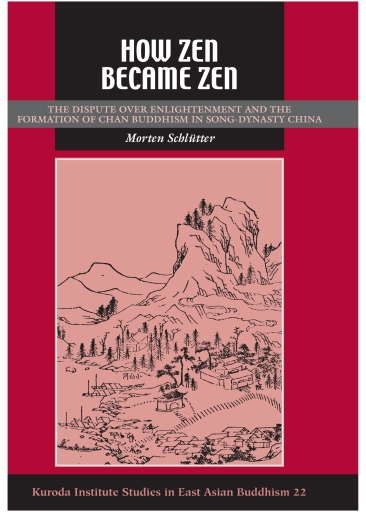
How Zen Became Zen
Published by University of Hawaii Press
English
2008
ISBN 9780824852153
eBook
Buy at Ebooks Librería Antártica
🇨🇱
 Association of University Presses - Tienda FILUNI
🇺🇸
Visit store →
Association of University Presses - Tienda FILUNI
🇺🇸
Visit store →
 Bajalibros Argentina
🇦🇷
Visit store →
Bajalibros Argentina
🇦🇷
Visit store →
 Bajalibros Latam
🇺🇸
Visit store →
Bajalibros Latam
🇺🇸
Visit store →
 Bookshop Uruguay
🇺🇾
Visit store →
Bookshop Uruguay
🇺🇾
Visit store →
 Catademic
🇺🇸
Visit store →
Catademic
🇺🇸
Visit store →
Available at 13 bookshops
Association of University Presses - Tienda FILUNI
🇺🇸
Visit store →
Bajalibros Argentina
🇦🇷
Visit store →
Bajalibros Latam
🇺🇸
Visit store →
Bookshop Uruguay
🇺🇾
Visit store →
Catademic
🇺🇸
Visit store →








About this book
How Zen Became Zen takes a novel approach to understanding one of the most crucial developments in Zen Buddhism: the dispute over the nature of enlightenment that erupted within the Chinese Chan (Zen) school in the twelfth century. The famous Linji (Rinzai) Chan master Dahui Zonggao (1089–1163) railed against "heretical silent illumination Chan" and strongly advocated kanhua (koan) meditation as an antidote. In this fascinating study, Morten Schlütter shows that Dahui’s target was the Caodong (Soto) Chan tradition that had been revived and reinvented in the early twelfth century, and that silent meditation was an approach to practice and enlightenment that originated within this "new" Chan tradition. Schlütter has written a refreshingly accessible account of the intricacies of the dispute, which is still reverberating through modern Zen in both Asia and the West. Dahui and his opponents’ arguments for their respective positions come across in this book in as earnest and relevant a manner as they must have seemed almost nine hundred years ago.
Although much of the book is devoted to illuminating the doctrinal and soteriological issues behind the enlightenment dispute, Schlütter makes the case that the dispute must be understood in the context of government policies toward Buddhism, economic factors, and social changes. He analyzes the remarkable ascent of Chan during the first centuries of the Song dynasty, when it became the dominant form of elite monastic Buddhism, and demonstrates that secular educated elites came to control the critical transmission from master to disciple ("procreation" as Schlütter terms it) in the Chan School.
Availability
How Zen Became Zen is available as eBook at 13 online bookshops. Bookshops carrying it include Association of University Presses - Tienda FILUNI, Bajalibros Argentina, Bajalibros Latam.
- Language
- English
Share
Frequently asked questions
- In what formats is How Zen Became Zen available?
- How Zen Became Zen is available as eBook at 13 online bookshops.
- Where can I buy How Zen Became Zen?
- You can buy How Zen Became Zen at Association of University Presses - Tienda FILUNI, Bajalibros Argentina, Bajalibros Latam. Compare every option in the list on this page.
Ratings & reviews
No ratings yet. Be the first to review this book.
Sign in to rate and review this book.