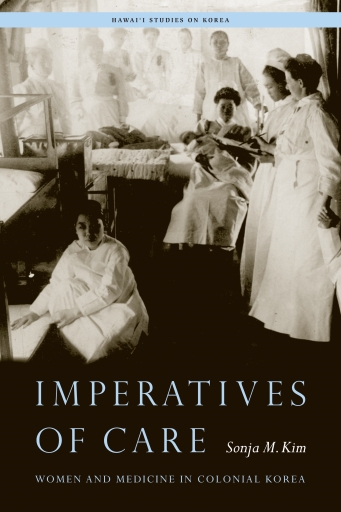
Imperatives of Care
Published by University of Hawaii Press
English
2019
ISBN 9780824855468
eBook
Buy at Association of University Presses - Tienda FILUNI
🇺🇸
 Bajalibros Argentina
🇦🇷
Visit store →
Bajalibros Argentina
🇦🇷
Visit store →
 Bajalibros Latam
🇺🇸
Visit store →
Bajalibros Latam
🇺🇸
Visit store →
 Bookshop Uruguay
🇺🇾
Visit store →
Bookshop Uruguay
🇺🇾
Visit store →
 Catademic
🇺🇸
Visit store →
Catademic
🇺🇸
Visit store →
Available at 13 bookshops
 Bajalibros Argentina
🇦🇷
Visit store →
Bajalibros Latam
🇺🇸
Visit store →
Bookshop Uruguay
🇺🇾
Visit store →
Catademic
🇺🇸
Visit store →
Bajalibros Argentina
🇦🇷
Visit store →
Bajalibros Latam
🇺🇸
Visit store →
Bookshop Uruguay
🇺🇾
Visit store →
Catademic
🇺🇸
Visit store →








About this book
In late nineteenth- and early twentieth-century Korea, public health priorities in maternal and infant welfare privileged the new nation’s reproductive health and women’s responsibility for care work to produce novel organization of services in hospitals and practices in the home. The first monograph on this topic, Imperatives of Care places women and gender at the center of modern medical transformations in Korea. It outlines the professionalization of medicine, nursing, and midwifery, tracing their evolution from new legal and institutional infrastructures in public health and education, and investigates women’s experiences as health practitioners and patients, medical activities directed at women’s bodies, and the related knowledge and goods produced for and consumed by women. Sonja M. Kim draws on archival sources, some not previously explored, to foreground the ways individual women met challenges posed by uneven developments in medicine, intervened in practices aimed at them, andseized the evolving options that became available to promote their personal, familial, and professional interests. She demonstrates how medicine produced, and in turn was produced by, gendered expectations caught between the Korean reformist agenda, the American Protestant missionary enterprise, and Japanese imperialism.
Availability
Imperatives of Care is available as eBook at 13 online bookshops. Bookshops carrying it include Association of University Presses - Tienda FILUNI, Bajalibros Argentina, Bajalibros Latam.
- Language
- English
Share
Frequently asked questions
- In what formats is Imperatives of Care available?
- Imperatives of Care is available as eBook at 13 online bookshops.
- Where can I buy Imperatives of Care?
- You can buy Imperatives of Care at Association of University Presses - Tienda FILUNI, Bajalibros Argentina, Bajalibros Latam. Compare every option in the list on this page.
Ratings & reviews
No ratings yet. Be the first to review this book.
Sign in to rate and review this book.