
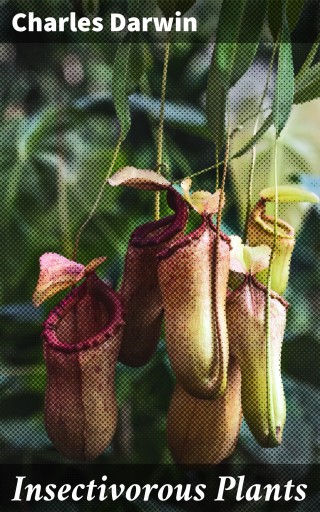
Insectivorous Plants
Published by Good Press
English
2019
ISBN 4057664633316
eBook
Buy at LORANCHBOOKSTORE
🇺🇸
 Bajalibros Latam
🇺🇸
Visit store →
Bajalibros Latam
🇺🇸
Visit store →
 LORANCHBOOKSTORE
🇺🇸
Visit store →
LORANCHBOOKSTORE
🇺🇸
Visit store →
 Libros Patagonia
🇨🇱
Visit store →
Libros Patagonia
🇨🇱
Visit store →
 Ebooks Librería Carlos Fuentes
🇲🇽
Visit store →
Ebooks Librería Carlos Fuentes
🇲🇽
Visit store →
 Ebooks Librería Antártica
🇨🇱
Visit store →
Ebooks Librería Antártica
🇨🇱
Visit store →
 Ebooks Happy Books
🇨🇴
Visit store →
Ebooks Happy Books
🇨🇴
Visit store →
 ebooks libreria española
🇪🇨
Visit store →
ebooks libreria española
🇪🇨
Visit store →
 Bajalibros Argentina
🇦🇷
Visit store →
Bajalibros Argentina
🇦🇷
Visit store →
 Alpha Books
🇨🇴
Visit store →
Alpha Books
🇨🇴
Visit store →
 Sanborns Ebooks
🇲🇽
Visit store →
Sanborns Ebooks
🇲🇽
Visit store →
 ebooks Libreria del GAM
🇨🇱
Visit store →
ebooks Libreria del GAM
🇨🇱
Visit store →
 Bookshop Uruguay
🇺🇾
Visit store →
Bookshop Uruguay
🇺🇾
Visit store →
 Ebooks Yenny - El Ateneo
🇦🇷
Visit store →
Ebooks Yenny - El Ateneo
🇦🇷
Visit store →
 Crisol Ebooks
🇵🇪
Visit store →
Crisol Ebooks
🇵🇪
Visit store →
Available at 14 bookshops
Bajalibros Latam
🇺🇸
Visit store →
LORANCHBOOKSTORE
🇺🇸
Visit store →
Libros Patagonia
🇨🇱
Visit store →
Ebooks Librería Carlos Fuentes
🇲🇽
Visit store →
Ebooks Librería Antártica
🇨🇱
Visit store →
Ebooks Happy Books
🇨🇴
Visit store →
ebooks libreria española
🇪🇨
Visit store →
Bajalibros Argentina
🇦🇷
Visit store →
Alpha Books
🇨🇴
Visit store →
Sanborns Ebooks
🇲🇽
Visit store →
ebooks Libreria del GAM
🇨🇱
Visit store →
Bookshop Uruguay
🇺🇾
Visit store →
Ebooks Yenny - El Ateneo
🇦🇷
Visit store →
Crisol Ebooks
🇵🇪
Visit store →
About this book
In "Insectivorous Plants," Charles Darwin meticulously explores the fascinating world of carnivorous plants, offering profound insights into their unique adaptations and ecological significance. Through meticulous observation and experimental methodology, Darwin presents a detailed analysis of how these remarkable organisms attract, trap, and digest insects to supplement their nutrient intake. The book is characterized by Darwin's signature clarity of prose and rigorous scientific inquiry, positioned within the broader context of his evolutionary theory. It stands as both a botanical treatise and a critical reflection on the interaction between flora and fauna, enriching the Victorian discourse on natural history. Charles Darwin, best known for his foundational work on evolution, was deeply intrigued by the intricate relationships in nature. His extensive travels and observations, particularly during the HMS Beagle expedition, shaped his understanding of adaptability and survival. This curiosity about the natural world led him to investigate the unusual mechanisms of insectivorous plants, emphasizing their roles within ecosystems and challenging contemporary views on plant life. I highly recommend "Insectivorous Plants" to anyone interested in botany, ecology, or the history of science. This work not only enriches our understanding of plant evolution and adaptation but also exemplifies Darwin's commitment to unraveling the complexities of the natural world, making it a captivating read for both scholars and amateurs alike.
- Language
- English
Share
You might also like
A Origem das Espécies
Darwin, Charles, Miranda, Daniel Moreira, Bizzo, Nelio

Iniciación al cultivo del cánnabis autofloreciente
Lowenfels, Jeff

Notizie del pubblico giardino de' semplici di Padova compilate intorno l'anno 1771
Marsili, Giovanni

Le piante utili dell' Eritrea
Schweinfurth, Georg August

Die Abstammung des Menschen und die geschlechtliche Zuchtwahl (Mit Illustrationen)
Darwin, Charles
Field Book of Western Wild Flowers
Thornber, J. J., Armstrong, Margaret