Lines That Connect

Lines That Connect

By Were, Graeme

Published by University of Hawaii Press

English 217 pages 2010 ISBN 9780824860486
Estimated reading time: 3 h 59 min
PDF

About this book

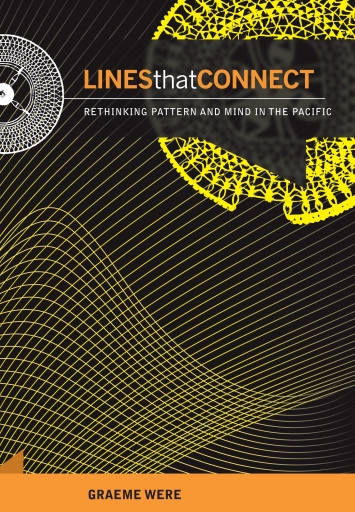
Building on historical and contemporary literature in anthropology and art theory, Lines That Connect treats pattern as a material form of thought that provokes connections between disparate things through processes of resemblance, memory, and transformation. Pattern is constantly in a state of motion as it traverses spatial and temporal divides and acts as an endless source for innovation through its inherent transformability. Graeme Were argues that it is the ideas carried by pattern’s relational capacity that allows Pacific islanders to express their links to land, genealogy, and resources in the most economic ways. In doing so, his book is a timely and unique contribution to the analysis of pattern and decorative art in the Pacific amid growing debates in anthropology and art history. This striking and original study brings together objects and photographs, historical literature and contemporary ethnographic case studies to explore pattern in its logical workings. It presents the first-ever analysis of the well-known patterned shell valuable called kapkap as revealed in New Ireland mortuary feasts. Innovative research in the study of Christianity and the Baha’i faithful in the region shows how pattern has been appropriated in new religious communities. Were argues that pattern is used in various guises in performances, church architecture, and funerary images to contrasting effect. He explores the conditions under which pattern facilitates a connecting of old and new ideas and how missionary processes are implicated in this flow. He then considers the mechanisms under which pattern is internalized, paying particular attention to its embeddedness in spatial and numerical thinking. Finally, he examines how pattern carries new materials and technologies, which in turn provide new resources for sustaining old beliefs. Drawing on a multitude of fields (anthropology; art history; Pacific, museum, and religious studies; education; ethnomathematics), Lines That Connect raises key questions about the capacity of pattern across the Pacific to bind and sustain ideas about place, body, and genealogy in the most logical of ways.

Availability

Lines That Connect is available as PDF at 13 online bookshops. Bookshops carrying it include Association of University Presses - Tienda FILUNI, Bajalibros Argentina, Bajalibros Latam.

Language
English
Share

Frequently asked questions

In what formats is Lines That Connect available?
Lines That Connect is available as PDF at 13 online bookshops.
Where can I buy Lines That Connect?
You can buy Lines That Connect at Association of University Presses - Tienda FILUNI, Bajalibros Argentina, Bajalibros Latam. Compare every option in the list on this page.
How long does it take to read Lines That Connect?
At an average reading pace, Lines That Connect takes about 3 h 59 min to read (217 pages).

Ratings & reviews

No ratings yet. Be the first to review this book.

Sign in to rate and review this book.
Comments

Sign in to join the conversation.

No comments yet.