Min Yong-hwan
Published by University of Hawaii Press
English
273 pages
2002
ISBN 9780824863616
Estimated reading time: 5 h
PDF
Buy at ebookskitapenas
🇬🇹
 Association of University Presses - Tienda FILUNI
🇺🇸
Visit store →
Association of University Presses - Tienda FILUNI
🇺🇸
Visit store →
 Bajalibros Argentina
🇦🇷
Visit store →
Bajalibros Argentina
🇦🇷
Visit store →
 Bajalibros Latam
🇺🇸
Visit store →
Bajalibros Latam
🇺🇸
Visit store →
 Bookshop Uruguay
🇺🇾
Visit store →
Bookshop Uruguay
🇺🇾
Visit store →
 Catademic
🇺🇸
Visit store →
Catademic
🇺🇸
Visit store →
Available at 13 bookshops
Association of University Presses - Tienda FILUNI
🇺🇸
Visit store →
Bajalibros Argentina
🇦🇷
Visit store →
Bajalibros Latam
🇺🇸
Visit store →
Bookshop Uruguay
🇺🇾
Visit store →
Catademic
🇺🇸
Visit store →








About this book
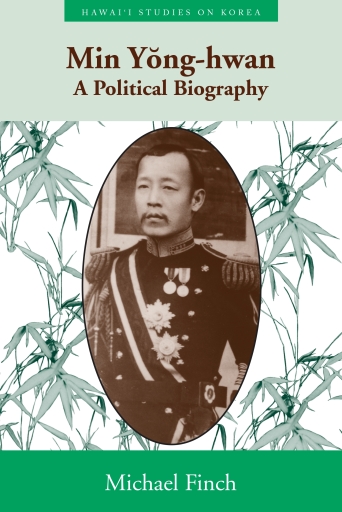
The diplomat and scholar-official Min Yông-hwan (1861-1905), described by one contemporary Western observer as "undoubtably the first Korean after the emperor," is best remembered in Korean historiography for his pioneering diplomacy at the courts of Tsar Nicholas II and Queen Victoria in the late 1890s. Furthermore, he is considered to be the foremost patriot of Korea's Taehan era (1897-1907). This pioneering study of Min Yông-hwan is long overdue and provides us with a new perspective on a period of Korean history that still casts its shadow over the region today.
This new biography of Min contributes substantially to our understanding of this period by looking beyond the established view of Korea as being polarized between reformists and reactionaries in the late Choson era. In doing so, it provides us with deeper insight into the full range of responses of the late Choson leadership to the dual challenges of internal stagnation and external intervention at the juncture of the nineteenth and twentieth centuries. It will be essential reading for anyone interested in the recent history of Korea, late nineteenth century imperialism, and Russian, Japanese, American, and British foreign policy in northeast Asia.
Availability
Min Yong-hwan is available as PDF at 13 online bookshops. Bookshops carrying it include Association of University Presses - Tienda FILUNI, Bajalibros Argentina, Bajalibros Latam.
Genres
- Language
- English
Share
Frequently asked questions
- In what formats is Min Yong-hwan available?
- Min Yong-hwan is available as PDF at 13 online bookshops.
- Where can I buy Min Yong-hwan?
- You can buy Min Yong-hwan at Association of University Presses - Tienda FILUNI, Bajalibros Argentina, Bajalibros Latam. Compare every option in the list on this page.
- How long does it take to read Min Yong-hwan?
- At an average reading pace, Min Yong-hwan takes about 5 h to read (273 pages).
Ratings & reviews
No ratings yet. Be the first to review this book.
Sign in to rate and review this book.