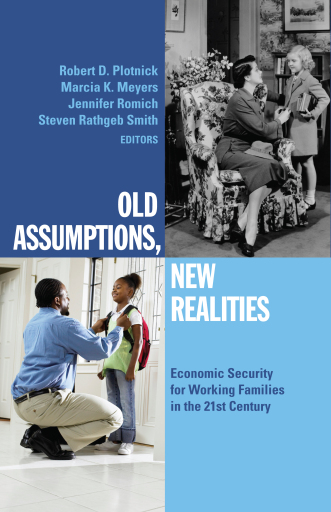
Old Assumptions, New Realities
Published by Russell Sage Foundation
English
2011
ISBN 9781610447218
eBook
Buy at Bajalibros Latam
🇺🇸
Catademic
🇺🇸
Visit store →
Bajalibros Latam
🇺🇸
Visit store →
Association of University Presses - Tienda FILUNI
🇺🇸
Visit store →

Ebooks Librería Antártica
🇨🇱
Visit store →
Ebooks Agustin
🇪🇸
Visit store →
Bajalibros Argentina
🇦🇷
Visit store →

Sanborns Ebooks
🇲🇽
Visit store →
ebooks Libreria del GAM
🇺🇾
Visit store →
Bookshop Uruguay
🇺🇾
Visit store →

ebookskitapenas
🇬🇹
Visit store →
Ebooks Yenny - El Ateneo
🇦🇷
Visit store →
Crisol Ebooks
🇨🇴
Visit store →
Available at 12 bookshops
Catademic
🇺🇸
Visit store →
Association of University Presses - Tienda FILUNI
🇺🇸
Visit store →
Ebooks Librería Antártica
🇨🇱
Visit store →
Ebooks Agustin
🇪🇸
Visit store →
Sanborns Ebooks
🇲🇽
Visit store →
ebooks Libreria del GAM
🇺🇾
Visit store →
ebookskitapenas
🇬🇹
Visit store →
Ebooks Yenny - El Ateneo
🇦🇷
Visit store →
Crisol Ebooks
🇨🇴
Visit store →
About this book
<div>The way Americans live and work has changed significantly since the creation of the Social Security Administration in 1935, but U.S. social welfare policy has failed to keep up with these changes. The model of the male breadwinner-led nuclear family has given way to diverse and often complex family structures, more women in the workplace, and nontraditional job arrangements. Old Assumptions, New Realities identifies the tensions between twentieth-century social policy and twenty-first-century realities for working Americans and offers promising new reforms for ensuring social and economic security. Old Assumptions, New Realities focuses on policy solutions for today's workers—particularly low-skilled workers and low-income families. Contributor Jacob Hacker makes strong and timely arguments for universal health insurance and universal 401(k) retirement accounts. Michael Stoll argues that job training and workforce development programs can mitigate the effects of declining wages caused by deindustrialization, technological changes, racial discrimination, and other forms of job displacement. Michael Sherraden maintains that wealth-building accounts for children—similar to state college savings plans—and universal and progressive savings accounts for workers can be invaluable strategies for all workers, including the poorest. Jody Heymann and Alison Earle underscore the potential for more extensive work-family policies to help the United States remain competitive in a globalized economy. Finally, Jodi Sandfort suggests that the United States can restructure the existing safety net via state-level reforms but only with a host of coordinated efforts, including better information to service providers, budget analyses, new funding sources, and oversight by intermediary service professionals. Old Assumptions, New Realities picks up where current policies leave off by examining what's not working, why, and how the safety net can be redesigned to work better. The book brings much-needed clarity to the process of creating viable policy solutions that benefit all working Americans. A West Coast Poverty Center Volume</div>
- Language
- English
Share
You might also like
The future of banking (Flash Ensayo)
Fernández Ordóñez, Miguel A.
Cómo transformarte en un nuevo vendedor
Taccari, Federico
Rousseau no usa bitcoins
Sanfeliz Mezquita, Alfredo
Un universo creativo
Azulay Azulay, José
Aprendiendo de los mejores 3
Alcaide Hernández, Francisco
Puesta en marcha del Plan de Social Media (SMO)
Accerto