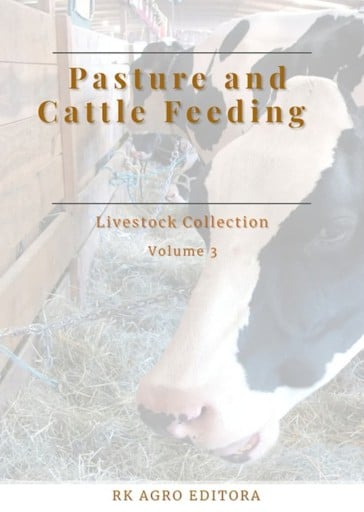
Pasture And Cattle Feeding
By Dos Nascente, Organizer: Roger Rodrigo Santos – Editor: Adriano Stephan
Published by Clube de Autores
English
2022
ISBN 9786584655089
eBook
Buy at Bajalibros Latam
🇺🇸
Bajalibros Latam
🇺🇸
Visit store →
Martins Fontes Paulista
🇧🇷
Visit store →
Disal - Distribuidora de Conhecimento
🇧🇷
Visit store →

Ebooks Librería Antártica
🇨🇱
Visit store →
Bajalibros Argentina
🇦🇷
Visit store →
Sanborns Ebooks
🇲🇽
Visit store →
ebooks Libreria del GAM
🇺🇾
Visit store →
Bookshop Uruguay
🇺🇾
Visit store →
Ebooks Yenny - El Ateneo
🇦🇷
Visit store →
Crisol Ebooks
🇨🇴
Visit store →
Available at 10 bookshops
Martins Fontes Paulista
🇧🇷
Visit store →
Disal - Distribuidora de Conhecimento
🇧🇷
Visit store →

Ebooks Librería Antártica
🇨🇱
Visit store →
Sanborns Ebooks
🇲🇽
Visit store →
ebooks Libreria del GAM
🇺🇾
Visit store →
Ebooks Yenny - El Ateneo
🇦🇷
Visit store →
Crisol Ebooks
🇨🇴
Visit store →
About this book
The global population is expected to reach 10 billion people in the next 30 years. According to the Food and Agriculture Organization of the United Nations, an additional 52 million tons of nitrogen fertilizers and 165 million ha of new agricultural land will be needed to meet the demand for food, feed, fiber, and biofuels by 2050. These variations correspond to a 50% increase in fertilizer use and 6% increase in agricultural land compared to 2012. The simultaneous need for more fertilizers and land is explained not only by regional differences in the endowment of production factors, technology and inequalities in income and land tenure. Inefficiencies and incorrect expenditures in the supply processes are responsible for significant losses of resources. Post-harvest production losses were estimated at 1.3 billion tons per year. In addition, 17 trillion tons of topsoil are lost every year worldwide, resulting in economic costs of up to US$8 billion. Erosion leads to land abandonment and degradation. Globally, 1 billion hectares of arable land are abandoned or degraded. Inefficient agricultural management and the growing demand for food have promoted a standard sectoral expansion, with severe environmental impacts. Agricultural expansion is recognized as a driver of deforestation in tropical regions around the world. Brazil, Indonesia, Republic of Congo, Colombia, Laos, and Mozambique have lost 50 million ha of forests since 2001. In addition to biodiversity losses and socio-economic impacts on the local population, deforestation results in the depreciation of ecosystem services needed for agriculture. Climate stability, soil fertility, water availability and quality, pollination and biological pest control are essential conditions to ensure agricultural productivity.
Genres
- Language
- English
Share
You might also like
Um Natal Diferente
De Oliveira, Hilda Rabelo
As Aventuras De Leofino
Davila, Cristiane Ferreira
Dudu Perdido Na Floresta Amazônica
Sol, Hebe
As Aventuras De Camilly
Amorim, Alex
A Terra De Serafian
Das E Das Chagas, Ivaldir D. Chagas Jesua B.
Happy Huhn - Das Hühnerrassen-Buch Band 2
Höck, Robert, Six, Armin