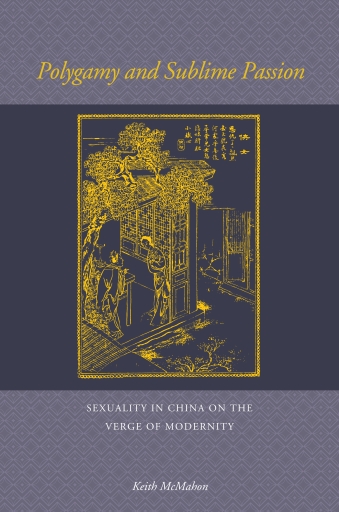
Polygamy and Sublime Passion
Published by University of Hawaii Press
English
226 pages
2009
ISBN 9780824837648
Estimated reading time: 4 h 9 min
PDF
Buy at Bookshop Uruguay
🇺🇾
 Association of University Presses - Tienda FILUNI
🇺🇸
Visit store →
Association of University Presses - Tienda FILUNI
🇺🇸
Visit store →
 Bajalibros Argentina
🇦🇷
Visit store →
Bajalibros Argentina
🇦🇷
Visit store →
 Bajalibros Latam
🇺🇸
Visit store →
Bajalibros Latam
🇺🇸
Visit store →
 Catademic
🇺🇸
Visit store →
Catademic
🇺🇸
Visit store →
Available at 13 bookshops
Association of University Presses - Tienda FILUNI
🇺🇸
Visit store →
Bajalibros Argentina
🇦🇷
Visit store →
Bajalibros Latam
🇺🇸
Visit store →
 Catademic
🇺🇸
Visit store →
Catademic
🇺🇸
Visit store →








About this book
For centuries of Chinese history, polygamy and prostitution were closely linked practices that legitimized the "polygynous male," the man with multiple sexual partners. Despite their strict hierarchies, these practices also addressed fundamental antagonisms in sexual relations in serious and constructive ways. Qing fiction abounds in stories of female resistance and superiority. Women—main wives, concubines, and prostitutes—were adept at exerting control and gaining status for themselves, while men indulged in elaborate fantasies about female power. In Polygamy and Sublime Passion, Keith McMahon introduces a new concept, "passive polygamy," to explain the unusual number of Qing stories in which women take charge of a man’s desires, turning him into an instrument of female will. To this he adds a story that haunted the institutions of polygamy and prostitution: the tale of "sublime passion," in which the main characters are a "remarkable" woman and her male lover.
Throughout the book McMahon examines how polygamy, prostitution, and the story of sublime passion encountered the first stages of paradigmatic change in the nineteenth century, decades before the legal abolition of polygamy. By the end of the Qing dynasty in 1911, love stories were celebrating the exploits of street-smart prostitutes who fleeced gullible patrons in the bustling city of Shanghai. What do these characters have in common with their early counterparts as men and women became inhabitants of a new city in an era flooded with ideas from radically foreign sources—all of this taking place in a time of economic and cultural dislocation? McMahon reads late Qing love stories in a historically symbolic way, taking them as part of a larger fantasy of Chinese civilization undergoing a fundamental crisis. The polygamous marriage and the affairs of the brothel became metaphorical staging grounds for portraying the destiny of China on the verge of modernity. Finally, McMahon speculates on the changes polygamous sexuality underwent after the Qing dynasty ended and whether it exerted a residual influence in later times.
Polygamy and Sublime Passion will undoubtedly engage those interested in Chinese society, culture, literature, and gender studies as well as comparativists seeking to understand the diverse responses to modernization around the world.
Availability
Polygamy and Sublime Passion is available as PDF at 13 online bookshops. Bookshops carrying it include Association of University Presses - Tienda FILUNI, Bajalibros Argentina, Bajalibros Latam.
Genres
- Language
- English
Share
Frequently asked questions
- In what formats is Polygamy and Sublime Passion available?
- Polygamy and Sublime Passion is available as PDF at 13 online bookshops.
- Where can I buy Polygamy and Sublime Passion?
- You can buy Polygamy and Sublime Passion at Association of University Presses - Tienda FILUNI, Bajalibros Argentina, Bajalibros Latam. Compare every option in the list on this page.
- How long does it take to read Polygamy and Sublime Passion?
- At an average reading pace, Polygamy and Sublime Passion takes about 4 h 9 min to read (226 pages).
Ratings & reviews
No ratings yet. Be the first to review this book.
Sign in to rate and review this book.