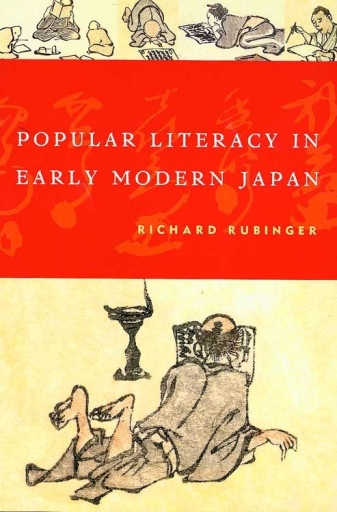
Popular Literacy in Early Modern Japan
Published by University of Hawaii Press
English
257 pages
2007
ISBN 9780824863975
Estimated reading time: 4 h 43 min
PDF
Buy at Ebooks Agustin
🇪🇸
 Association of University Presses - Tienda FILUNI
🇺🇸
Visit store →
Association of University Presses - Tienda FILUNI
🇺🇸
Visit store →
 Bajalibros Argentina
🇦🇷
Visit store →
Bajalibros Argentina
🇦🇷
Visit store →
 Bajalibros Latam
🇺🇸
Visit store →
Bajalibros Latam
🇺🇸
Visit store →
 Bookshop Uruguay
🇺🇾
Visit store →
Bookshop Uruguay
🇺🇾
Visit store →
 Catademic
🇺🇸
Visit store →
Catademic
🇺🇸
Visit store →
Available at 13 bookshops
Association of University Presses - Tienda FILUNI
🇺🇸
Visit store →
Bajalibros Argentina
🇦🇷
Visit store →
Bajalibros Latam
🇺🇸
Visit store →
Bookshop Uruguay
🇺🇾
Visit store →
Catademic
🇺🇸
Visit store →








About this book
The focus of Richard Rubinger’s study of Japanese literacy is the least-studied (yet overwhelming majority) of the premodern population: the rural farming class. In this book-length historical exploration of the topic, the first in any language, Rubinger dispels the misconception that there are few materials available for the study of popular literacy in Japan. He analyzes a rich variety of untapped sources from the sixteenth century onward, drawing for the first time on material that allows him to measure literacy: signatures on apostasy oaths, diaries, agricultural manuals, home encyclopedias, rural poetry-contest entries, village election ballots, literacy surveys, and family account books.
The book begins by tracing the origins of popular literacy up to the Tokugawa period and goes on to discuss the pivotal roles of village headmen during the early sixteenth century, a group extraordinarily skilled in administrative literacy using the Sino-Japanese hybrid language favored by their warrior overlords. In time literacy began to spread beyond the leadership class to household heads, particularly those in towns and farming communities involved in commerce, and eventually to women, employees, and servants. Rubinger identifies substantial and enduring differences in the ability to read and write between commoners in the cities and those in the country until the eighteenth century, when the vigorous popular culture of Kyoto, Osaka, and Edo (Tokyo) attracted village leaders and caused them to extend their capabilities. Later chapters focus on the nineteenth-century expansion of literacy to wider constituencies of farmers and townspeople. Using direct measures of literacy attainment such as village surveys, election ballots, diaries, and letters, Rubinger demonstrates the spread of basic reading and writing skills into virually every corner of Japanese society. The book ends by examining data on illiteracy generated from conscription examinations given by the Japanese army during the Meiji period, bringing the discussion into the twentieth century. Rubinger’s analysis of this information suggests that geographical factors and local traditions of learning and culture may have been more important than school attendance in explaining why illiteracy continued to persist in some areas.
Availability
Popular Literacy in Early Modern Japan is available as PDF at 13 online bookshops. Bookshops carrying it include Association of University Presses - Tienda FILUNI, Bajalibros Argentina, Bajalibros Latam.
- Language
- English
Share
Frequently asked questions
- In what formats is Popular Literacy in Early Modern Japan available?
- Popular Literacy in Early Modern Japan is available as PDF at 13 online bookshops.
- Where can I buy Popular Literacy in Early Modern Japan?
- You can buy Popular Literacy in Early Modern Japan at Association of University Presses - Tienda FILUNI, Bajalibros Argentina, Bajalibros Latam. Compare every option in the list on this page.
- How long does it take to read Popular Literacy in Early Modern Japan?
- At an average reading pace, Popular Literacy in Early Modern Japan takes about 4 h 43 min to read (257 pages).
Ratings & reviews
No ratings yet. Be the first to review this book.
Sign in to rate and review this book.