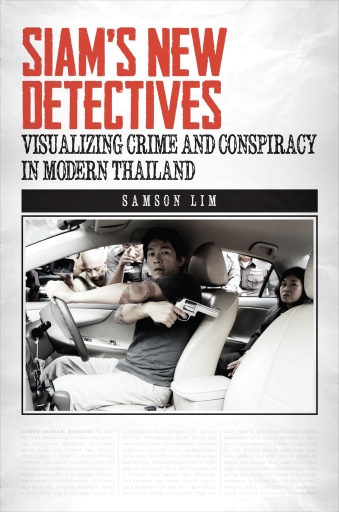
Siam's New Detectives
By Lim, Samson
Published by University of Hawaii Press
English
233 pages
2016
ISBN 9780824855284
PDF
Buy at Catademic
🇺🇸
Catademic
🇺🇸
Visit store →
Bajalibros Latam
🇺🇸
Visit store →
Association of University Presses - Tienda FILUNI
🇺🇸
Visit store →

Ebooks Librería Antártica
🇨🇱
Visit store →
Ebooks Agustin
🇪🇸
Visit store →
Bajalibros Argentina
🇦🇷
Visit store →

Sanborns Ebooks
🇲🇽
Visit store →
ebooks Libreria del GAM
🇨🇱
Visit store →
Bookshop Uruguay
🇺🇾
Visit store →

ebookskitapenas
🇬🇹
Visit store →
Ebooks Yenny - El Ateneo
🇦🇷
Visit store →
Crisol Ebooks
🇵🇪
Visit store →
Available at 12 bookshops
Catademic
🇺🇸
Visit store →
Association of University Presses - Tienda FILUNI
🇺🇸
Visit store →
Ebooks Librería Antártica
🇨🇱
Visit store →
Ebooks Agustin
🇪🇸
Visit store →
Sanborns Ebooks
🇲🇽
Visit store →
ebooks Libreria del GAM
🇨🇱
Visit store →
ebookskitapenas
🇬🇹
Visit store →
Ebooks Yenny - El Ateneo
🇦🇷
Visit store →
Crisol Ebooks
🇵🇪
Visit store →
About this book
<p>Visual evidence is the sine qua non of the modern criminal process—from photographs and video to fingerprints and maps. <i>Siam's New Detectives</i> offers an analytical history of these visual tools as employed by the Thai police when investigating crime. Covering the period between the late nineteenth century and the end of the Cold War, the book provides both an extended overview of the development and evolution of modern police practices in Thailand, and a window into the role of the Thai police within a larger cultural system of knowledge production about crime, violence, and history.<br><br><br>Based on a diverse set of primary sources—police reports, detective training manuals, trial records, newspaper stories, memoirs, archival documents, and hard-to-find crime fiction—the book makes two related arguments. First, the factuality of the visual evidence used in the criminal justice system stems as much from formal conventions—proper lighting in a crime scene photo, standardized markings on maps—as from the reality of what is being represented. Second, some images, once created, function as tools, helping the police produce truths about the criminal past. This generative power makes images such as crime scene maps useful as investigative aids but also means that scholars cannot analyze them simply in terms of mimetic accuracy or interpret them in isolation for deeper meaning. Understanding how modern legal systems operate requires an examination of the visual culture of the law, particularly the aesthetic rules that govern the generation and use of documentary evidence. <br><br><br>By examining modern policing in terms of visual culture, <i>Siam's New Detectives</i> makes important methodological contributions. The book shows how a historical analysis of form can supplement the way many scholars have traditionally approached visual sources, as symbols requiring a close reading. By acknowledging the productive nature of images in addition to their symbolic functions, the book makes clear that policing is fundamentally an interactive, creative endeavor as much as a disciplinary one.</p>
Genres
- Language
- English
Share
You might also like
Always Again
In Court and Kampong
Clifford, Hugh Charles, Sir
The home-life of Borneo head-hunters : Its festivals and folk-lore
Furness, William Henry
Spirits of the Place
Holt, John Clifford
After the New Order
Kusno, Abidin
Sustainable Communities, Sustainable Development
James, Paul, Nadarajah, Yaso, Haive, Karen, Stead, Victoria C.