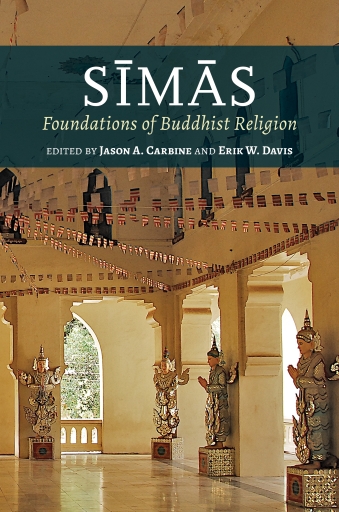
Simas
Published by University of Hawaii Press
English
2022
ISBN 9780824891145
eBook
Buy at Catademic
🇺🇸
Catademic
🇺🇸
Visit store →
Bajalibros Latam
🇺🇸
Visit store →
Association of University Presses - Tienda FILUNI
🇺🇸
Visit store →

Ebooks Librería Antártica
🇨🇱
Visit store →
Ebooks Agustin
🇪🇸
Visit store →
Bajalibros Argentina
🇦🇷
Visit store →

Sanborns Ebooks
🇲🇽
Visit store →
ebooks Libreria del GAM
🇨🇱
Visit store →
Bookshop Uruguay
🇺🇾
Visit store →

ebookskitapenas
🇬🇹
Visit store →
Ebooks Yenny - El Ateneo
🇦🇷
Visit store →
Crisol Ebooks
🇵🇪
Visit store →
Available at 12 bookshops
Catademic
🇺🇸
Visit store →
Association of University Presses - Tienda FILUNI
🇺🇸
Visit store →
Ebooks Librería Antártica
🇨🇱
Visit store →
Ebooks Agustin
🇪🇸
Visit store →
Sanborns Ebooks
🇲🇽
Visit store →
ebooks Libreria del GAM
🇨🇱
Visit store →
ebookskitapenas
🇬🇹
Visit store →
Ebooks Yenny - El Ateneo
🇦🇷
Visit store →
Crisol Ebooks
🇵🇪
Visit store →
About this book
<p>Human-fashioned boundaries transform spaces by introducing dualisms, bifurcations, creative symbioses, contradictions, and notions of inclusion and exclusion. The Buddhist boundaries considered in this book, <i>sīmā</i>s—a term found in South and Southeast Asian languages and later translated into East Asian languages—come in various shapes and sizes and can be established on land or in bodies of water. Sometimes, the word <i>sīmā </i>refers not only to a ceremonial boundary, but the space enclosed by the boundary, or even the markers (when they are used) that denote the boundary.<br><br><i>Sīmā</i>s were established early on as places where core legal acts<i> (kamma)</i>, including ordination, of the monastic community <i>(sangha)</i> took place according to their disciplinary codes. <i>Sīmā</i>s continue to be deployed in the creation of monastic lineages and to function in diverse ways for monastics and non-monastics alike. As foundations of Buddhist religion, <i>sīmā</i>s are used to sustain, revitalize, or reform Buddhist practices, notions of identity, and conceptualizations of time and history. In the last few decades, scholarly awareness of and expertise on <i>sīmā</i>s has developed to a point where a volume like this one, which examines <i>sīmā</i>s across numerous cultural contexts and scholarly fields of inquiry, is both possible and needed. <i>Sīmā</i> traditions expressed in the Theravāda cultures of Myanmar, Thailand, Laos, Cambodia, Bangladesh, and Sri Lanka constitute the dominant focus of the work; a chapter on East Asia raises questions of historical transmission beyond these areas. Throughout contributors engage texts; history; archaeology; politics; art; ecology; economics; epigraphy; legal categories; mythic narratives; understandings of the cosmos; and conceptualizations of compassion, authority, and violence.<br><br>Examining <i>sīmā</i>s through multiple perspectives allows us to look at them in their contextual specificity, in a way that allows for discernment of variation as well as consistency. <i>Sīmā </i>spaces can be both simple and extremely intricate, and this book helps show why and how that is the case.</p>
Genres
- Language
- English
Share
You might also like
Forging Islamic Power and Place
Bradley, Francis R.
Chasing Traces
Emergentes Asiáticos en América Latina.El Sudeste de Asia, China e India
Rubiolo M. Florencia, Baroni Paola A. (comps.)
The home-life of Borneo head-hunters : Its festivals and folk-lore
Furness, William Henry
Natural Potency and Political Power
Singh, Sarinda
Clash of Spirits
Aguilar, Filomeno V.