
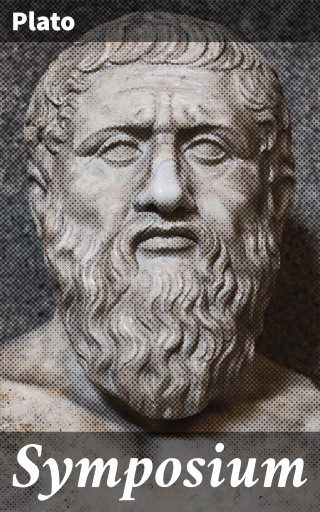
Symposium
By Plato
Published by Good Press
Available at 14 bookshops
 Bajalibros Latam
🇺🇸
Visit store →
Bajalibros Latam
🇺🇸
Visit store →
 LORANCHBOOKSTORE
🇺🇸
Visit store →
LORANCHBOOKSTORE
🇺🇸
Visit store →
 Libros Patagonia
🇨🇱
Visit store →
Libros Patagonia
🇨🇱
Visit store →
 Ebooks Librería Carlos Fuentes
🇲🇽
Visit store →
Ebooks Librería Carlos Fuentes
🇲🇽
Visit store →
 Ebooks Librería Antártica
🇨🇱
Visit store →
Ebooks Librería Antártica
🇨🇱
Visit store →
 Ebooks Happy Books
🇨🇴
Visit store →
Ebooks Happy Books
🇨🇴
Visit store →
 ebooks libreria española
🇪🇨
Visit store →
ebooks libreria española
🇪🇨
Visit store →
 Bajalibros Argentina
🇦🇷
Visit store →
Bajalibros Argentina
🇦🇷
Visit store →
 Alpha Books
🇨🇴
Visit store →
Alpha Books
🇨🇴
Visit store →
 Sanborns Ebooks
🇲🇽
Visit store →
Sanborns Ebooks
🇲🇽
Visit store →
 ebooks Libreria del GAM
🇨🇱
Visit store →
ebooks Libreria del GAM
🇨🇱
Visit store →
 Bookshop Uruguay
🇺🇾
Visit store →
Bookshop Uruguay
🇺🇾
Visit store →
 Ebooks Yenny - El Ateneo
🇦🇷
Visit store →
Ebooks Yenny - El Ateneo
🇦🇷
Visit store →
 Crisol Ebooks
🇵🇪
Visit store →
Crisol Ebooks
🇵🇪
Visit store →
About this book
Genres
- Language
- English
You might also like

Schriften zu Psychologie und Ästhetik
The Bucket List Collection: Masterpieces You Should Read Before You Die
Melville, Herman, Shakespeare, William, Wilde, Oscar, Twain, Mark, Storm, Theodor, Balzac, Honoré de, Lewis, C. S., Zola, Émile, Burnett, Frances Hodgson, Grahame, Kenneth, Stevenson, Robert Louis, Goethe, Johann Wolfgang von, Brontë, Emily, Carroll, Lewis, Flaubert, Gustave, Apuleius, Boccaccio, Giovanni, Thoreau, Henry David, Fitzgerald, F. Scott, Proust, Marcel, London, Jack, Joyce, James, Stoker, Bram, Gógol, Nikolai, Hardy, Thomas, de Cervantes, Miguel, Chopin, Kate, Eliot, George, Chesterton, G. K., Valera, Juan, Dostoyevsky, Fyodor, Wharton, Edith, Shaw, George Bernard, Howells, William Dean, Milton, John, Gibran, Kahlil, Confucius, Tolstoy, Leo, Chekhov, Anton, Laozi, Der Ling, Princess, Yeats, W. B., Xueqin, Cao, Dante, Scott, Walter, Sir, Shelley, P. B., Válmíki, Chatterjee, Bankim Chandra, Montgomery, M., Poe, Edgar Allan, Stendhal, Verne, Jules, Dickens, Charles, Sterne, Laurence, Doyle, Arthur Conan, Swift, Jonathan, Homer, Kipling, Rudyard, Conrad, Joseph, Shelley, Mary, Brontë, Charlotte, Austen, Jane, Dumas, Alexandre, Hugo, Victor, Leroux, Gastón, Nietzsche, Friedrich, James, Henry, Cooper, James Fenimore, Defoe, Daniel, Barrie, J. M., Hawthorne, Nathaniel, Lawrence, D. H., Wells, H. G., Tagore, Rabindranath, Baudelaire, Charles, Irving, Washington, Thackeray, William Makepeace, Stowe, Harriet Beecher, Baum, L. Frank, Alcott, Louisa May, Pérez Galdós, Benito, Lovecraft, H. P., Voltaire, Ibsen, Henrik, Whitman, Walt, Tzu, Sun, Hesse, Herman, Nitobe, Inazo, de la Barca, Pedro Calderón, Wallace, Lewis, Cather, Willa, MacDonald, George, Von Arnim, Elizabeth, Machiavelli, Niccolò, Aurelius, Marcus, Plato, Brontë, Anne, Keats, John, Forster, E. M., Gilman, Charlotte Perkins, Kâlidasa, Radcliffe, Ann Ward, Okakura, Kakuzo, Eliot, T. S., Douglass, Frederick, Turgenev, Ivan, Fielding, Henry, Natsume, Sōseki, Grossmith, George Weedon, Collins, Willkie

Wittgenstein: la estética y el problema de la expresión
López Jaimes, Julio César

La génie Européen
Ségur, Nicolas
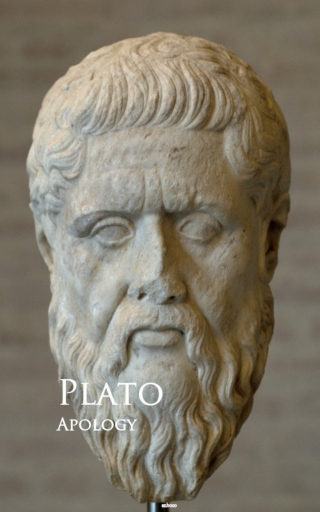
Apology
Plato
The Complete Plato
Plato