
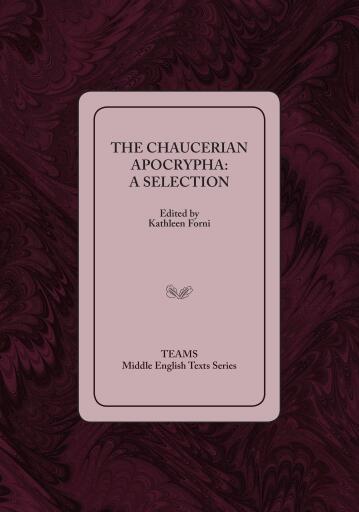
The Chaucerian Apocrypha
Published by Medieval Institute Publications
Available at 14 bookshops
 Alpha Books
🇨🇴
Visit store →
Alpha Books
🇨🇴
Visit store →
 Bajalibros Argentina
🇦🇷
Visit store →
Bajalibros Argentina
🇦🇷
Visit store →
 Bajalibros Latam
🇺🇸
Visit store →
Bajalibros Latam
🇺🇸
Visit store →
 Bookshop Uruguay
🇺🇾
Visit store →
Bookshop Uruguay
🇺🇾
Visit store →
 Catademic
🇺🇸
Visit store →
Catademic
🇺🇸
Visit store →









About this book
Availability
The Chaucerian Apocrypha is available as PDF at 14 online bookshops. Bookshops carrying it include Alpha Books, Bajalibros Argentina, Bajalibros Latam.
Genres
- Language
- English
Frequently asked questions
- In what formats is The Chaucerian Apocrypha available?
- The Chaucerian Apocrypha is available as PDF at 14 online bookshops.
- Where can I buy The Chaucerian Apocrypha?
- You can buy The Chaucerian Apocrypha at Alpha Books, Bajalibros Argentina, Bajalibros Latam. Compare every option in the list on this page.
- How long does it take to read The Chaucerian Apocrypha?
- At an average reading pace, The Chaucerian Apocrypha takes about 3 h 24 min to read (185 pages).
Ratings & reviews
No ratings yet. Be the first to review this book.
Sign in to rate and review this book.
You might also like
Die Nibelungen
Pröhle, Heinrich
La invención social de la Iglesia en la Edad Media
Iogna-Prat, Dominique

Dryden's Palamon and Arcite
Dryden, John, Chaucer, Geoffrey
The Owl and the Nightingale
Armitage, Simon
The Dialogue of Solomon and Marcolf
Nobility and Annihilation in Marguerite Porete's Mirror of Simple Souls
Robinson, Joanne Maguire