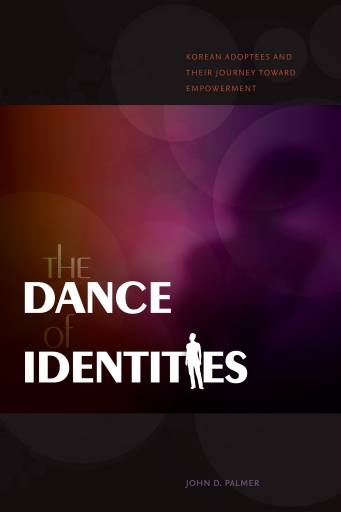
The Dance of Identities
Published by University of Hawaii Press
English
217 pages
2010
ISBN 9780824860875
Estimated reading time: 3 h 59 min
PDF
Buy at Crisol Ebooks
🇵🇪
 Association of University Presses - Tienda FILUNI
🇺🇸
Visit store →
Association of University Presses - Tienda FILUNI
🇺🇸
Visit store →
 Bajalibros Argentina
🇦🇷
Visit store →
Bajalibros Argentina
🇦🇷
Visit store →
 Bajalibros Latam
🇺🇸
Visit store →
Bajalibros Latam
🇺🇸
Visit store →
 Bookshop Uruguay
🇺🇾
Visit store →
Bookshop Uruguay
🇺🇾
Visit store →
 Catademic
🇺🇸
Visit store →
Catademic
🇺🇸
Visit store →
Available at 13 bookshops
Association of University Presses - Tienda FILUNI
🇺🇸
Visit store →
Bajalibros Argentina
🇦🇷
Visit store →
Bajalibros Latam
🇺🇸
Visit store →
Bookshop Uruguay
🇺🇾
Visit store →
Catademic
🇺🇸
Visit store →








About this book
Korean adoptees have a difficult time relating to any of the racial identity models because they are people of color who often grew up in white homes and communities. Biracial and nonadopted people of color typically have at least one parent whom they can racially identify with, which may also allow them access to certain racialized groups. When Korean adoptees attempt to immerse into the Korean community, they feel uncomfortable and unwelcome because they are unfamiliar with Korean customs and language. The Dance of Identities looks at how Korean adoptees "dance," or engage, with their various identities (white, Korean, Korean adoptee, and those in between and beyond) and begin the journey toward self-discovery and empowerment.
Throughout the author draws closely on his own experiences and those of thirty-eight other Korean adoptees, mainly from the U.S. Chapters are organized according to major themes that emerged from interviews with adoptees. "Wanting to be like White" examines assimilation into a White middle-class identity during childhood. Although their White identity may be challenged at times, for the most part adoptees feel accepted as "honorary" Whites among their families and friends. "Opening Pandora’s Box" discusses the shattering of adoptees’ early views on race and racism and the problems of being raised colorblind in a race-conscious society. "Engaging and Reflecting" is filled with adoptee voices as they discover their racial and transracial identities as young adults. During this stage many engage in activities that they believe make more culturally Korean, such as joining Korean churches and Korean student associations in college. "Questioning What I Have Done" delves into the issues that arise when Korean adoptees explore their multiple identities and the possible effects on relationships with parents and spouses. In "Empowering Identities" the author explores how adoptees are able to take control of their racial and transracial identities by reaching out to parents, prospective parents, and adoption agencies and by educating Korean and Korean Americans about their lives. The final chapter, "Linking the Dance of Identities Theory to Life Experiences," reiterates for adoptees, parents, adoption agencies, and social justice activists and educators the need for identity journeys and the empowered identities that can result.
The Dance of Identities is an honest look at the complex nature of race and how we can begin to address race and racism from a fresh perspective. It will be well received by not only members of the Korean adoption community and transracial parents, but also Asian American scholars, educators, and social workers.
Availability
The Dance of Identities is available as PDF at 13 online bookshops. Bookshops carrying it include Association of University Presses - Tienda FILUNI, Bajalibros Argentina, Bajalibros Latam.
- Language
- English
Share
Frequently asked questions
- In what formats is The Dance of Identities available?
- The Dance of Identities is available as PDF at 13 online bookshops.
- Where can I buy The Dance of Identities?
- You can buy The Dance of Identities at Association of University Presses - Tienda FILUNI, Bajalibros Argentina, Bajalibros Latam. Compare every option in the list on this page.
- How long does it take to read The Dance of Identities?
- At an average reading pace, The Dance of Identities takes about 3 h 59 min to read (217 pages).
Ratings & reviews
No ratings yet. Be the first to review this book.
Sign in to rate and review this book.