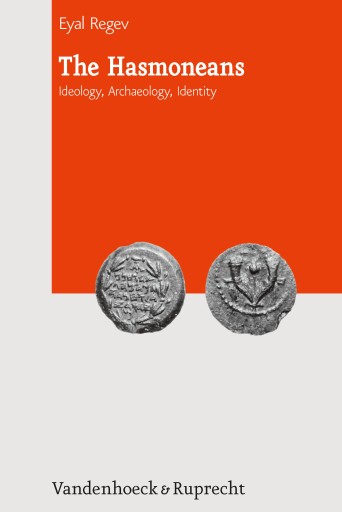
The Hasmoneans
By Regev, Eyal
Published by Vandenhoeck & Ruprecht
English
342 pages
2013
ISBN 9783647550435
PDF
Buy at Bajalibros Latam
🇺🇸
 Bajalibros Latam
🇺🇸
Visit store →
Bajalibros Latam
🇺🇸
Visit store →
 LORANCHBOOKSTORE
🇺🇸
Visit store →
LORANCHBOOKSTORE
🇺🇸
Visit store →
 Libros Patagonia
🇨🇱
Visit store →
Libros Patagonia
🇨🇱
Visit store →
 Ebooks Librería Carlos Fuentes
🇲🇽
Visit store →
Ebooks Librería Carlos Fuentes
🇲🇽
Visit store →
 Ebooks Librería Antártica
🇨🇱
Visit store →
Ebooks Librería Antártica
🇨🇱
Visit store →
 Ebooks Happy Books
🇨🇴
Visit store →
Ebooks Happy Books
🇨🇴
Visit store →
 ebooks libreria española
🇪🇨
Visit store →
ebooks libreria española
🇪🇨
Visit store →
 Bajalibros Argentina
🇦🇷
Visit store →
Bajalibros Argentina
🇦🇷
Visit store →
 Alpha Books
🇨🇴
Visit store →
Alpha Books
🇨🇴
Visit store →
 Sanborns Ebooks
🇲🇽
Visit store →
Sanborns Ebooks
🇲🇽
Visit store →
 ebooks Libreria del GAM
🇨🇱
Visit store →
ebooks Libreria del GAM
🇨🇱
Visit store →
 Bookshop Uruguay
🇺🇾
Visit store →
Bookshop Uruguay
🇺🇾
Visit store →
 Ebooks Yenny - El Ateneo
🇦🇷
Visit store →
Ebooks Yenny - El Ateneo
🇦🇷
Visit store →
 Crisol Ebooks
🇵🇪
Visit store →
Crisol Ebooks
🇵🇪
Visit store →
Available at 14 bookshops
Bajalibros Latam
🇺🇸
Visit store →
LORANCHBOOKSTORE
🇺🇸
Visit store →
Libros Patagonia
🇨🇱
Visit store →
Ebooks Librería Carlos Fuentes
🇲🇽
Visit store →
Ebooks Librería Antártica
🇨🇱
Visit store →
Ebooks Happy Books
🇨🇴
Visit store →
ebooks libreria española
🇪🇨
Visit store →
Bajalibros Argentina
🇦🇷
Visit store →
Alpha Books
🇨🇴
Visit store →
Sanborns Ebooks
🇲🇽
Visit store →
ebooks Libreria del GAM
🇨🇱
Visit store →
Bookshop Uruguay
🇺🇾
Visit store →
Ebooks Yenny - El Ateneo
🇦🇷
Visit store →
Crisol Ebooks
🇵🇪
Visit store →
About this book
The first two chapters discuss the religious practices of the Hasmoneans. Chapter 1 explores why the Maccabees regarded Hanukkah as a festival of renewal, specifically of those traditions related to the Temple cult. Chapter 2 examines the manner in which the Hasmoneans used the protection and maintenance of the Jewish Temple to legitimize their rule—and how they worked to place the Temple at the center of the Jewish religion. Chapters 3–5 deal with different perspectives in the Hellenistic world on the role of government and royal ideologies. Specifically, chapter 3 explores both the Hellenistic and Jewish contexts for Hasmonean government and kingship. Regev shows how the Hasmonean dynasty built up its religious (in contrast to political) authority, suggesting that the Hasmonean state was not a conventionally Hellenistic one, but rather a 'national' monarchy, closer to Macedonian in type. Chapter 4 attempts to decipher the meaning of the symbols and epigraphs on Hasmonean coins, and examines how both Hellenistic symbols and Jewish concepts were employed to reinforce the dynasty's authority and introduce Jewish 'national' ideas into the populace. Chapter 5 then undertakes a comparative social-archaeological analysis of the Hasmonean palaces in Jericho in an effort to gain insight into their royal ideology. The author compares the Hasmonean palaces to other Hellenistic palaces – especially the Herodian palaces. Finally, the concluding chapter integrates the previous findings into a new understanding of and appreciation for the Hasmoneans' creation of an innovative Jewish corporal identity, one whose echoes we can still hear today.
- Language
- English
Share