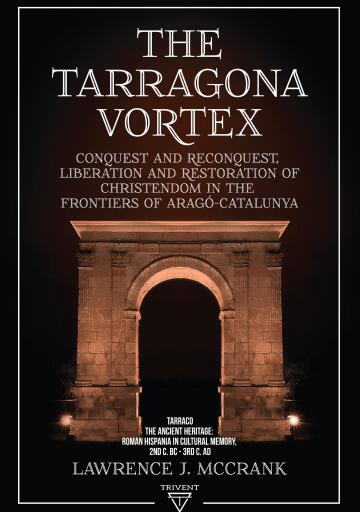
The Tarragona Vortex
Published by Trivent Publishing
English
632 pages
2024
ISBN 9786156405555
Estimated reading time: 11 h 35 min
PDF
Buy at Viubux
🇲🇽
 Bajalibros Argentina
🇦🇷
Visit store →
Bajalibros Argentina
🇦🇷
Visit store →
 Bajalibros Latam
🇺🇸
Visit store →
Bajalibros Latam
🇺🇸
Visit store →
 Bookshop Uruguay
🇺🇾
Visit store →
Bookshop Uruguay
🇺🇾
Visit store →
 Crisol Ebooks
🇵🇪
Visit store →
Crisol Ebooks
🇵🇪
Visit store →
 ebooks Libreria del GAM
🇨🇱
Visit store →
ebooks Libreria del GAM
🇨🇱
Visit store →
Available at 10 bookshops
Bajalibros Argentina
🇦🇷
Visit store →
Bajalibros Latam
🇺🇸
Visit store →
Bookshop Uruguay
🇺🇾
Visit store →
Crisol Ebooks
🇵🇪
Visit store →
ebooks Libreria del GAM
🇨🇱
Visit store →





About this book
Roman Tarraco was the foundation for what came afterward at the same site in Late-Antiquity and the Islamic and Latin Christian periods, but it was an overlay on an Iberian habitation, Cissis, a coastal trading post with the Phocaean Greek partner, Kesse; a Punic counterpart on the other side of the River Tulcis; and above them all a refuge fort on the summit of Mt. Tarrakon. This history traces the amalgamation of these and their Romanization during the Punic Wars I-III, and Rome's conversion of Tarraco into an imperial provincial capital. It was a complex of the main army base, a vast war industry, the government for the Hispania Citerior that became the Tarraconensis, a port, and trade center for the Western Mediterranean. It grew in population to become a major city with sophistication imitating everything Roman, The Hispanic Romans converted this outpost into a walled fortress and magnificent hillside municipality whose city-state encompassed the Camp de Tarragona as its territorium. Its upper tier was built into a terraformed tri-level monumental complex consisting of the temple ceremonial square, a new forum, and a circus with an amphitheater below. The hillside became its intramural residential district, and old Cissis was overbuilt with a lower forum, temple, market, and an entertainment area with a great theater, baths, gardens, and the coastal shelf consisted of a warehouse row, a manufacturing center, fishing villages and an artificial port, and waterworks for the Tulcis and harbor that demonstrated Roman advanced engineering just like the upper city showed off Roman architectural prowess and artistic tastes but also entertainment, i.e., its love of racing and games, bloodlust, and violence, and enjoyment of drama, music, and the brisque. The province would have an extensive road system, a proliferation of provincial towns, wealthy villas, and large-scale farms. The Tarraconensis was reduced in size during the re-organizations of the Empire, and the Roman Ulterior or Baetica became more urbanized as its population became more dense. The powerful northeastern capital followed the history of Rome and decline of the Empire with its interminable wars, barbarian invasions, weakened civic religion, and economic problems leading to the Visigohtic successor state in Late-Antiquity. Roman Tarraco was transformed into Tarracona but its monumental ruins and fabled history remained to be an inspiration to the medieval Restoration movement after the Islamic interlude. These are the subjects of subsequent volumes in this series.
Availability
The Tarragona Vortex is available as PDF at 10 online bookshops. Bookshops carrying it include Bajalibros Argentina, Bajalibros Latam, Bookshop Uruguay.
Genres
- Language
- English
Share
Frequently asked questions
- In what formats is The Tarragona Vortex available?
- The Tarragona Vortex is available as PDF at 10 online bookshops.
- Where can I buy The Tarragona Vortex?
- You can buy The Tarragona Vortex at Bajalibros Argentina, Bajalibros Latam, Bookshop Uruguay. Compare every option in the list on this page.
- How long does it take to read The Tarragona Vortex?
- At an average reading pace, The Tarragona Vortex takes about 11 h 35 min to read (632 pages).
Ratings & reviews
No ratings yet. Be the first to review this book.
Sign in to rate and review this book.