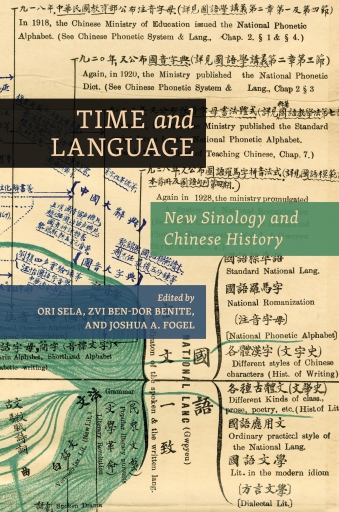
Time and Language
Published by University of Hawaii Press
English
305 pages
2023
ISBN 9780824894580
Estimated reading time: 5 h 36 min
PDF
Buy at Ebooks Yenny - El Ateneo
🇦🇷
 Association of University Presses - Tienda FILUNI
🇺🇸
Visit store →
Association of University Presses - Tienda FILUNI
🇺🇸
Visit store →
 Bajalibros Argentina
🇦🇷
Visit store →
Bajalibros Argentina
🇦🇷
Visit store →
 Bajalibros Latam
🇺🇸
Visit store →
Bajalibros Latam
🇺🇸
Visit store →
 Bookshop Uruguay
🇺🇾
Visit store →
Bookshop Uruguay
🇺🇾
Visit store →
 Catademic
🇺🇸
Visit store →
Catademic
🇺🇸
Visit store →
Available at 13 bookshops
Association of University Presses - Tienda FILUNI
🇺🇸
Visit store →
Bajalibros Argentina
🇦🇷
Visit store →
Bajalibros Latam
🇺🇸
Visit store →
Bookshop Uruguay
🇺🇾
Visit store →
Catademic
🇺🇸
Visit store →








About this book
China’s past and present have been in a continuous dialogue throughout history, one that is heavily influenced by time and language: the temporal orientation and the linguistic apparatus used to express and solidify identity, ideas, and practices. Presenting a host of in-depth case studies, Time and Language: New Sinology and Chinese History argues for and demonstrates the significance of “New Sinology” by restoring the role of language/philology in the research and understanding of how modern China emerged. Reading the modern as a careful and ongoing conversation with the past renders the “new” in a different perspective. This volume is a significant step toward a new historical narrative of China’s modern history, one wherein “ruptures” can exist in tandem with continuities. The collection accentuates the deep connection between language and power—one that spans well across China’s long past—and hence the immense consequences of linguistic-related methodology to the comprehension of power structures and identity in China.
Each of the essays in this volume tackles these issues, the methodological and the thematic, from a different angle but they all share the Sinological prism of analysis and the basic understanding that a much longer timeframe is required to make sense of Chinese modernity. The languages examined are diverse, including modern and classical Chinese, as well as Manchu and Japanese. Taken together they bring a spectrum of linguistic perspectives and hence a spectrum of power relations and identities to the forefront. While the essays focus on late Qing and early twentieth-century eras, they refer often to earlier periods, which are necessary to making real sense of later eras. The methodological and the thematic do not only converge, but also generate a plea for fostering and expanding this approach in current and future studies.
Availability
Time and Language is available as PDF at 13 online bookshops. Bookshops carrying it include Association of University Presses - Tienda FILUNI, Bajalibros Argentina, Bajalibros Latam.
- Language
- English
Share
Frequently asked questions
- In what formats is Time and Language available?
- Time and Language is available as PDF at 13 online bookshops.
- Where can I buy Time and Language?
- You can buy Time and Language at Association of University Presses - Tienda FILUNI, Bajalibros Argentina, Bajalibros Latam. Compare every option in the list on this page.
- How long does it take to read Time and Language?
- At an average reading pace, Time and Language takes about 5 h 36 min to read (305 pages).
Ratings & reviews
No ratings yet. Be the first to review this book.
Sign in to rate and review this book.