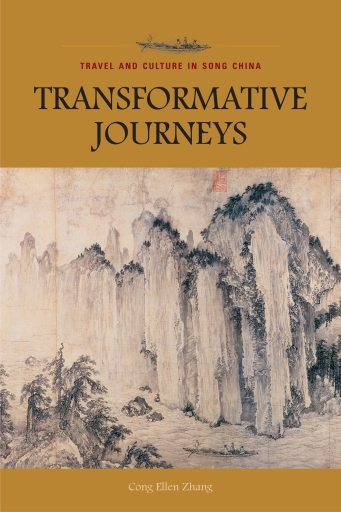
Transformative Journeys
Published by University of Hawaii Press
English
319 pages
2010
ISBN 9780824860684
Estimated reading time: 5 h 51 min
PDF
Buy at ebooks Libreria del GAM
🇨🇱
 Association of University Presses - Tienda FILUNI
🇺🇸
Visit store →
Association of University Presses - Tienda FILUNI
🇺🇸
Visit store →
 Bajalibros Argentina
🇦🇷
Visit store →
Bajalibros Argentina
🇦🇷
Visit store →
 Bajalibros Latam
🇺🇸
Visit store →
Bajalibros Latam
🇺🇸
Visit store →
 Bookshop Uruguay
🇺🇾
Visit store →
Bookshop Uruguay
🇺🇾
Visit store →
 Catademic
🇺🇸
Visit store →
Catademic
🇺🇸
Visit store →
Available at 13 bookshops
Association of University Presses - Tienda FILUNI
🇺🇸
Visit store →
Bajalibros Argentina
🇦🇷
Visit store →
Bajalibros Latam
🇺🇸
Visit store →
Bookshop Uruguay
🇺🇾
Visit store →
Catademic
🇺🇸
Visit store →








About this book
During the Song (960-1279), all educated Chinese men traveled frequently, journeying long distances to attend school and take civil service examinations. They crisscrossed the country to assume government posts, report back to the capital, and return home between assignments and to attend to family matters. Based on a wide array of texts, Transformative Journeys analyzes the impact of travel on this group of elite men and the places they visited.
In the first part of the book, Cong Ellen Zhang considers the practical aspects of travel during the Song in the context of state mobilization of and assistance to government travelers, including the infrastructure of waterways and highways, the bureaucratic procedures entailed in official travel, and the means of transport and types of lodging. The second part of the book focuses on elite activities on the road, especially the elaborate farewell banquets, welcoming ceremonies, and visits to famous places. Zhang argues convincingly that abundant travel experience became integral to Song elite identity and status, greatly strengthening the social and cultural coherence of the practitioners. In promoting their experience of traveling across a large empire, Song elite men firmly established their position as the country’s political, social, and cultural leaders. The literary compositions and physical traces they left behind also formed an overlapping web of collective memories, continually enhancing local pride and defining the place of various localities in the cultural geography of the country.
Transformative Journeys sheds new light on the nature of Chinese literati, their dominance of culture and society, and China’s social and cultural integration. Those interested in premodern China and travel literature will find a wealth of material previously unavailable to Western readers.
Availability
Transformative Journeys is available as PDF at 13 online bookshops. Bookshops carrying it include Association of University Presses - Tienda FILUNI, Bajalibros Argentina, Bajalibros Latam.
Genres
- Language
- English
Share
Frequently asked questions
- In what formats is Transformative Journeys available?
- Transformative Journeys is available as PDF at 13 online bookshops.
- Where can I buy Transformative Journeys?
- You can buy Transformative Journeys at Association of University Presses - Tienda FILUNI, Bajalibros Argentina, Bajalibros Latam. Compare every option in the list on this page.
- How long does it take to read Transformative Journeys?
- At an average reading pace, Transformative Journeys takes about 5 h 51 min to read (319 pages).
Ratings & reviews
No ratings yet. Be the first to review this book.
Sign in to rate and review this book.