
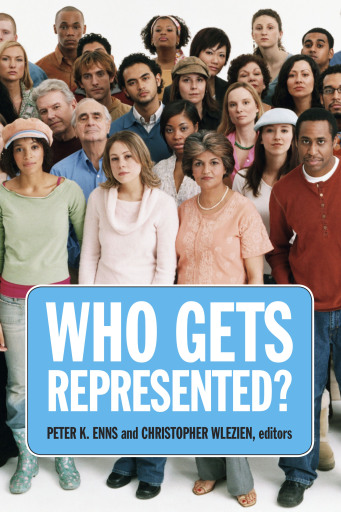
Who Gets Represented?
Published by Russell Sage Foundation
English
2011
ISBN 9781610447225
eBook
Buy at Association of University Presses - Tienda FILUNI
🇺🇸
 Catademic
🇺🇸
Visit store →
Catademic
🇺🇸
Visit store →
 Bajalibros Latam
🇺🇸
Visit store →
Bajalibros Latam
🇺🇸
Visit store →
 Association of University Presses - Tienda FILUNI
🇺🇸
Visit store →
Association of University Presses - Tienda FILUNI
🇺🇸
Visit store →
 Ebooks Librería Antártica
🇨🇱
Visit store →
Ebooks Librería Antártica
🇨🇱
Visit store →
 Ebooks Agustin
🇪🇸
Visit store →
Ebooks Agustin
🇪🇸
Visit store →
 Bajalibros Argentina
🇦🇷
Visit store →
Bajalibros Argentina
🇦🇷
Visit store →
 Sanborns Ebooks
🇲🇽
Visit store →
Sanborns Ebooks
🇲🇽
Visit store →
 ebooks Libreria del GAM
🇨🇱
Visit store →
ebooks Libreria del GAM
🇨🇱
Visit store →
 Bookshop Uruguay
🇺🇾
Visit store →
Bookshop Uruguay
🇺🇾
Visit store →
 ebookskitapenas
🇬🇹
Visit store →
ebookskitapenas
🇬🇹
Visit store →
 Ebooks Yenny - El Ateneo
🇦🇷
Visit store →
Ebooks Yenny - El Ateneo
🇦🇷
Visit store →
 Crisol Ebooks
🇵🇪
Visit store →
Crisol Ebooks
🇵🇪
Visit store →
Available at 12 bookshops
Catademic
🇺🇸
Visit store →
Bajalibros Latam
🇺🇸
Visit store →
Association of University Presses - Tienda FILUNI
🇺🇸
Visit store →
Ebooks Librería Antártica
🇨🇱
Visit store →
Ebooks Agustin
🇪🇸
Visit store →
Bajalibros Argentina
🇦🇷
Visit store →
Sanborns Ebooks
🇲🇽
Visit store →
ebooks Libreria del GAM
🇨🇱
Visit store →
Bookshop Uruguay
🇺🇾
Visit store →
ebookskitapenas
🇬🇹
Visit store →
Ebooks Yenny - El Ateneo
🇦🇷
Visit store →
Crisol Ebooks
🇵🇪
Visit store →
About this book
<div>An investigation of policy preferences in the U.S. and how group opinion affects political representation. While it is often assumed that policymakers favor the interests of some citizens at the expense of others, it is not always evident when and how groups' interests differ or what it means when they do. Who Gets Represented? challenges the usual assumption that the preferences of any one group—women, African Americans, or the middle class—are incompatible with the preferences of other groups. The book analyzes differences across income, education, racial, and partisan groups and investigates whether and how differences in group opinion matter with regard to political representation. Part I examines opinions among social and racial groups. Relying on an innovative matching technique, contributors Marisa Abrajano and Keith Poole link respondents in different surveys to show that racial and ethnic groups do not, as previously thought, predictably embrace similar attitudes about social welfare. Katherine Cramer Walsh finds that, although preferences on health care policy and government intervention are often surprisingly similar across class lines, different income groups can maintain the same policy preferences for different reasons. Part II turns to how group interests translate into policy outcomes, with a focus on differences in representation between income groups. James Druckman and Lawrence Jacobs analyze Ronald Reagan's response to private polling data during his presidency and show how different electorally significant groups—Republicans, the wealthy, religious conservatives—wielded disproportionate influence on Reagan's policy positions. Christopher Wlezien and Stuart Soroka show that politicians' responsiveness to the preferences of constituents within different income groups can be surprisingly even-handed. Analyzing data from 1876 to the present, Wesley Hussey and John Zaller focus on the important role of political parties, vis-à-vis constituents' preferences, for legislators' behavior. Who Gets Represented? upends several long-held assumptions, among them the growing conventional wisdom that income plays in American politics and the assumption that certain groups will always—or will never—have common interests. Similarities among group opinions are as significant as differences for understanding political representation. Who Gets Represented? offers important and surprising answers to the question it raises.</div>
Genres
- Language
- English
Share
You might also like

La Nueva Mayoría
Ignacio Walker

Influencias y resistencias: Militares y poder en América Latina
Claudio Agüero, Felipe Fuentes

Década perdida
Antonio Villa, Marco

Mi vida. Memorias I
Lagos, Ricardo

Experiencias y aprendizajes para la reactivación de la integración latinoamericana:
Giacalone, Rita, Wabgou, Maguemati, Szucko, Angélica Saraiva, Loss de Araújo, Flavia, Bustamante, Ana Marleny, Sacristán Rodríguez, Claudia Patricia, El Arabi, Hassane, El Jeffali, Hassane, Toro Guerrero, Luis, de León, María Fátima

Elecciones 2018 en Colombia
Autores varios