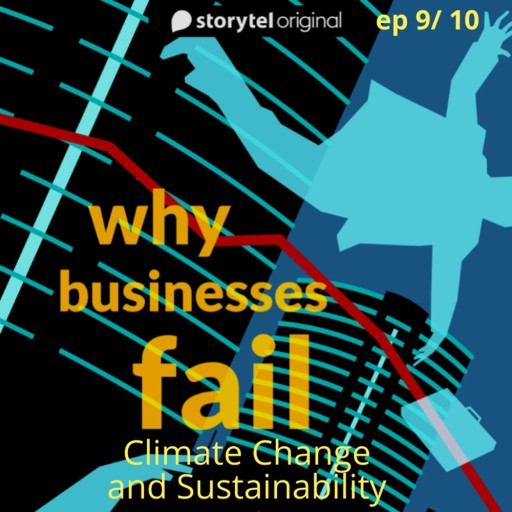
Why Businesses Fail? S01E09
Published by Storytel Original IN
English
2022
ISBN 0408100161902
Audiobook
Buy at Bajalibros Latam
🇺🇸
Bajalibros Latam
🇺🇸
Visit store →
LORANCHBOOKSTORE
🇺🇸
Visit store →
Ebooks Librería Carlos Fuentes
🇲🇽
Visit store →
Viubux
🇲🇽
Visit store →
Ebooks Librería Antártica
🇨🇱
Visit store →
Ebooks Happy Books
🇨🇴
Visit store →
ebooks libreria española
🇪🇨
Visit store →
Bajalibros Argentina
🇦🇷
Visit store →
Alpha Books
🇨🇴
Visit store →

Sanborns Ebooks
🇲🇽
Visit store →
ebooks Libreria del GAM
🇺🇾
Visit store →
Bookshop Uruguay
🇺🇾
Visit store →
Ebooks Yenny - El Ateneo
🇦🇷
Visit store →
Crisol Ebooks
🇨🇴
Visit store →
Available at 14 bookshops
LORANCHBOOKSTORE
🇺🇸
Visit store →
Ebooks Librería Carlos Fuentes
🇲🇽
Visit store →
Viubux
🇲🇽
Visit store →
Ebooks Librería Antártica
🇨🇱
Visit store →
Ebooks Happy Books
🇨🇴
Visit store →
ebooks libreria española
🇪🇨
Visit store →
Alpha Books
🇨🇴
Visit store →
Sanborns Ebooks
🇲🇽
Visit store →
ebooks Libreria del GAM
🇺🇾
Visit store →
Ebooks Yenny - El Ateneo
🇦🇷
Visit store →
Crisol Ebooks
🇨🇴
Visit store →
About this book
Nearly two decades ago, there were two or three global standards for reporting the impact of large companies as they went about doing their business. The focus back then was on reporting something called the "Triple Bottom Line", which alluded to the planet, people, and profit (i.e. impact of business on environment, society as well as its financial impact). Then came the United Nations' MDGs or Millennium Development Goals, which were followed by SDGs or Sustainable Development Goals. In 2021, the Stock market regulator SEBI (Securities and Exchange Board of India) made it mandatory for top 100 listed companies to submit their business responsibility reports.
Failure to operate a business in a sustainable manner poses a bigger risk today than ever before- from drop in share price, to challenges in recruiting high quality talent, and increased burden of compliance.
In other words, once it was optional to report on sustainable practices. Today, has it become a license to do business? Listen to a thought provoking interview of Gagan Singh, who is Director at CEEW (Council for Energy, Environment and Water). Gagan brings a depth of experience in sustainable reporting and how financial markets view sustainability. He shares specific examples of Indian companies- how market capitalization of a small green energy company is higher than that of the largest thermal power producer in India, and how a cement company was able to raise capital at lower cost in international markets by making commitments to reduce emissions.
This is an episode of Why Business Fail where one can learn a lot by simply listening and reflecting.
- Language
- English
Share
You might also like
As novas regras do varejo
Lewis, Robin, Dart, Michael
Actitud E
Gómez, Felipe
Sundar Pichai, Eine Vision für die Zukunft von Google – Der Architekt der digitalen Zukunft
EDITORIAL, MAX
Development and schooling
Laborda Castillo, Leopoldo
Elementos de economía matemática
Casas Hernández, Daniel Ricardo
Prospección de clientes y preparación de la venta
Accerto