
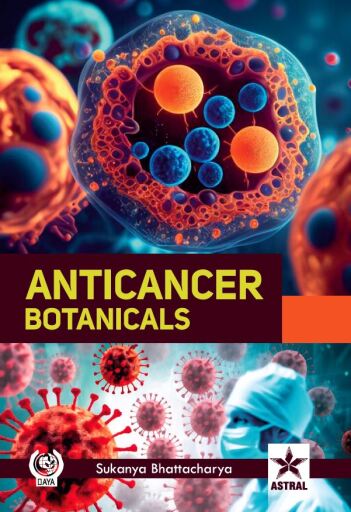
Anticancer Botanicals
Publié par Astral International Pvt Ltd
English
182 pages
2024
ISBN 9789354617829
PDF

À propos de ce livre
The biological action of plant extracts has led epidemiologists to investigate a number of interesting observations in cases of lung, liver, breast and oral cancers. However, the literature pertaining to the role of Trianthema portulacastrum extracts in liver. Cancer is scanty or else in non-existent. The objective of the work incorporated in this book is an outcome of the lacunae in the existing scientific knowledge regarding the possible role of the various fractions of T portulacastrum in hepatocellular carcinogenesis. The chemopreventive efficacy of the plant was tested in a defined experimental carcinogenesis model. The book has been divided into six chapters. The first phase of experimentation was confined to morphometric evaluation of hepatic lesions. In the second phase of experimentation Antioxidant defence enzymes (GSH, GST) and drug metabolizing enzymes (Cyt-P-450 monoxygenase and UDPGT) were assayed in all experimental and control groups to assess the anti-carcinogenic potential of T portulacastrum. Lipid peroxidation cytosolic and microsomal were included in the study. The third phase of experimentation involved histopathological and histochemical evaluation of tissue samples. PAS and reticulin patterns were evaluated. The fourth phase of experimentation was confined to electron microscopic study (TEM) to gain ultrastructural insight into the changes brought about by carcinogen and the ability of the extract to restore the tissue to the normal state. In the fifth phase, genetic parameters such as chromosomal aberrations, G-banding patterns of rats were considered to understand the ability of the extract to combat the genotoxic effect of the carcinogen. The outcome of the incorporated in this book is that T portulacastrum could prevent neoplastic transformation in rat liver by reduction of nodule incidence, reduction of altered foci, alteration of patterns of antioxidant and drug metabolizing enzymes accompanied by diminished lipid peroxidation. Moreover at the histopathological and ultrastructural level the plant could maintain nearly normal tissue architecture. Further it could prevent the advent of neoplasia by limiting chromosomal aberrations without any toxic manifestation.
Catégories
- Langue
- English
Partager
Vous aimerez aussi
Limnological Study of Tighra Reservoir
Sharma Dushyant Kumar
Traditional and Alternative Medicine: Research and Policy Perspectives/NAM S&T Centre
Le Mai Huong, Manoranjan, Sahu Bahorun, Tuley De DeSilva
Agroforstpraxis in der Schweiz
den Hond-Vaccaro, Christina, Schoop, Johanna, Nilles, Lisa, Jäger, Mareike, Kay, Sonja, Herzog, Felix

Pregúntale a una planta
Viola, Alessandra
Ernährungspraxis Säuglinge, Kinder, Jugendliche
Alexy, Ute, Hilbig, Annett, Lang, Frauke
Stechapfel und Engelstrompete
Berger, Markus