Bangkok Utopia
Par Chua, Lawrence
Publié par University of Hawaii Press
English
292 pages
2021
ISBN 9780824887735
PDF
Buy at Bajalibros Latam
🇺🇸
Catademic
🇺🇸
Visiter la boutique →
UN
University of Hawaiʻi Press
🇺🇸
Visiter la boutique →
Bajalibros Latam
🇺🇸
Visiter la boutique →
Association of University Presses - Tienda FILUNI
🇺🇸
Visiter la boutique →

Ebooks Librería Antártica
🇨🇱
Visiter la boutique →
Ebooks Agustin
🇪🇸
Visiter la boutique →
Bajalibros Argentina
🇦🇷
Visiter la boutique →

Sanborns Ebooks
🇲🇽
Visiter la boutique →
ebooks Libreria del GAM
🇺🇾
Visiter la boutique →
Bookshop Uruguay
🇺🇾
Visiter la boutique →

ebookskitapenas
🇬🇹
Visiter la boutique →
Ebooks Yenny - El Ateneo
🇦🇷
Visiter la boutique →
Crisol Ebooks
🇨🇴
Visiter la boutique →
Disponible dans 13 librairies
Catademic
🇺🇸
Visiter la boutique →

UN
University of Hawaiʻi Press
🇺🇸
Visiter la boutique →
Association of University Presses - Tienda FILUNI
🇺🇸
Visiter la boutique →
Ebooks Librería Antártica
🇨🇱
Visiter la boutique →
Ebooks Agustin
🇪🇸
Visiter la boutique →
Sanborns Ebooks
🇲🇽
Visiter la boutique →
ebooks Libreria del GAM
🇺🇾
Visiter la boutique →
ebookskitapenas
🇬🇹
Visiter la boutique →
Ebooks Yenny - El Ateneo
🇦🇷
Visiter la boutique →
Crisol Ebooks
🇨🇴
Visiter la boutique →
À propos de ce livre
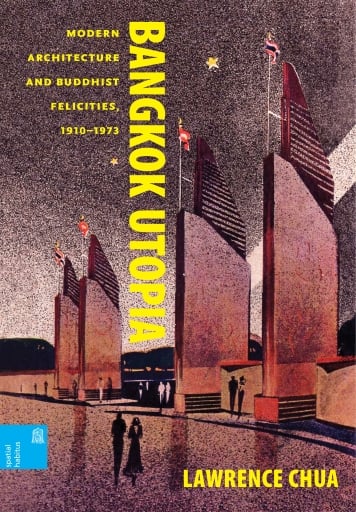
<p>“Utopia” is a word not often associated with the city of Bangkok, which is better known for its disorderly sprawl, overburdened roads, and stifling levels of pollution. Yet as early as 1782, when the city was officially founded on the banks of the Chao Phraya river as the home of the Chakri dynasty, its orientation was based on material and rhetorical considerations that alluded to ideal times and spaces. The construction of palaces, monastic complexes, walls, forts, and canals created a defensive network while symbolically locating the terrestrial realm of the king within the Theravada Buddhist cosmos. Into the twentieth century, pictorial, narrative, and built representations of utopia were critical to Bangkok’s transformation into a national capital and commercial entrepôt. But as older representations of the universe encountered modern architecture, building technologies, and urban planning, new images of an ideal society attempted to reconcile urban-based understandings of Buddhist liberation and felicitous states like nirvana with worldly models of political community like the nation-state.<br><br><i>Bangkok Utopia</i> outlines an alternative genealogy of both utopia and modernism in a part of the world that has often been overlooked by researchers of both. It examines representations of utopia that developed in the city—as expressed in built forms as well as architectural drawings, building manuals, novels, poetry, and ecclesiastical murals—from its first general strike of migrant laborers in 1910 to the overthrow of the military dictatorship in 1973. Using Thai- and Chinese-language archival sources, the book demonstrates how the new spaces of the city became arenas for modern subject formation, utopian desires, political hegemony, and social unrest, arguing that the modern city was a space of antinomy—one able not only to sustain heterogeneous temporalities, but also to support conflicting world views within the urban landscape. <br><br>By underscoring the paradoxical character of utopias and their formal narrative expressions of both hope and hegemony, <i>Bangkok Utopia</i> provides an innovative way to conceptualize the uneven economic development and fractured political conditions of contemporary global cities.</p>
Catégories
- Langue
- English
Partager
Vous aimerez aussi
Die Sebalduskirche in Nürnberg
Hoffmann, Friedrich Wilhelm
Uniformen Des Ersten Weltkriegs
Ygua, Ruben
La arquitectura religiosa de la improvisación
Martínez Pérez, Jorge, Flores García, Laura Gemma
Bangkok Utopia
Chua, Lawrence
Las vidas de San Francisco: Arquitectura, patrimonio y ciudad
Rodrigo Pérez de Arce, Emilio de la Cerda
Cristianismo O Evangelho Dos Homens A Serviço Do Adversário De Deus
Neto, Ismael Cordeiro