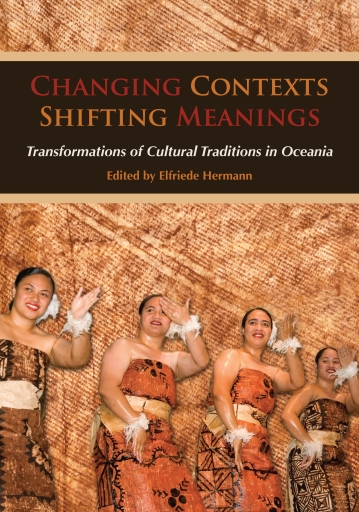
Changing Contexts, Shifting Meanings
Publié par University of Hawaii Press
English
386 pages
2011
ISBN 9780824860141
Temps de lecture estimé : 7 h 5 min
PDF
Buy at Association of University Presses - Tienda FILUNI
🇺🇸
 Bajalibros Argentina
🇦🇷
Visiter la boutique →
Bajalibros Argentina
🇦🇷
Visiter la boutique →
 Bajalibros Latam
🇺🇸
Visiter la boutique →
Bajalibros Latam
🇺🇸
Visiter la boutique →
 Bookshop Uruguay
🇺🇾
Visiter la boutique →
Bookshop Uruguay
🇺🇾
Visiter la boutique →
 Catademic
🇺🇸
Visiter la boutique →
Catademic
🇺🇸
Visiter la boutique →
Disponible dans 13 librairies
 Bajalibros Argentina
🇦🇷
Visiter la boutique →
Bajalibros Latam
🇺🇸
Visiter la boutique →
Bookshop Uruguay
🇺🇾
Visiter la boutique →
Catademic
🇺🇸
Visiter la boutique →
Bajalibros Argentina
🇦🇷
Visiter la boutique →
Bajalibros Latam
🇺🇸
Visiter la boutique →
Bookshop Uruguay
🇺🇾
Visiter la boutique →
Catademic
🇺🇸
Visiter la boutique →








À propos de ce livre
This book sheds new light on processes of cultural transformation at work in Oceania and analyzes them as products of interrelationships between culturally created meanings and specific contexts. In a series of inspiring essays, noted scholars of the region examine these interrelationships for insight into how cultural traditions are shaped on an ongoing basis.
The collection marks a turning point in the debate on the conceptualization of tradition. Following a critique of how tradition has been viewed in terms of dichotomies like authenticity vs. inauthenticity, contributors stake out a novel perspective in which tradition figures as context-bound articulation. This makes it possible to view cultural traditions as resulting from interactions between people—their ideas, actions, and objects—and the ambient contexts. Such interactions are analyzed from the past down to the Oceanian present—with indigenous agency being highlighted. The work focuses first on early encounters, initially between Pacific Islanders themselves and later with the European navigators of the late eighteenth and early nineteenth centuries, to clarify how meaningful actions and contexts interrelated in the past. The present-day memories of Pacific Islanders are examined to ask how such memories represent encounters that occurred long ago and how they influenced the social, political, economic, and religious changes that ensued. Next, contributors address ongoing social and structural interactions that social actors enlist to shape their traditions within the context of globalization and then the repercussions that these intersections and intercultural exchanges of discourses and practices are having on active identity formation as practiced by Pacific Islanders. Finally, two authorities on Oceania—who themselves move in the intersecting space between anthropology and history—discuss the essays and add their own valuable reflections.
With its wealth of illuminating analyses and illustrations, Changing Contexts, Shifting Meanings will appeal to students and scholars in the fields of cultural and social anthropology, history, art history, museology, Pacific studies, gender studies, cultural studies, and literary criticism.
Contributors: Aletta Biersack, Françoise Douaire-Marsaudon, Bronwen Douglas, David Hanlon, Brigitta Hauser-Schäublin, Peter Hempenstall, Margaret Jolly, Miriam Kahn, Martha Kaplan, John D. Kelly, Wolfgang Kempf, Gundolf Krüger, Jacquelyn Lewis-Harris, Lamont Lindstrom, Karen Nero, Ton Otto, Anne Salmond, Serge Tcherkézoff, Paul van der Grijp, Toon van Meijl.
Disponibilité
Changing Contexts, Shifting Meanings est disponible en PDF dans 13 librairies en ligne. Parmi les librairies qui le proposent : Association of University Presses - Tienda FILUNI, Bajalibros Argentina, Bajalibros Latam.
- Langue
- English
Partager
Questions fréquentes
- Dans quels formats Changing Contexts, Shifting Meanings est-il disponible ?
- Changing Contexts, Shifting Meanings est disponible en PDF dans 13 librairies en ligne.
- Où puis-je acheter Changing Contexts, Shifting Meanings ?
- Vous pouvez acheter Changing Contexts, Shifting Meanings sur Association of University Presses - Tienda FILUNI, Bajalibros Argentina, Bajalibros Latam. Comparez toutes les options dans la liste de cette page.
- Combien de temps faut-il pour lire Changing Contexts, Shifting Meanings ?
- À un rythme de lecture moyen, Changing Contexts, Shifting Meanings se lit en environ 7 h 5 min (386 pages).
Notes et avis
Pas encore de note. Soyez le premier à donner votre avis sur ce livre.
Se connecter pour noter ce livre et donner votre avis.