Emplacing East Timor
Par Tsuchiya, Kisho
Publié par University of Hawaii Press
English
2024
ISBN 9780824895006
eBook
Buy at Catademic
🇺🇸
 Catademic
🇺🇸
Visiter la boutique →
Catademic
🇺🇸
Visiter la boutique →
 Bajalibros Latam
🇺🇸
Visiter la boutique →
Bajalibros Latam
🇺🇸
Visiter la boutique →
 Association of University Presses - Tienda FILUNI
🇺🇸
Visiter la boutique →
Association of University Presses - Tienda FILUNI
🇺🇸
Visiter la boutique →
 Ebooks Librería Antártica
🇨🇱
Visiter la boutique →
Ebooks Librería Antártica
🇨🇱
Visiter la boutique →
 Ebooks Agustin
🇪🇸
Visiter la boutique →
Ebooks Agustin
🇪🇸
Visiter la boutique →
 Bajalibros Argentina
🇦🇷
Visiter la boutique →
Bajalibros Argentina
🇦🇷
Visiter la boutique →
 Sanborns Ebooks
🇲🇽
Visiter la boutique →
Sanborns Ebooks
🇲🇽
Visiter la boutique →
 ebooks Libreria del GAM
🇨🇱
Visiter la boutique →
ebooks Libreria del GAM
🇨🇱
Visiter la boutique →
 Bookshop Uruguay
🇺🇾
Visiter la boutique →
Bookshop Uruguay
🇺🇾
Visiter la boutique →
 ebookskitapenas
🇬🇹
Visiter la boutique →
ebookskitapenas
🇬🇹
Visiter la boutique →
 Ebooks Yenny - El Ateneo
🇦🇷
Visiter la boutique →
Ebooks Yenny - El Ateneo
🇦🇷
Visiter la boutique →
 Crisol Ebooks
🇵🇪
Visiter la boutique →
Crisol Ebooks
🇵🇪
Visiter la boutique →
Disponible dans 12 librairies
Catademic
🇺🇸
Visiter la boutique →
Bajalibros Latam
🇺🇸
Visiter la boutique →
Association of University Presses - Tienda FILUNI
🇺🇸
Visiter la boutique →
Ebooks Librería Antártica
🇨🇱
Visiter la boutique →
Ebooks Agustin
🇪🇸
Visiter la boutique →
Bajalibros Argentina
🇦🇷
Visiter la boutique →
Sanborns Ebooks
🇲🇽
Visiter la boutique →
ebooks Libreria del GAM
🇨🇱
Visiter la boutique →
Bookshop Uruguay
🇺🇾
Visiter la boutique →
ebookskitapenas
🇬🇹
Visiter la boutique →
Ebooks Yenny - El Ateneo
🇦🇷
Visiter la boutique →
Crisol Ebooks
🇵🇪
Visiter la boutique →
À propos de ce livre
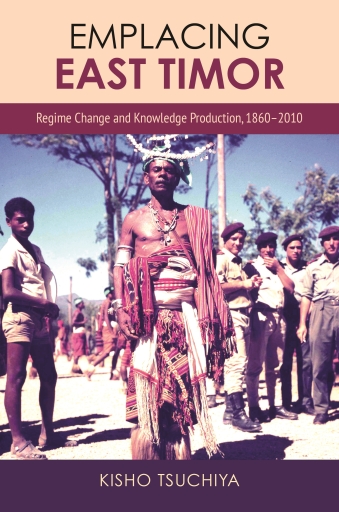
<p><i>Emplacing East Timor </i>explores the relationship between the cycle of regime change and that of knowledge production, offering an alternative framework to periodize the history from 1850s to 2010s. Kisho Tsuchiya shows that the prevailing perceptions of East Timor have been shaped by large-scale wars, postwar consolidation, and the dominance of foreign observers. The transitions that construct what we know about East Timor have followed the rhythm of devastating violence and regime transformations. Playing a role as well are personal, institutional, and geopolitical interests and the creativity of Timorese and foreign observers. Acknowledging this cycle, Tsuchiya interweaves narrative of crucial events and political movements with an analysis of Timor’s connections to global circulations and historical transitions. He traces key persons and communities that shaped the contour of East Timor—from Portuguese colonial officers to anthropologists, Japanese occupiers to Australian activists, and Timorese poets to revolutionaries. Their experiences and imaginations of (East) Timor have been expressed through scholarly works, secret documents, policy statements, ceremonies, revolutionary songs, and museums.<br><br>Using multi-archival historical research, the author introduces sources in several languages and provides missing links, including secret documents in Portuguese archives and the National Archives of Timor-Leste, Japanese wartime sources, and Timorese sources in the Archives of Timorese Resistance. <i>Emplacing East Timor</i> skillfully synthesizes nationalism studies and borderland studies, creating a comprehensive approach to modern East Timorese national imaginings, the historical role of territorial borders, and its postcolonial problems.</p>
- Langue
- English
Partager