Fighting in Paradise
Par Horne, Gerald
Publié par University of Hawaii Press
English
473 pages
2011
ISBN 9780824860219
PDF
Buy at Catademic
🇺🇸
 Catademic
🇺🇸
Visiter la boutique →
UN
University of Hawaiʻi Press
🇺🇸
Visiter la boutique →
Catademic
🇺🇸
Visiter la boutique →
UN
University of Hawaiʻi Press
🇺🇸
Visiter la boutique →
 Bajalibros Latam
🇺🇸
Visiter la boutique →
Bajalibros Latam
🇺🇸
Visiter la boutique →
 Association of University Presses - Tienda FILUNI
🇺🇸
Visiter la boutique →
Association of University Presses - Tienda FILUNI
🇺🇸
Visiter la boutique →
 Ebooks Librería Antártica
🇨🇱
Visiter la boutique →
Ebooks Librería Antártica
🇨🇱
Visiter la boutique →
 Ebooks Agustin
🇪🇸
Visiter la boutique →
Ebooks Agustin
🇪🇸
Visiter la boutique →
 Bajalibros Argentina
🇦🇷
Visiter la boutique →
Bajalibros Argentina
🇦🇷
Visiter la boutique →
 Sanborns Ebooks
🇲🇽
Visiter la boutique →
Sanborns Ebooks
🇲🇽
Visiter la boutique →
 ebooks Libreria del GAM
🇺🇾
Visiter la boutique →
ebooks Libreria del GAM
🇺🇾
Visiter la boutique →
 Bookshop Uruguay
🇺🇾
Visiter la boutique →
Bookshop Uruguay
🇺🇾
Visiter la boutique →
 ebookskitapenas
🇬🇹
Visiter la boutique →
ebookskitapenas
🇬🇹
Visiter la boutique →
 Ebooks Yenny - El Ateneo
🇦🇷
Visiter la boutique →
Ebooks Yenny - El Ateneo
🇦🇷
Visiter la boutique →
 Crisol Ebooks
🇨🇴
Visiter la boutique →
Crisol Ebooks
🇨🇴
Visiter la boutique →
Disponible dans 13 librairies
Catademic
🇺🇸
Visiter la boutique →
UN
University of Hawaiʻi Press
🇺🇸
Visiter la boutique →
Bajalibros Latam
🇺🇸
Visiter la boutique →
Association of University Presses - Tienda FILUNI
🇺🇸
Visiter la boutique →
Ebooks Librería Antártica
🇨🇱
Visiter la boutique →
Ebooks Agustin
🇪🇸
Visiter la boutique →
Bajalibros Argentina
🇦🇷
Visiter la boutique →
Sanborns Ebooks
🇲🇽
Visiter la boutique →
ebooks Libreria del GAM
🇺🇾
Visiter la boutique →
Bookshop Uruguay
🇺🇾
Visiter la boutique →
ebookskitapenas
🇬🇹
Visiter la boutique →
Ebooks Yenny - El Ateneo
🇦🇷
Visiter la boutique →
Crisol Ebooks
🇨🇴
Visiter la boutique →
À propos de ce livre
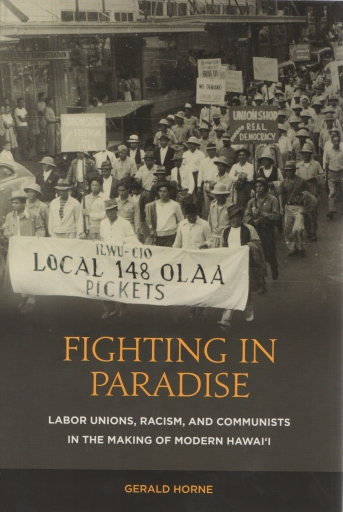
<p>Powerful labor movements played a critical role in shaping modern Hawaii, beginning in the 1930s, when International Longshore and Warehousemen’s Union (ILWU) representatives were dispatched to the islands to organize plantation and dock laborers. They were stunned by the feudal conditions they found in Hawaii, where the majority of workers—Hawaiian, Japanese, Chinese, and Filipino in origin—were routinely subjected to repression and racism at the hands of white bosses.<br><br>The wartime civil liberties crackdown brought union organizing to a halt; but as the war wound down, Hawaii workers’ frustrations boiled over, leading to an explosive success in the forming of unions. During the 1950s, just as the ILWU began a series of successful strikes and organizing drives, the union came under McCarthyite attacks and persecution. In the midst of these allegations, Hawaii’s bid for statehood was being challenged by powerful voices in Washington who claimed that admitting Hawaii to the union would be tantamount to giving the Kremlin two votes in the U.S. Senate, while Jim Crow advocates worried that Hawaii’s representatives would be enthusiastic supporters of pro–civil rights legislation.<br><br>Hawaii’s extensive social welfare system and the continuing power of unions to shape the state politically are a direct result of those troubled times. Based on exhaustive archival research in Hawaii, California, Washington, and elsewhere, Gerald Horne’s gripping story of Hawaii workers’ struggle to unionize reads like a suspense novel as it details for the first time how radicalism and racism helped shape Hawaii in the twentieth century.</p>
Catégories
- Langue
- English
Partager