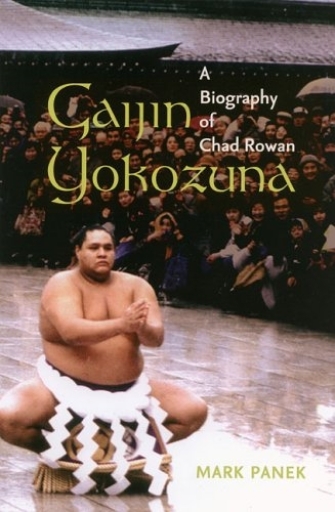
Gaijin Yokozuna
Par Panek, Mark
Publié par University of Hawaii Press
English
320 pages
2006
ISBN 9780824838041
PDF
Buy at Bajalibros Latam
🇺🇸
 Catademic
🇺🇸
Visiter la boutique →
UN
University of Hawaiʻi Press
🇺🇸
Visiter la boutique →
Catademic
🇺🇸
Visiter la boutique →
UN
University of Hawaiʻi Press
🇺🇸
Visiter la boutique →
 Bajalibros Latam
🇺🇸
Visiter la boutique →
Bajalibros Latam
🇺🇸
Visiter la boutique →
 Association of University Presses - Tienda FILUNI
🇺🇸
Visiter la boutique →
Association of University Presses - Tienda FILUNI
🇺🇸
Visiter la boutique →
 Ebooks Librería Antártica
🇨🇱
Visiter la boutique →
Ebooks Librería Antártica
🇨🇱
Visiter la boutique →
 Ebooks Agustin
🇪🇸
Visiter la boutique →
Ebooks Agustin
🇪🇸
Visiter la boutique →
 Bajalibros Argentina
🇦🇷
Visiter la boutique →
Bajalibros Argentina
🇦🇷
Visiter la boutique →
 Sanborns Ebooks
🇲🇽
Visiter la boutique →
Sanborns Ebooks
🇲🇽
Visiter la boutique →
 ebooks Libreria del GAM
🇺🇾
Visiter la boutique →
ebooks Libreria del GAM
🇺🇾
Visiter la boutique →
 Bookshop Uruguay
🇺🇾
Visiter la boutique →
Bookshop Uruguay
🇺🇾
Visiter la boutique →
 ebookskitapenas
🇬🇹
Visiter la boutique →
ebookskitapenas
🇬🇹
Visiter la boutique →
 Ebooks Yenny - El Ateneo
🇦🇷
Visiter la boutique →
Ebooks Yenny - El Ateneo
🇦🇷
Visiter la boutique →
 Crisol Ebooks
🇨🇴
Visiter la boutique →
Crisol Ebooks
🇨🇴
Visiter la boutique →
Disponible dans 13 librairies
Catademic
🇺🇸
Visiter la boutique →
UN
University of Hawaiʻi Press
🇺🇸
Visiter la boutique →
Bajalibros Latam
🇺🇸
Visiter la boutique →
Association of University Presses - Tienda FILUNI
🇺🇸
Visiter la boutique →
Ebooks Librería Antártica
🇨🇱
Visiter la boutique →
Ebooks Agustin
🇪🇸
Visiter la boutique →
Bajalibros Argentina
🇦🇷
Visiter la boutique →
Sanborns Ebooks
🇲🇽
Visiter la boutique →
ebooks Libreria del GAM
🇺🇾
Visiter la boutique →
Bookshop Uruguay
🇺🇾
Visiter la boutique →
ebookskitapenas
🇬🇹
Visiter la boutique →
Ebooks Yenny - El Ateneo
🇦🇷
Visiter la boutique →
Crisol Ebooks
🇨🇴
Visiter la boutique →
À propos de ce livre
<p>At the age of eighteen, Chad Rowan left his home in rural Hawai'i for Tokyo with visions of becoming a star athlete in Japan's national sport, sumo. But upon his arrival he was shocked less by the city crowds and the winter cold than by having to scrub toilets and answer to fifteen-year-olds who had preceded him at the sumo <i>beya.</i> Rowan spoke no Japanese. Of Japanese culture, he knew only what little his father, a former tour bus driver in Hawai'i, had been able to tell him as they drove to the airport. And he had never before set foot in a sumo ring.<br><br>Five years later, against the backdrop of rising U.S.–Japan economic tension, Rowan became the first <i>gaijin</i> (non-Japanese) to advance to sumo's top rank, <i>yokozuna.</i> His historic promotion was more a cultural accomplishment than an athletic one, since <i>yokozuna</i> are expected to embody highly prized Japanese values such as hard work, patience, strength, and <i>hinkaku,</i> a special kind of dignity thought to be available only to Japanese. He was promoted ahead of his two main rivals, the brothers Koji and Masaru Hanada, who had been raised in the sumo <i>beya</i> run by their father, the former sumo great Takanohana I. Perhaps the defining moment of the <i>gaijin'</i>s unique success occurred at the 1998 Nagano Olympics, when Rowan, chosen to personify "Japanese" to one of the largest television audiences in history, performed a sacred sumo ritual at the opening ceremony.<br><br><i>Gaijin Yokozuna</i> chronicles the events leading to that improbable scene at Nagano and beyond, tracing Rowan's life from his Hawai'i upbringing to his 2001 retirement ceremony. Along the way it briefly examines the careers of two Hawai'i-born <i>sumotori</i> who paved the way for Rowan, Jesse Kuhaulua (Takamiyama) and Salevaa Atisanoe (Konishiki). The author shares stories from family members, coaches, friends, fellow sumo competitors, and of course Rowan himself, whom he accompanied on three Japan-wide exhibition tours. The work is further informed by volumes of secondary source material on sumo, Japanese culture, and local Hawai'i culture.</p>
Catégories
- Langue
- English
Partager