Individualism in Early China
Publié par University of Hawaii Press
English
241 pages
2010
ISBN 9780824860677
Temps de lecture estimé : 4 h 25 min
PDF
Buy at Catademic
🇺🇸
 Association of University Presses - Tienda FILUNI
🇺🇸
Visiter la boutique →
Association of University Presses - Tienda FILUNI
🇺🇸
Visiter la boutique →
 Bajalibros Argentina
🇦🇷
Visiter la boutique →
Bajalibros Argentina
🇦🇷
Visiter la boutique →
 Bajalibros Latam
🇺🇸
Visiter la boutique →
Bajalibros Latam
🇺🇸
Visiter la boutique →
 Bookshop Uruguay
🇺🇾
Visiter la boutique →
Bookshop Uruguay
🇺🇾
Visiter la boutique →
Disponible dans 13 librairies
Association of University Presses - Tienda FILUNI
🇺🇸
Visiter la boutique →
Bajalibros Argentina
🇦🇷
Visiter la boutique →
Bajalibros Latam
🇺🇸
Visiter la boutique →
Bookshop Uruguay
🇺🇾
Visiter la boutique →









À propos de ce livre
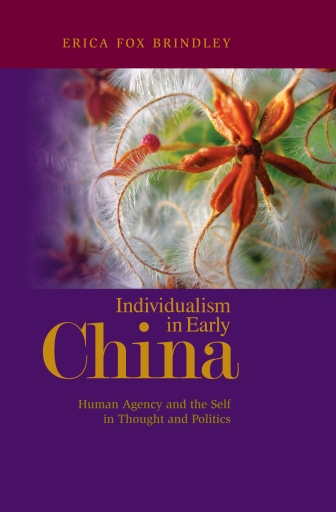
Conventional wisdom has it that the concept of individualism was absent in early China. In this uncommon study of the self and human agency in ancient China, Erica Fox Brindley provides an important corrective to this view and persuasively argues that an idea of individualism can be applied to the study of early Chinese thought and politics with intriguing results. She introduces the development of ideological and religious beliefs that link universal, cosmic authority to the individual in ways that may be referred to as individualistic and illustrates how these evolved alongside and potentially helped contribute to larger sociopolitical changes of the time, such as the centralization of political authority and the growth in the social mobility of the educated elite class.
Starting with the writings of the early Mohists (fourth century BCE), Brindley analyzes many of the major works through the early second century BCE by Laozi, Mencius, Zhuangzi, Xunzi, and Han Feizi, as well as anonymous authors of both received and excavated texts. Changing notions of human agency affected prevailing attitudes toward the self as individual—in particular, the onset of ideals that stressed the power and authority of the individual, either as a conformist agent in relation to a larger whole or as an individualistic agent endowed with inalienable cosmic powers and authorities. She goes on to show how distinctly internal (individualistic), external (institutionalized), or mixed (syncretic) approaches to self-cultivation and state control emerged in response to such ideals. In her exploration of the nature of early Chinese individualism and the various theories for and against it, she reveals the ways in which authors innovatively adapted new theories on individual power to the needs of the burgeoning imperial state.
With clarity and force, Individualism in Early China illuminates the importance of the individual in Chinese culture. By focusing on what is unique about early Chinese thinking on this topic, it gives readers a means of understanding particular "Chinese" discussions of and respect for the self.
Disponibilité
Individualism in Early China est disponible en PDF dans 13 librairies en ligne. Parmi les librairies qui le proposent : Association of University Presses - Tienda FILUNI, Bajalibros Argentina, Bajalibros Latam.
- Langue
- English
Partager
Questions fréquentes
- Dans quels formats Individualism in Early China est-il disponible ?
- Individualism in Early China est disponible en PDF dans 13 librairies en ligne.
- Où puis-je acheter Individualism in Early China ?
- Vous pouvez acheter Individualism in Early China sur Association of University Presses - Tienda FILUNI, Bajalibros Argentina, Bajalibros Latam. Comparez toutes les options dans la liste de cette page.
- Combien de temps faut-il pour lire Individualism in Early China ?
- À un rythme de lecture moyen, Individualism in Early China se lit en environ 4 h 25 min (241 pages).
Notes et avis
Pas encore de note. Soyez le premier à donner votre avis sur ce livre.
Se connecter pour noter ce livre et donner votre avis.