Indoctrinating the Youth
Par Liu, Jennifer
Publié par University of Hawaii Press
English
2024
ISBN 9780824897000
eBook
Buy at Catademic
🇺🇸
 Catademic
🇺🇸
Visiter la boutique →
Catademic
🇺🇸
Visiter la boutique →
 Bajalibros Latam
🇺🇸
Visiter la boutique →
Bajalibros Latam
🇺🇸
Visiter la boutique →
 Association of University Presses - Tienda FILUNI
🇺🇸
Visiter la boutique →
Association of University Presses - Tienda FILUNI
🇺🇸
Visiter la boutique →
 Ebooks Librería Antártica
🇨🇱
Visiter la boutique →
Ebooks Librería Antártica
🇨🇱
Visiter la boutique →
 Ebooks Agustin
🇪🇸
Visiter la boutique →
Ebooks Agustin
🇪🇸
Visiter la boutique →
 Bajalibros Argentina
🇦🇷
Visiter la boutique →
Bajalibros Argentina
🇦🇷
Visiter la boutique →
 Sanborns Ebooks
🇲🇽
Visiter la boutique →
Sanborns Ebooks
🇲🇽
Visiter la boutique →
 ebooks Libreria del GAM
🇨🇱
Visiter la boutique →
ebooks Libreria del GAM
🇨🇱
Visiter la boutique →
 Bookshop Uruguay
🇺🇾
Visiter la boutique →
Bookshop Uruguay
🇺🇾
Visiter la boutique →
 ebookskitapenas
🇬🇹
Visiter la boutique →
ebookskitapenas
🇬🇹
Visiter la boutique →
 Ebooks Yenny - El Ateneo
🇦🇷
Visiter la boutique →
Ebooks Yenny - El Ateneo
🇦🇷
Visiter la boutique →
 Crisol Ebooks
🇵🇪
Visiter la boutique →
Crisol Ebooks
🇵🇪
Visiter la boutique →
Disponible dans 12 librairies
Catademic
🇺🇸
Visiter la boutique →
Bajalibros Latam
🇺🇸
Visiter la boutique →
Association of University Presses - Tienda FILUNI
🇺🇸
Visiter la boutique →
Ebooks Librería Antártica
🇨🇱
Visiter la boutique →
Ebooks Agustin
🇪🇸
Visiter la boutique →
Bajalibros Argentina
🇦🇷
Visiter la boutique →
Sanborns Ebooks
🇲🇽
Visiter la boutique →
ebooks Libreria del GAM
🇨🇱
Visiter la boutique →
Bookshop Uruguay
🇺🇾
Visiter la boutique →
ebookskitapenas
🇬🇹
Visiter la boutique →
Ebooks Yenny - El Ateneo
🇦🇷
Visiter la boutique →
Crisol Ebooks
🇵🇪
Visiter la boutique →
À propos de ce livre
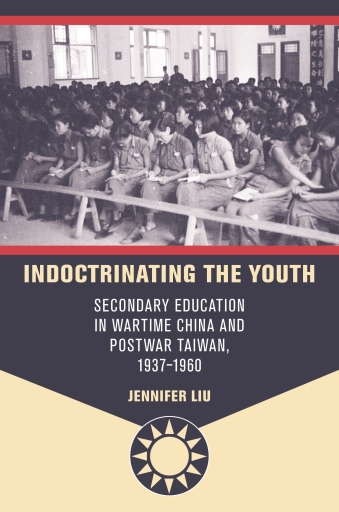
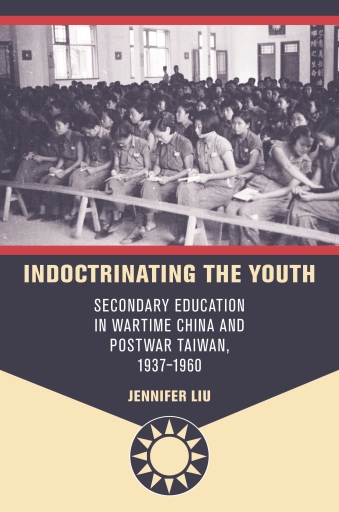
<p><i>Indoctrinating the Youth</i> examines how the Guomindang (GMD or Nationalists) sought to maintain control of middle-school students and cultivate their political loyalty over the trajectory of the Second Sino-Japanese War, Chinese Civil War, and postwar Taiwan. During the Sino-Japanese War the Nationalists managed middle-school refugee students by merging schools, publishing and distributing updated textbooks, and assisting students as they migrated to the interior with their principals and teachers. In Taiwan, the China Youth Corps (CYC) became a symbol of the regime’s successful establishment. Tracing Nationalist efforts to indoctrinate ideology and martial spirit, Jennifer Liu investigates how GMD leaders Chiang Kai-shek and his son Chiang Ching-kuo tried to build support among young people in their efforts to stabilize Taiwanese society under their rule. By comparing two key youth organizations—the Three People’s Principles Youth Corps in China, and the CYC on Taiwan—Liu uses education as a lens to analyze state-building in modern China. <br><br>Liu’s careful analysis of the inner workings of GMD youth organizations also illuminates the day-to-day operations of military training in gender-segregated upper-middle schools—including how the government selected instructors and the skills taught to students. According to Liu, mandatory military training contributed to preventing major protest against the government but the policy was not without critics. Intellectuals, parents, and students voiced their dissent at what they perceived as excessive control by a repressive government and a waste of resources interfering with academics. The government-mandated civics curriculum, including government-approved textbooks and standards, reveals the characteristics and duties GMD officials believed modern citizens of the next generation should possess. Through provisions for refugee students, youth organizations, military training, and civics classes, GMD secondary education policy played a critical role in the process of state building in both modern China and Taiwan.<br><br>Skillfully combining archival work in Nanjing and Taipei, along with oral interviews with former students and CYC administrators, instructors, and members, Liu offers a unique perspective toward a balanced assessment of Nationalist Party rule.</p>
- Langue
- English
Partager