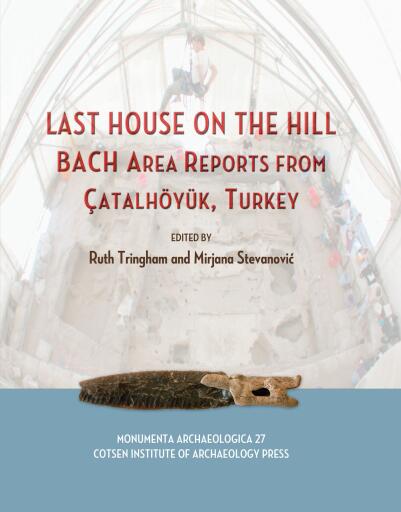
Last House on the Hill
Publié par Cotsen Institute of Archaeology Press
English
625 pages
2012
ISBN 9781938770227
Temps de lecture estimé : 11 h 28 min
PDF
Buy at ebooks Libreria del GAM
🇨🇱
 Alpha Books
🇨🇴
Visiter la boutique →
Alpha Books
🇨🇴
Visiter la boutique →
 Bajalibros Argentina
🇦🇷
Visiter la boutique →
Bajalibros Argentina
🇦🇷
Visiter la boutique →
 Bajalibros Latam
🇺🇸
Visiter la boutique →
Bajalibros Latam
🇺🇸
Visiter la boutique →
 Bookshop Uruguay
🇺🇾
Visiter la boutique →
Bookshop Uruguay
🇺🇾
Visiter la boutique →
 Catademic
🇺🇸
Visiter la boutique →
Catademic
🇺🇸
Visiter la boutique →
Disponible dans 14 librairies
Alpha Books
🇨🇴
Visiter la boutique →
Bajalibros Argentina
🇦🇷
Visiter la boutique →
Bajalibros Latam
🇺🇸
Visiter la boutique →
Bookshop Uruguay
🇺🇾
Visiter la boutique →
Catademic
🇺🇸
Visiter la boutique →









À propos de ce livre
Recipient of the Jo Anne Stolaroff Cotsen Prize Occupied from around 7500 BC to 5700 BC, the large Neolithic and Chalcolithic settlement of Catalhoyuk in Anatolia is composed entirely of domestic buildings; no public buildings have been identified. First excavated in the early 1960s, the site was left untouched until 1993. During the summers of 1997-2003 a team from the University of California at Berkeley (the BACH team) excavated an area at the northern end of the East Mound of Catalhoyuk. The houses there date predominantly to the late Aceramic and early Ceramic Neolithic, around 7000 BC. Last House on the Hill is the final report of the BACH excavations. This volume comprises both interpretive chapters and empirical data from the excavations and their materials. The research of the BACH team focuses on the lives and life histories of houses and people, the use of digital technologies in documenting and sharing the archaeological process, the senses of place, and the nature of cultural heritage and our public responsibilities.
Disponibilité
Last House on the Hill est disponible en PDF dans 14 librairies en ligne. Parmi les librairies qui le proposent : Alpha Books, Bajalibros Argentina, Bajalibros Latam.
Catégories
- Langue
- English
Partager
Questions fréquentes
- Dans quels formats Last House on the Hill est-il disponible ?
- Last House on the Hill est disponible en PDF dans 14 librairies en ligne.
- Où puis-je acheter Last House on the Hill ?
- Vous pouvez acheter Last House on the Hill sur Alpha Books, Bajalibros Argentina, Bajalibros Latam. Comparez toutes les options dans la liste de cette page.
- Combien de temps faut-il pour lire Last House on the Hill ?
- À un rythme de lecture moyen, Last House on the Hill se lit en environ 11 h 28 min (625 pages).
Notes et avis
Pas encore de note. Soyez le premier à donner votre avis sur ce livre.
Se connecter pour noter ce livre et donner votre avis.