
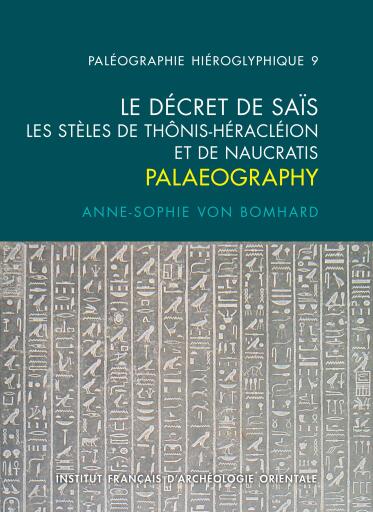
Le decret de Sais
Publié par IFAO
French
254 pages
2025
ISBN 9782724711547
Temps de lecture estimé : 4 h 39 min
PDF
Buy at Sanborns Ebooks
🇲🇽
Disponible dans 1 librairies

À propos de ce livre
Raised from the bottom of the Mediterranean Sea where it had remained over 2000 years, a large black granodiorite stele was brought to light on the site of Thonis-Heracleion, the currently submerged ancient harbour of the Canopic mouth. The representations and the text of the "Decree of Sais" it contains are already known from a similar monument found a century earlier: the Naukratis stele. The Thonis-Heracleion revealed the complete so far unattested name of the locality for which it was intended, "La-Hone-de-Sais". These two monuments, engraved with perfectly preserved and high-quality hieroglyphs, offer the opportunity for a palaeographic study of a decree promulgated by Nectanebo I in the temple of Neith at Sais in his first year of reign. This parallel study shows the personal manners in which each of the engravers reproduced this document, that was manifestly conceived by a highly lettered priest of the temple of Sais. The choice of the hieroglyphs and their positioning, the search for variety through graphic and iconic dissimilations, all form part of the tradition of writing at several levels of reading termed "difficult" and observed particularly at the Saite period, but also during the reign of the Nectanebo pharaohs. Brought up from the bottom of the Mediterranean Sea, where it lay for more than 2,000 years, a large black granodiorite stele has been brought to light at the site of Thonis-Heracleion, the ancient harbour of the canopic mouth that is now completely submerged. The representations and text of the "Decree of Sais" it bears are known to us from a similar monument found a century earlier: the Naucratis stele. The Thonis-Heracleion stele, however, has the advantage of revealing the full Egyptian name of the locality for which it was intended, "La-Hone-de-Sais", which had not been attested until then. These two monuments, engraved with perfectly preserved, high-quality hieroglyphs, provide an opportunity to carry out a paleographic study of a decree promulgated by Nectanebo I, during his first year of reign, in the temple of Neith at Sais. Placing the two copies side by side shows the personal way in which each of the engravers reproduced this document, clearly drawn up by a literate high priest at the temple of Sais. The choice of hieroglyphs and their arrangement, the search for variety through graphic and iconic dissimilations-all this is in keeping with the tradition of writing with several levels of reading, known as "difficult", particularly appreciated in the Saite period, but also under the reign of the Nectanebo pharaohs.
Disponibilité
Le decret de Sais est disponible en PDF dans 1 librairie en ligne.
Catégories
- Langue
- French
Partager
Questions fréquentes
- Dans quels formats Le decret de Sais est-il disponible ?
- Le decret de Sais est disponible en PDF dans 1 librairie en ligne.
- Où puis-je acheter Le decret de Sais ?
- Vous pouvez acheter Le decret de Sais sur Sanborns Ebooks. Comparez toutes les options dans la liste de cette page.
- Combien de temps faut-il pour lire Le decret de Sais ?
- À un rythme de lecture moyen, Le decret de Sais se lit en environ 4 h 39 min (254 pages).
Notes et avis
Pas encore de note. Soyez le premier à donner votre avis sur ce livre.
Se connecter pour noter ce livre et donner votre avis.
Vous aimerez aussi
Egiptosophia
Piulats Riu, Octavi
The Discovery of Tutankhamun's Tomb (Illustrated Edition)
Carter, Howard, Mace, Arthur Cruttenden
Visualizing Knowledge and Creating Meaning in Ancient Writing Systems
The Demotic and Hieratic Papyri in the Suzuki Collection of Tokai University, Japan
Jasnow, Richard, Krutzsch, Myriam, Manning, J, Manning, J.G., Yamahana, Kyoko
Die Grabräuber von Theben
Peters, Johann
History of Ancient Egypt
Gilman, Arthur, Rawlinson, George