
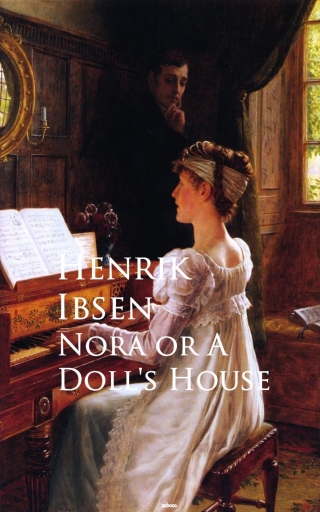
Nora or A Doll's House
Par Ibsen, Henrik
Publié par anboco
Disponible dans 9 librairies
 Bajalibros Argentina
🇦🇷
Visiter la boutique →
Bajalibros Argentina
🇦🇷
Visiter la boutique →

 Bookshop Uruguay
🇺🇾
Visiter la boutique →
Bookshop Uruguay
🇺🇾
Visiter la boutique →
 Crisol Ebooks
🇵🇪
Visiter la boutique →
Crisol Ebooks
🇵🇪
Visiter la boutique →
 ebooks Libreria del GAM
🇨🇱
Visiter la boutique →
ebooks Libreria del GAM
🇨🇱
Visiter la boutique →




À propos de ce livre
Disponibilité
Nora or A Doll's House est disponible en eBook dans 9 librairies en ligne. Parmi les librairies qui le proposent : Bajalibros Argentina, Bajalibros Latam, Bookshop Uruguay.
Catégories
- Langue
- English
Questions fréquentes
- Dans quels formats Nora or A Doll's House est-il disponible ?
- Nora or A Doll's House est disponible en eBook dans 9 librairies en ligne.
- Où puis-je acheter Nora or A Doll's House ?
- Vous pouvez acheter Nora or A Doll's House sur Bajalibros Argentina, Bajalibros Latam, Bookshop Uruguay. Comparez toutes les options dans la liste de cette page.
Notes et avis
Pas encore de note. Soyez le premier à donner votre avis sur ce livre.
Se connecter pour noter ce livre et donner votre avis.
Vous aimerez aussi
Pygmalion
Shaw, George Bernard
Gesammelte Werke
Ibsen, Henrik
Love's Comedy
Ibsen, Henrik
CLASSICS FOR SUMMERTIME
Goethe, Johann Wolfgang von, Stendhal, Verne, Jules, Flaubert, Gustave, Carroll, Lewis, Storm, Theodor, Ibsen, Henrik, Dickens, Charles, Plato, Balzac, Honoré de, Twain, Mark, Stowe, Harriet Beecher, Tagore, Rabindranath, Dostoyevsky, Fyodor, Whitman, Walt, Machiavelli, Niccolò, Wilde, Oscar, Stevenson, Robert Louis, Cooper, James Fenimore, Poe, Edgar Allan, Shakespeare, William, Boccaccio, Giovanni, Confucius, MacDonald, George, Stoker, Bram, Brontë, Charlotte, Brontë, Anne, Brontë, Emily, Thoreau, Henry David, London, Jack, James, Henry, Alcott, Louisa May, Hugo, Victor, Doyle, Arthur Conan, Burnett, Frances Hodgson, Conrad, Joseph, Austen, Jane, Melville, Herman, Eliot, George, Sterne, Laurence, Hardy, Thomas, Swift, Jonathan, Wharton, Edith, Pérez Galdós, Benito, Defoe, Daniel, Fielding, Henry, Dumas, Alexandre, Kipling, Rudyard, Howells, William Dean, Kâlidasa, Grahame, Kenneth, Proust, Marcel, Irving, Washington, Valera, Juan, Cather, Willa, Hawthorne, Nathaniel, Homer, Leroux, Gastón, Baudelaire, Charles, Thackeray, William Makepeace, Voltaire, Chopin, Kate, Apuleius, Milton, John, Gilman, Charlotte Perkins, Douglass, Frederick, Laozi, Keats, John, Joyce, James, Radcliffe, Ann Ward, Gibran, Kahlil, Okakura, Kakuzo, Natsume, Sōseki, Der Ling, Princess, Baum, L. Frank, Wells, H. G., Yeats, W. B., Barrie, J. M., Chesterton, G. K., Eliot, T. S., Montgomery, L. M., Lewis, C. S., Lawrence, D. H., Forster, E. M., Lovecraft, H. P., Fitzgerald, F. Scott, Aurelius, Marcus, Nietzsche, Friedrich, Wallace, Lewis, Turgenev, Ivan, Chekhov, Anton, Tolstoy, Leo, Gógol, Nikolai, Scott, Walter, Sir, Shaw, George Bernard, de Cervantes, Miguel, Shelley, Mary, Xueqin, Cao, Zola, Émile, Válmíki, Chatterjee, Bankim Chandra, Shelley, P. B., Von Arnim, Elizabeth, Hesse, Herman, Dante, de la Barca, Pedro Calderón, Tzu, Sun, Nitobe, Inazo, Grossmith, George Weedon, Collins, Willkie
Hedda Gabler
Ibsen, Henrik
90 Masterpieces You Must Read (Vol.2)
Goethe, Johann Wolfgang von, Stendhal, Verne, Jules, Flaubert, Gustave, Storm, Theodor, Ibsen, Henrik, Dickens, Charles, Balzac, Honoré de, Stowe, Harriet Beecher, Tagore, Rabindranath, Dostoyevsky, Fyodor, Stevenson, Robert Louis, Cooper, James Fenimore, Poe, Edgar Allan, Buchan, John, Confucius, MacDonald, George, Stoker, Bram, James, Henry, Hugo, Victor, Conrad, Joseph, Austen, Jane, Scott, Walter, Sterne, Laurence, Hardy, Thomas, Swift, Jonathan, Wharton, Edith, Defoe, Daniel, Fielding, Henry, Lewis, Sinclair, Trollope, Anthony, Dumas, Alexandre, Howells, William Dean, Kâlidasa, Woolf, Virginia, Atkinson, William Walker, Grahame, Kenneth, Irving, Washington, Cather, Willa, Hawthorne, Nathaniel, Homer, Leroux, Gastón, Collins, Wilkie, Ford, Ford Madox, Franklin, Benjamin, Chopin, Kate, Milton, John, Gilman, Charlotte Perkins, Wallace, Edgar, Vonnegut, Kurt, Laozi, Radcliffe, Ann Ward, Okakura, Kakuzo, Wells, H. G., Yeats, W. B., Barrie, J. M., Chesterton, G. K., Jerome, Jerome K., Maugham, W. Somerset, Forster, E. M., Fitzgerald, F. Scott, Nietzsche, Friedrich, Wallace, Lewis, Leskov, Nikolai, Turgenev, Ivan, Tolstoy, Leo, Gógol, Nikolai, Shaw, George Bernard, Xueqin, Cao, Zola, Émile, Válmíki, Chatterjee, Bankim Chandra, Shelley, P. B., Von Arnim, Elizabeth, Dante, de la Barca, Pedro Calderón, Coué, Émile, Grossmith, George Weedon, Lawrence, D.H., Machiavelli