
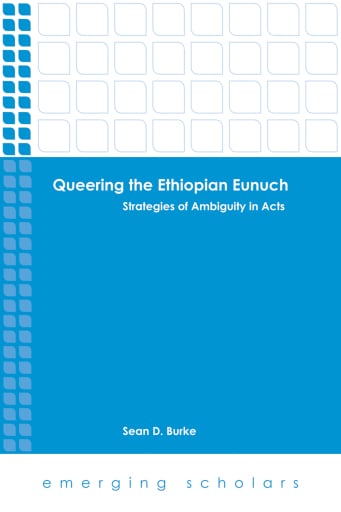
Queering the Ethiopian Eunuch
Par Burke, Sean D.
Publié par Augsburg Fortress Publishers
English
2013
ISBN 9781451469882
eBook
Buy at Bajalibros Latam
🇺🇸
 Catademic
🇺🇸
Visiter la boutique →
Catademic
🇺🇸
Visiter la boutique →
 Bajalibros Latam
🇺🇸
Visiter la boutique →
Bajalibros Latam
🇺🇸
Visiter la boutique →
 Ebooks Librería Antártica
🇨🇱
Visiter la boutique →
Ebooks Librería Antártica
🇨🇱
Visiter la boutique →
 Bajalibros Argentina
🇦🇷
Visiter la boutique →
Bajalibros Argentina
🇦🇷
Visiter la boutique →
 Sanborns Ebooks
🇲🇽
Visiter la boutique →
Sanborns Ebooks
🇲🇽
Visiter la boutique →
 ebooks Libreria del GAM
🇨🇱
Visiter la boutique →
ebooks Libreria del GAM
🇨🇱
Visiter la boutique →
 Bookshop Uruguay
🇺🇾
Visiter la boutique →
Bookshop Uruguay
🇺🇾
Visiter la boutique →
 Ebooks Yenny - El Ateneo
🇦🇷
Visiter la boutique →
Ebooks Yenny - El Ateneo
🇦🇷
Visiter la boutique →
 Crisol Ebooks
🇵🇪
Visiter la boutique →
Crisol Ebooks
🇵🇪
Visiter la boutique →
Disponible dans 9 librairies
Catademic
🇺🇸
Visiter la boutique →
Bajalibros Latam
🇺🇸
Visiter la boutique →
Ebooks Librería Antártica
🇨🇱
Visiter la boutique →
Bajalibros Argentina
🇦🇷
Visiter la boutique →
Sanborns Ebooks
🇲🇽
Visiter la boutique →
ebooks Libreria del GAM
🇨🇱
Visiter la boutique →
Bookshop Uruguay
🇺🇾
Visiter la boutique →
Ebooks Yenny - El Ateneo
🇦🇷
Visiter la boutique →
Crisol Ebooks
🇵🇪
Visiter la boutique →
À propos de ce livre
Were eunuchs more usually castrated guardians of the harem, as florid Orientalist portraits imagine them, or were they trusted court officials who may never have been castrated? Was the Ethiopian eunuch a Jew or a Gentile, a slave or a free man? Why does Luke call him a “man” while contemporaries referred to eunuchs as “unmanned” beings? As Sean D. Burke treats questions that have received dramatically different answers over the centuries of Christian interpretation, he shows that eunuchs bore particular stereotyped associations regarding gender and sexual status as well as of race, ethnicity, and class. Not only has Luke failed to resolve these ambiguities; he has positioned this destabilized figure at a key place in the narrative—as the gospel has expanded beyond Judea, but before Gentiles are explicitly named—in such a way as to blur a number of social role boundaries. In this sense, Burke argues, Luke intended to “queer” his reader’s expectations and so to present the boundary-transgressing potentiality of a new community.
Catégories
- Langue
- English
Partager
Vous aimerez aussi
A Class-Book of New Testament History
Maclear, G. F.
A Commentary on Acts
Kwon, Yon Gyong
Novo Testamento - NVT (Nova Versão Transformadora)
Fundamentos da teologia bíblica
Miranda, Valtair
O papel de Maria e José na história da salvação
Oliveira, Elson Gonçalves de

Weymouth New Testament in Modern Speech, Philemon
Weymouth, Richard Francis