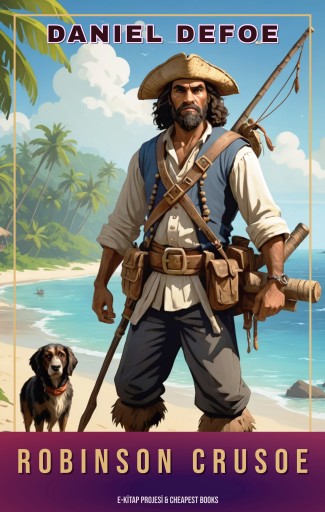
Robinson Crusoe
Par Defoe, Daniel
Publié par E-Kitap Projesi & Cheapest Books
English
2024
ISBN 9786155564581
eBook
Buy at LORANCHBOOKSTORE
🇺🇸
Bajalibros Latam
🇺🇸
Visiter la boutique →
LORANCHBOOKSTORE
🇺🇸
Visiter la boutique →
Libros Patagonia
🇨🇱
Visiter la boutique →
Ebooks Librería Carlos Fuentes
🇲🇽
Visiter la boutique →
Ebooks Librería Antártica
🇨🇱
Visiter la boutique →
Ebooks Happy Books
🇨🇴
Visiter la boutique →
ebooks libreria española
🇪🇨
Visiter la boutique →
Bajalibros Argentina
🇦🇷
Visiter la boutique →
Alpha Books
🇨🇴
Visiter la boutique →

Sanborns Ebooks
🇲🇽
Visiter la boutique →
ebooks Libreria del GAM
🇺🇾
Visiter la boutique →
Bookshop Uruguay
🇺🇾
Visiter la boutique →
Ebooks Yenny - El Ateneo
🇦🇷
Visiter la boutique →
Crisol Ebooks
🇨🇴
Visiter la boutique →
Disponible dans 14 librairies
LORANCHBOOKSTORE
🇺🇸
Visiter la boutique →
Libros Patagonia
🇨🇱
Visiter la boutique →
Ebooks Librería Carlos Fuentes
🇲🇽
Visiter la boutique →
Ebooks Librería Antártica
🇨🇱
Visiter la boutique →
Ebooks Happy Books
🇨🇴
Visiter la boutique →
ebooks libreria española
🇪🇨
Visiter la boutique →
Alpha Books
🇨🇴
Visiter la boutique →
Sanborns Ebooks
🇲🇽
Visiter la boutique →
ebooks Libreria del GAM
🇺🇾
Visiter la boutique →
Ebooks Yenny - El Ateneo
🇦🇷
Visiter la boutique →
Crisol Ebooks
🇨🇴
Visiter la boutique →
À propos de ce livre
Defoe's novel Robinson Crusoe (1719) tells of a man's shipwreck on a deserted island and his subsequent adventures. The author based part of his narrative on the story of the Scottish castaway Alexander Selkirk, who spent four years stranded on the island of Juan Fernandez. He may have also been inspired by the Latin or English translation of a book by the Andalusian-Arab Muslim polymath Ibn Tufail, who was known as "Abubacer" in Europe. The Latin edition of the book was entitled Philosophus Autodidactus and it was an earlier novel that is also set on a deserted island.
"One day, about noon, going towards my boat, I was exceedingly surprised with the print of a man's naked foot on the shore, which was very plain to be seen on the sand."— Defoe's Robinson Crusoe, 1719
The novel has been variously read as an allegory for the development of civilisation, as a manifesto of economic individualism and as an expression of European colonial desires but it also shows the importance of repentance and illustrates the strength of Defoe's religious convictions.
It is also considered by many to be the first novel written in English. Early critics, such as Robert Louis Stevenson admired it saying that the footprint scene in Crusoe was one of the four greatest in English literature and most unforgettable; more prosaically, Dr. Wesley Vernon has seen the origins of forensic podiatry in this episode. It has inspired a new genre, the Robinsonade as works like Johann David Wyss's The Swiss Family Robinson (1812) adapt its premise and has provoked modern postcolonial responses, including J. M. Coetzee's Foe (1986) and Michel Tournier's Vendredi ou les Limbes du Pacifique (in English, Friday, or, The Other Island) (1967).
Two sequels followed, Defoe's The Farther Adventures of Robinson Crusoe (1719) and his Serious reflections during the life and surprising adventures of Robinson Crusoe: with his Vision of the angelick world (1720). Jonathan Swift's Gulliver's Travels (1726) in part parodies Defoe's adventure novel..
Catégories
- Langue
- English
Partager
Vous aimerez aussi
Novelle einer überschaubaren Apokalypse - Literatur-Quickie
Feimer, Isabella
A velha Nova York
Wharton, Edith
Box O melhor das irmãs Brontë
Brontë, Anne, Brontë, Charlotte, Brontë, Emily
El lado de la sombra
Bioy Casares, Adolfo
Persuasión (Los mejores clásicos)
Austen, Jane
Fluch der Seeräuber: 15 Piraten-Klassiker in einem Band
Stevenson, Robert Louis, Scott, Walter, Marryat, Frederick Kapitän, Cooper, James Fenimore, Defoe, Daniel, Salgari, Emilio, Engel, Georg