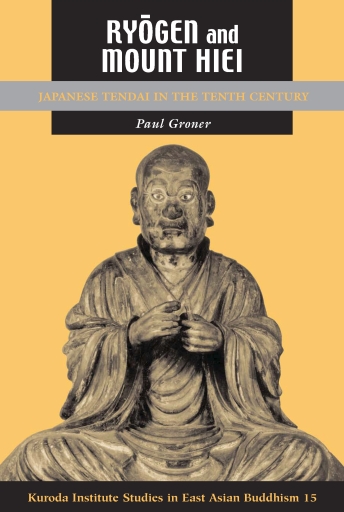
Ryōgen and Mount Hiei
Par Groner, Paul
Publié par University of Hawaii Press
English
546 pages
2002
ISBN 9780824864200
PDF
Buy at Association of University Presses - Tienda FILUNI
🇺🇸
Catademic
🇺🇸
Visiter la boutique →
UN
University of Hawaiʻi Press
🇺🇸
Visiter la boutique →
Bajalibros Latam
🇺🇸
Visiter la boutique →
Association of University Presses - Tienda FILUNI
🇺🇸
Visiter la boutique →

Ebooks Librería Antártica
🇨🇱
Visiter la boutique →
Ebooks Agustin
🇪🇸
Visiter la boutique →
Bajalibros Argentina
🇦🇷
Visiter la boutique →

Sanborns Ebooks
🇲🇽
Visiter la boutique →
ebooks Libreria del GAM
🇺🇾
Visiter la boutique →
Bookshop Uruguay
🇺🇾
Visiter la boutique →

ebookskitapenas
🇬🇹
Visiter la boutique →
Ebooks Yenny - El Ateneo
🇦🇷
Visiter la boutique →
Crisol Ebooks
🇨🇴
Visiter la boutique →
Disponible dans 13 librairies
Catademic
🇺🇸
Visiter la boutique →

UN
University of Hawaiʻi Press
🇺🇸
Visiter la boutique →
Association of University Presses - Tienda FILUNI
🇺🇸
Visiter la boutique →
Ebooks Librería Antártica
🇨🇱
Visiter la boutique →
Ebooks Agustin
🇪🇸
Visiter la boutique →
Sanborns Ebooks
🇲🇽
Visiter la boutique →
ebooks Libreria del GAM
🇺🇾
Visiter la boutique →
ebookskitapenas
🇬🇹
Visiter la boutique →
Ebooks Yenny - El Ateneo
🇦🇷
Visiter la boutique →
Crisol Ebooks
🇨🇴
Visiter la boutique →
À propos de ce livre
<p><i>Ryogen and Mount Hiei</i> focuses on the transformation of the Tendai School from a small and impoverished group of monks in the early ninth century to its emergence as the most powerful and influential school of Japanese Buddhism in the last half of the tenth century—a position it would maintain throughout the medieval period. This is the first study in a Western language of the institutional factors that lay behind the school's success. At its core is a biography of a major figure behind this transformation, Ryogen (912–985). The discussion, however, extends well beyond a simple biography as Ryogen's activities are placed in their historical and institutional context.<br><br>Unlike the recluses and eccentrics that have so often attracted Western readers of Buddhism, Ryogen was a consummate politician and builder. Because he lost his major monastic sponsor at an early age, he was forced to find ways to advance his career with little support. His activities reveal much about the path to success for monks during the tenth century. Skill in debate, the performance of Esoteric Buddhist ritual, and strategic alliances with powerful lay and monastic figures were important to his advance. In 966 Ryogen was appointed head of the Tendai School and served until his death nineteen years later. He has been vilified at times for his loyalty to his own faction within Tendai at the expense of other groups. Careful analysis of the political and social factors behind his attitudes, however, places his activities in their appropriate context.<br><br>The study concludes with a discussion of the ordinations and roles of nuns during the early Heian period. An examination of Ryogen's close relation with his mother helps define the ambiguities of a school that prohibited women from the precincts of its temple yet performed rituals to insure safe childbirth and frequently attracted their patronage. A number of primary sources are translated in the appendices.</p>
Catégories
- Langue
- English
Partager