Aller au contenu principal
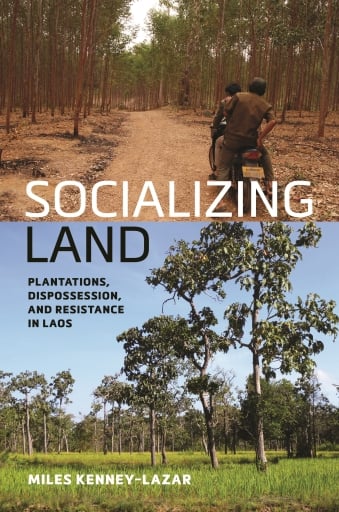
Socializing Land

Socializing Land

Par Kenney-Lazar, Miles

Publié par University of Hawaii Press

English 265 pages 2025 ISBN 9780824899028
Temps de lecture estimé : 4 h 52 min
PDF

À propos de ce livre

Since 2008, there has been tremendous public interest in the social and ecological ramifications of the global land rush, a rapid increase of capital investment into land, especially for the establishment of agricultural and tree plantations. In Laos, the government has granted five percent of the national territory to investors as long-term land concessions since the early 2000s. Land investments, globally and in Laos, have violently and unjustly dispossessed peasants and Indigenous peoples of their life-giving land, leading to their immiseration. Yet, targeted communities have rarely accepted the theft of their land outright, often struggling to protect their land rights with varying degrees of success. How can these divergent outcomes of land control be understood? In Socializing Land, Miles Kenney-Lazar addresses these questions by investigating the development of Chinese and Vietnamese pulpwood and rubber plantations on the lands of ethnic minority Brou people in eastern Savannakhet of southern Laos. He argues that land should not be viewed as a “thing” but as a set of social relationships among different groups of people. The characteristics of these ties to land play a critical role in determining if and how its use, access, and ownership change—whether land becomes the property of plantation capitalists or remains in the possession of peasant farmers. Furthermore, the book explores the contradictory role of the state, simultaneously pursuing investment-driven economic growth built upon the coercive expropriation of land while pledging to protect a limited set of peasant land rights. Highlighting the sociality of land demonstrates that land transactions are full of friction and contestation. The book is based upon in-depth ethnographic research and generates unique insights into the political relationships between government officials, plantation managers, and village authorities and households in Laos. Each chapter examines a different element of land relations that impacted shifting control over land: state-investor relationships, customary versus statutory property, lowland versus upland land uses, the kinship, ethnic, and personal relationships between villagers and government officials, and village solidarity and democratic accountability. Ultimately, the book demonstrates how the land rush, despite its many disastrous effects, can strengthen peasant social ties to land through resistance, progressively limiting attempts at land alienation.

Disponibilité

Socializing Land est disponible en PDF dans 13 librairies en ligne. Parmi les librairies qui le proposent : Association of University Presses - Tienda FILUNI, Bajalibros Argentina, Bajalibros Latam.

Langue
English
Partager

Questions fréquentes

Dans quels formats Socializing Land est-il disponible ?
Socializing Land est disponible en PDF dans 13 librairies en ligne.
Où puis-je acheter Socializing Land ?
Vous pouvez acheter Socializing Land sur Association of University Presses - Tienda FILUNI, Bajalibros Argentina, Bajalibros Latam. Comparez toutes les options dans la liste de cette page.
Combien de temps faut-il pour lire Socializing Land ?
À un rythme de lecture moyen, Socializing Land se lit en environ 4 h 52 min (265 pages).

Notes et avis

Pas encore de note. Soyez le premier à donner votre avis sur ce livre.

Se connecter pour noter ce livre et donner votre avis.

Commentaires

Se connecter pour rejoindre la conversation.

Pas encore de commentaires.