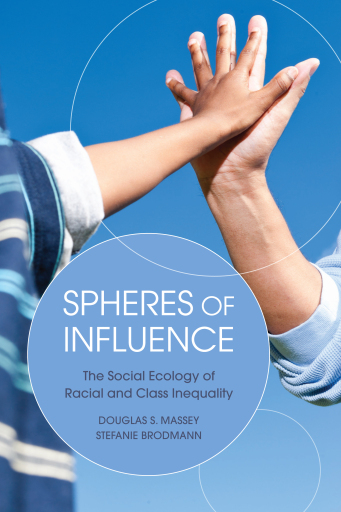
Spheres of Influence
Par Massey, Douglas S., Brodmann, Stefanie
Publié par Russell Sage Foundation
English
2014
ISBN 9781610448222
eBook
Buy at Association of University Presses - Tienda FILUNI
🇺🇸
Catademic
🇺🇸
Visiter la boutique →
Bajalibros Latam
🇺🇸
Visiter la boutique →
Association of University Presses - Tienda FILUNI
🇺🇸
Visiter la boutique →

Ebooks Librería Antártica
🇨🇱
Visiter la boutique →
Ebooks Agustin
🇪🇸
Visiter la boutique →
Bajalibros Argentina
🇦🇷
Visiter la boutique →

Sanborns Ebooks
🇲🇽
Visiter la boutique →
ebooks Libreria del GAM
🇺🇾
Visiter la boutique →
Bookshop Uruguay
🇺🇾
Visiter la boutique →

ebookskitapenas
🇬🇹
Visiter la boutique →
Ebooks Yenny - El Ateneo
🇦🇷
Visiter la boutique →
Crisol Ebooks
🇨🇴
Visiter la boutique →
Disponible dans 12 librairies
Catademic
🇺🇸
Visiter la boutique →

Association of University Presses - Tienda FILUNI
🇺🇸
Visiter la boutique →
Ebooks Librería Antártica
🇨🇱
Visiter la boutique →
Ebooks Agustin
🇪🇸
Visiter la boutique →
Sanborns Ebooks
🇲🇽
Visiter la boutique →
ebooks Libreria del GAM
🇺🇾
Visiter la boutique →
ebookskitapenas
🇬🇹
Visiter la boutique →
Ebooks Yenny - El Ateneo
🇦🇷
Visiter la boutique →
Crisol Ebooks
🇨🇴
Visiter la boutique →
À propos de ce livre
<div>The black-white divide has long haunted the United States as a driving force behind social inequality. Yet, the civil rights movement, the increase in immigration, and the restructuring of the economy in favor of the rich over the last several decades have begun to alter the contours of inequality. Spheres of Influence, co-authored by noted social scientists Douglas S. Massey and Stefanie Brodmann, presents a rigorous new study of the intersections of racial and class disparities today. Massey and Brodmann argue that despite the persistence of potent racial inequality, class effects are drastically transforming social stratification in America. This data-intensive volume examines the differences in access to material, symbolic, and emotional resources across major racial groups. The authors find that the effects of racial inequality are exacerbated by the class differences within racial groups. For example, when measuring family incomes solely according to race, Massey and Brodmann found that black families' average income measured $28,400, compared to Hispanic families' $35,200. But this gap was amplified significantly when class differences within each group were taken into account. With class factored in, inequality across blacks' and Hispanics' family incomes increased by a factor of almost four, with lower class black families earning an average income of only $9,300 compared to $97,000 for upper class Hispanics. Massey and Brodmann found similar interactions between class and racial effects on the distribution of symbolic resources, such as occupational status, and emotional resources, such as the presence of a biological father—across racial groups. Although there are racial differences in each group's access to these resources, like income, these disparities are even more pronounced once class is factored in. The complex interactions between race and class are apparent in other social spheres, such as health and education. In looking at health disparities across groups, Massey and Brodmann observed no single class effect on the propensity to smoke cigarettes. Among whites, cigarette smoking declined with rising class standing, whereas among Hispanics it increased as class rose. Among Asians and blacks, there was no class difference at all. Similarly, the authors found no single effect of race alone on health: Health differences between whites, Asians, Hispanics, and blacks were small and non-significant in the upper class, but among those in the lower class, intergroup differences were pronounced. As Massey and Brodmann show, in the United States, a growing kaleidoscope of race-class interactions has replaced pure racial and class disadvantages. By advancing an ecological model of human development that considers the dynamics of race and class across multiple social spheres, Spheres of Influence sheds important light on the factors that are currently driving inequality today.</div>
- Langue
- English
Partager
Vous aimerez aussi
Ciencias Sociales 2EGB
Barreras Invisibles
Franco Calderón, Ángela María, Castillo-Valencia, María, Jiménez Restrepo, Diana Marcela, Salazar, Boris, Caicedo Hurtado, María Isabel
Problemas del derecho de familia, infancia y adolescencia
Rueda, Natalia
Don Mateo Rey
Elejalde, Ramón
Los Herederos de Eva
Fauzt, Franz Xaver
La ciudad colonial y sus textualidades contemporáneas
Garcia, Felipe