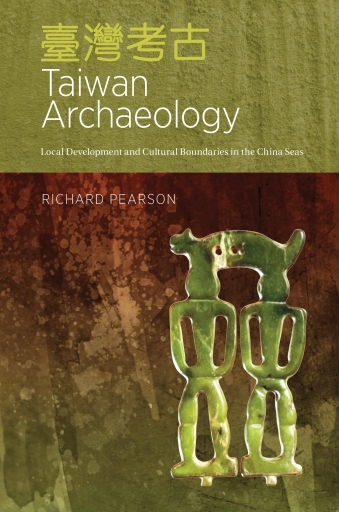
Taiwan Archaeology
Par Pearson, Richard
Publié par University of Hawaii Press
English
2022
ISBN 9780824893781
eBook
Buy at Association of University Presses - Tienda FILUNI
🇺🇸
Catademic
🇺🇸
Visiter la boutique →
UN
University of Hawaiʻi Press
🇺🇸
Visiter la boutique →
ebookstaolistic
🇺🇸
Visiter la boutique →
Bajalibros Latam
🇺🇸
Visiter la boutique →
Association of University Presses - Tienda FILUNI
🇺🇸
Visiter la boutique →

Ebooks Librería Antártica
🇨🇱
Visiter la boutique →
Ebooks Agustin
🇪🇸
Visiter la boutique →
Bajalibros Argentina
🇦🇷
Visiter la boutique →

Sanborns Ebooks
🇲🇽
Visiter la boutique →
ebooks Libreria del GAM
🇺🇾
Visiter la boutique →
Bookshop Uruguay
🇺🇾
Visiter la boutique →

ebookskitapenas
🇬🇹
Visiter la boutique →
Ebooks Yenny - El Ateneo
🇦🇷
Visiter la boutique →
Crisol Ebooks
🇨🇴
Visiter la boutique →
Disponible dans 14 librairies
Catademic
🇺🇸
Visiter la boutique →

UN
University of Hawaiʻi Press
🇺🇸
Visiter la boutique →
ebookstaolistic
🇺🇸
Visiter la boutique →
Association of University Presses - Tienda FILUNI
🇺🇸
Visiter la boutique →
Ebooks Librería Antártica
🇨🇱
Visiter la boutique →
Ebooks Agustin
🇪🇸
Visiter la boutique →
Sanborns Ebooks
🇲🇽
Visiter la boutique →
ebooks Libreria del GAM
🇺🇾
Visiter la boutique →
ebookskitapenas
🇬🇹
Visiter la boutique →
Ebooks Yenny - El Ateneo
🇦🇷
Visiter la boutique →
Crisol Ebooks
🇨🇴
Visiter la boutique →
À propos de ce livre
<p>In <i>Taiwan Archaeology: Local Development and Cultural Boundaries in the China Seas</i>, Richard Pearson describes the archaeology of the island, outlining the major discoveries of the past fifty years. These date from roughly 200,000 years ago to the pivotal seventeenth century AD, the time of Dutch and Spanish contact and the entry of Taiwan into global trade markets. The book focuses on some forty sites and is based on roughly 450 published sources in English, Chinese, and Japanese and includes a brief discussion of finds from the surrounding areas of Fujian, Guangdong, the northern Philippines, and the Ryukyu Islands, noting their significance for understanding Taiwan. This discussion allows for comparison of the different historical trajectories of the neighboring regions of the East and South China Seas through more than five millennia. <br><br>While the early chapters are primarily descriptive with some interpretive conclusions, the final chapter contains discussions of general topics that integrate and interpret the earlier narrative sections and highlight some of the most interesting topics of the latest research. Among the subjects covered are the effects of sea level change, ancient exchange systems of basalt from Penghu and nephrite from Fengtian (Hualien), and glass beads from Southeast Asia and the China mainland. The prehistoric people of Taiwan lived in a similar fashion to the peoples of the adjacent mainland until around 3500 years ago, when their cultural and political developmental trajectories diverged as Taiwan became isolated from the increasingly complex societies of Guangdong and Fujian. New data show that southern and eastern Taiwan groups participated in exchange networks with people in Island Southeast Asia as early as 2500 years ago. <br><br>Unique in its coverage of recent advances in the study of the long-term history of Taiwan and surrounding areas, <i>Taiwan Archaeology</i> explores many features of the island’s premodern past that are key to understanding its current geopolitical situation.</p>
Catégories
- Langue
- English
Partager