
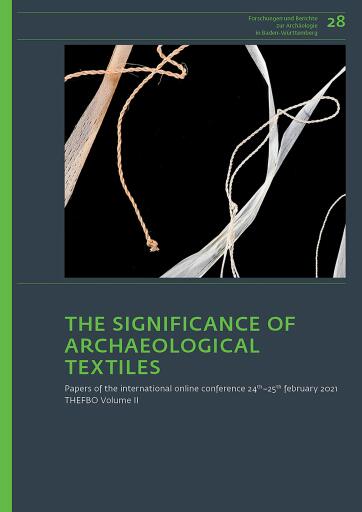
The Significance of Archaeological Textiles
Publié par Dr Ludwig Reichert Verlag
Disponible dans 8 librairies
 Bajalibros Argentina
🇦🇷
Visiter la boutique →
Bajalibros Argentina
🇦🇷
Visiter la boutique →
 Bajalibros Latam
🇺🇸
Visiter la boutique →
Bajalibros Latam
🇺🇸
Visiter la boutique →
 Bookshop Uruguay
🇺🇾
Visiter la boutique →
Bookshop Uruguay
🇺🇾
Visiter la boutique →

 ebooks Libreria del GAM
🇨🇱
Visiter la boutique →
ebooks Libreria del GAM
🇨🇱
Visiter la boutique →



À propos de ce livre
Disponibilité
The Significance of Archaeological Textiles est disponible en PDF dans 8 librairies en ligne. Parmi les librairies qui le proposent : Bajalibros Argentina, Bajalibros Latam, Bookshop Uruguay.
Catégories
- Langue
- English
Questions fréquentes
- Dans quels formats The Significance of Archaeological Textiles est-il disponible ?
- The Significance of Archaeological Textiles est disponible en PDF dans 8 librairies en ligne.
- Où puis-je acheter The Significance of Archaeological Textiles ?
- Vous pouvez acheter The Significance of Archaeological Textiles sur Bajalibros Argentina, Bajalibros Latam, Bookshop Uruguay. Comparez toutes les options dans la liste de cette page.
- Combien de temps faut-il pour lire The Significance of Archaeological Textiles ?
- À un rythme de lecture moyen, The Significance of Archaeological Textiles se lit en environ 3 h 50 min (209 pages).
Notes et avis
Pas encore de note. Soyez le premier à donner votre avis sur ce livre.
Se connecter pour noter ce livre et donner votre avis.
Vous aimerez aussi

Festival Puerto de Ideas 2011-2015
Chantal Signorio

Cultura Chinchorro: Las momias artificiales más antiguas del mundo
Bernardo Arriaza Torres, Marlene Oñate (traductora)

Mi Buenos Aires querido
Wortman, Ana

Sede
Mendoza, Virginia

Status
Ridgeway, Cecilia L.

An Ugly Word
Morning, Ann, Maneri, Marcello