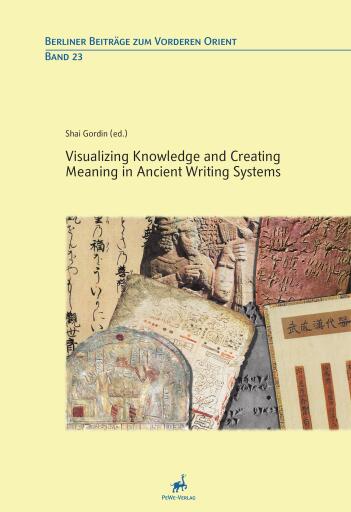
Visualizing Knowledge and Creating Meaning in Ancient Writing Systems
Publié par PeWe-Verlag
English
261 pages
2013
ISBN 9783689850456
Temps de lecture estimé : 4 h 47 min
PDF
Buy at Ebooks Librería Carlos Fuentes
🇲🇽
 Alpha Books
🇨🇴
Visiter la boutique →
Alpha Books
🇨🇴
Visiter la boutique →
 Bajalibros Argentina
🇦🇷
Visiter la boutique →
Bajalibros Argentina
🇦🇷
Visiter la boutique →
 Bajalibros Latam
🇺🇸
Visiter la boutique →
Bajalibros Latam
🇺🇸
Visiter la boutique →
 Bookshop Uruguay
🇺🇾
Visiter la boutique →
Bookshop Uruguay
🇺🇾
Visiter la boutique →
 Crisol Ebooks
🇵🇪
Visiter la boutique →
Crisol Ebooks
🇵🇪
Visiter la boutique →
Disponible dans 13 librairies
Alpha Books
🇨🇴
Visiter la boutique →
Bajalibros Argentina
🇦🇷
Visiter la boutique →
Bajalibros Latam
🇺🇸
Visiter la boutique →
Bookshop Uruguay
🇺🇾
Visiter la boutique →
Crisol Ebooks
🇵🇪
Visiter la boutique →








À propos de ce livre
Ancient writing systems employ logographic and logophonetic principles playing on the relationship between writing, script and scribal learning. The workshop proceedings published in this volume explore the way these relationships encode knowledge and meaning reflected in the social, historical and cultural mentality of the early peoples of East Asia (China and Japan), Anatolia, the Aegean, Egypt and Mesoamerica. The meeting was organized in the FU Berlin on the fall of 2010 by the editor and Dr. Renata Landgrafova (now Charles University, Prague) in the frame of the DFG research training group 1458 "Notational Iconicity" ("Schriftbildlichkeit") headed by Prof. Eva Cancik-Kirschbaum and Prof. Sybille Kramer. The premise of our meeting was that script and the organization of texts can reveal how knowledge is transformed and transmitted among different social groups across time and space, and eventually standardized as written tradition. Its multidisciplinary approach follows recent trends in the attempt to arouse debate between scholars of disparate systems of writing - be it Cuneiform, Hieroglyphic or Linear in nature - and to discuss their elements independent of origin or cultural context. A broad perspective on ancient writing and its visual elements was established with the contributions delving into the aspects of generating knowledge and meaning (J. Janak, M. Weeden), categorizing knowledge (E. Boot, T. W. Kwan, H. Tomas), diffusion and transformation of knowledge (Sh. Gordin, R. Landgrafova) and rationalizing knowledge (E. Birk).
Disponibilité
Visualizing Knowledge and Creating Meaning in Ancient Writing Systems est disponible en PDF dans 13 librairies en ligne. Parmi les librairies qui le proposent : Alpha Books, Bajalibros Argentina, Bajalibros Latam.
- Langue
- English
Partager
Questions fréquentes
- Dans quels formats Visualizing Knowledge and Creating Meaning in Ancient Writing Systems est-il disponible ?
- Visualizing Knowledge and Creating Meaning in Ancient Writing Systems est disponible en PDF dans 13 librairies en ligne.
- Où puis-je acheter Visualizing Knowledge and Creating Meaning in Ancient Writing Systems ?
- Vous pouvez acheter Visualizing Knowledge and Creating Meaning in Ancient Writing Systems sur Alpha Books, Bajalibros Argentina, Bajalibros Latam. Comparez toutes les options dans la liste de cette page.
- Combien de temps faut-il pour lire Visualizing Knowledge and Creating Meaning in Ancient Writing Systems ?
- À un rythme de lecture moyen, Visualizing Knowledge and Creating Meaning in Ancient Writing Systems se lit en environ 4 h 47 min (261 pages).
Notes et avis
Pas encore de note. Soyez le premier à donner votre avis sur ce livre.
Se connecter pour noter ce livre et donner votre avis.