Aller au contenu principal
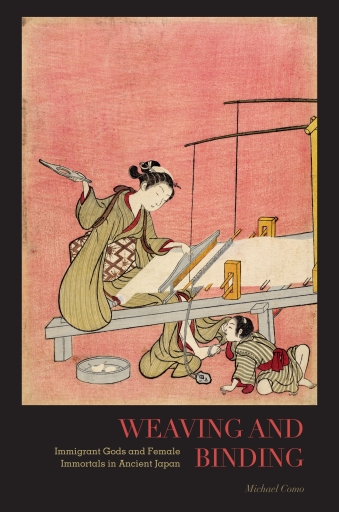
Weaving and Binding

Weaving and Binding

Par Como, Michael

Publié par University of Hawaii Press

English 330 pages 2009 ISBN 9780824837525
Temps de lecture estimé : 6 h 3 min
PDF

À propos de ce livre

Among the most exciting developments in the study of Japanese religion over the past two decades has been the discovery of tens of thousands of ritual vessels, implements, and scapegoat dolls (hitogata) from the Nara (710-784) and early Heian (794-1185) periods. Because inscriptions on many of the items are clearly derived from Chinese rites of spirit pacification, it is now evident that previous scholarship has mischaracterized the role of Buddhism in early Japanese religion. Weaving and Binding makes a compelling argument that both the Japanese royal system and the Japanese Buddhist tradition owe much to continental rituals centered on the manipulation of yin and yang, animal sacrifice, and spirit quelling. Building on these recent archaeological discoveries, Michael Como charts an epochal transformation in the religious culture of the Japanese islands, tracing the transmission and development of fundamental paradigms of religious practice to immigrant lineages and deities from the Korean peninsula. In addition to archaeological materials, Como makes extensive use of a wide range of textual sources from across Asia, including court chronicles, poetry collections, gazetteers, temple records, and divinatory texts. As he investigates the influence of myths, legends, and rites of the ancient Chinese festival calendar on religious practice across the Japanese islands, Como shows how the ability of immigrant lineages to propitiate hostile deities led to the creation of elaborate networks of temple-shrine complexes that shaped later sectarian Shinto as well as popular understandings of the relationship between the buddhas and the gods of Japan. For much of the book, this process is examined through rites and legends from the Chinese calendar that were related to weaving, sericulture, and medicine—technologies that to a large degree were controlled by lineages with roots in the Korean peninsula and that claimed female deities and weaving maidens as founding ancestors. Como’s examination of a series of ancient Japanese legends of female immortals, weaving maidens, and shamanesses reveals that female deities played a key role in the moving of technologies and ritual practices from peripheral regions in Kyushu and elsewhere into central Japan and the heart of the imperial cult. As a result, some of the most important building blocks of the purportedly native Shinto tradition were to a remarkable degree shaped by the ancestral cults of immigrant lineages and popular Korean and Chinese religious practices. This is a provocative and innovative work that upsets the standard interpretation of early historical religion in Japan, revealing a complex picture of continental cultic practice both at court and in the countryside.

Disponibilité

Weaving and Binding est disponible en PDF dans 13 librairies en ligne. Parmi les librairies qui le proposent : Association of University Presses - Tienda FILUNI, Bajalibros Argentina, Bajalibros Latam.

Langue
English
Partager

Questions fréquentes

Dans quels formats Weaving and Binding est-il disponible ?
Weaving and Binding est disponible en PDF dans 13 librairies en ligne.
Où puis-je acheter Weaving and Binding ?
Vous pouvez acheter Weaving and Binding sur Association of University Presses - Tienda FILUNI, Bajalibros Argentina, Bajalibros Latam. Comparez toutes les options dans la liste de cette page.
Combien de temps faut-il pour lire Weaving and Binding ?
À un rythme de lecture moyen, Weaving and Binding se lit en environ 6 h 3 min (330 pages).

Notes et avis

Pas encore de note. Soyez le premier à donner votre avis sur ce livre.

Se connecter pour noter ce livre et donner votre avis.

Commentaires

Se connecter pour rejoindre la conversation.

Pas encore de commentaires.