
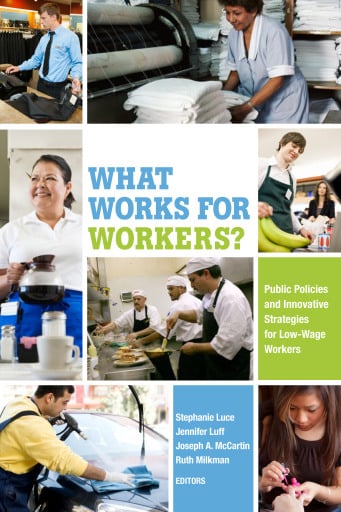
What Works for Workers?
Publié par Russell Sage Foundation
English
2014
ISBN 9781610448192
eBook
Buy at Catademic
🇺🇸
 Catademic
🇺🇸
Visiter la boutique →
Catademic
🇺🇸
Visiter la boutique →
 Bajalibros Latam
🇺🇸
Visiter la boutique →
Bajalibros Latam
🇺🇸
Visiter la boutique →
 Association of University Presses - Tienda FILUNI
🇺🇸
Visiter la boutique →
Association of University Presses - Tienda FILUNI
🇺🇸
Visiter la boutique →
 Ebooks Librería Antártica
🇨🇱
Visiter la boutique →
Ebooks Librería Antártica
🇨🇱
Visiter la boutique →
 Ebooks Agustin
🇪🇸
Visiter la boutique →
Ebooks Agustin
🇪🇸
Visiter la boutique →
 Bajalibros Argentina
🇦🇷
Visiter la boutique →
Bajalibros Argentina
🇦🇷
Visiter la boutique →
 Sanborns Ebooks
🇲🇽
Visiter la boutique →
Sanborns Ebooks
🇲🇽
Visiter la boutique →
 ebooks Libreria del GAM
🇨🇱
Visiter la boutique →
ebooks Libreria del GAM
🇨🇱
Visiter la boutique →
 Bookshop Uruguay
🇺🇾
Visiter la boutique →
Bookshop Uruguay
🇺🇾
Visiter la boutique →
 ebookskitapenas
🇬🇹
Visiter la boutique →
ebookskitapenas
🇬🇹
Visiter la boutique →
 Ebooks Yenny - El Ateneo
🇦🇷
Visiter la boutique →
Ebooks Yenny - El Ateneo
🇦🇷
Visiter la boutique →
 Crisol Ebooks
🇵🇪
Visiter la boutique →
Crisol Ebooks
🇵🇪
Visiter la boutique →
Disponible dans 12 librairies
Catademic
🇺🇸
Visiter la boutique →
Bajalibros Latam
🇺🇸
Visiter la boutique →
Association of University Presses - Tienda FILUNI
🇺🇸
Visiter la boutique →
Ebooks Librería Antártica
🇨🇱
Visiter la boutique →
Ebooks Agustin
🇪🇸
Visiter la boutique →
Bajalibros Argentina
🇦🇷
Visiter la boutique →
Sanborns Ebooks
🇲🇽
Visiter la boutique →
ebooks Libreria del GAM
🇨🇱
Visiter la boutique →
Bookshop Uruguay
🇺🇾
Visiter la boutique →
ebookskitapenas
🇬🇹
Visiter la boutique →
Ebooks Yenny - El Ateneo
🇦🇷
Visiter la boutique →
Crisol Ebooks
🇵🇪
Visiter la boutique →
À propos de ce livre
<div>The majority of new jobs created in the United States today are low-wage jobs, and a fourth of the labor force earns no more than poverty-level wages. Policymakers and citizens alike agree that declining real wages and constrained spending among such a large segment of workers imperil economic prosperity and living standards for all Americans. Though many policies to assist low-wage workers have been proposed, there is little agreement across the political spectrum about which policies actually reduce poverty and raise income among the working poor. What Works for Workers provides a comprehensive analysis of policy measures designed to address the widening income gap in the United States. Featuring contributions from an eminent group of social scientists, What Works for Workers evaluates the most high-profile strategies for poverty reduction, including innovative “living wage” ordinances, education programs for African American youth, and better regulation of labor laws pertaining to immigrants. The contributors delve into an extensive body of scholarship on low-wage work to reveal a number of surprising findings. Richard Freeman suggests that labor unions, long assumed to be moribund, have a fighting chance to reclaim their historic redistributive role if they move beyond traditional collective bargaining and establish new ties with other community actors. John Schmitt predicts that the Affordable Care Act will substantially increase insurance coverage for low-wage workers, 38 percent of whom currently lack any kind of health insurance. Other contributors explore the shortcomings of popular solutions: Stephanie Luce shows that while living wage ordinances rarely lead to job losses, they have not yet covered most low-wage workers. And Jennifer Gordon corrects the notion that a path to legalization alone will fix the plight of immigrant workers. Without energetic regulatory enforcement, she argues, legalization may have limited impact on the exploitation of undocumented workers. Ruth Milkman and Eileen Appelbaum conclude with an analysis of California’s paid family leave program, a policy designed to benefit the working poor, who have few resources that allow them to take time off work to care for children or ill family members. Despite initial opposition, the paid leave program proved more acceptable than expected among employers and provided a much-needed system of wage replacement for low-income workers. In the wake of its success, the initiative has emerged as a useful blueprint for paid leave programs in other states. Alleviating the low-wage crisis will require a comprehensive set of programs rather than piecemeal interventions. With its rigorous analysis of what works and what doesn’t, What Works for Workers points the way toward effective reform. For social scientists, policymakers, and activists grappling with the practical realities of low-wage work, this book provides a valuable guide for narrowing the gap separating rich and poor.</div>
Catégories
- Langue
- English
Partager
Vous aimerez aussi

Coaching para la efectividad organizacional
Andrés Pucheu M.
El gran descalabro: La Macroeconomía de la primera crisis financiera del siglo XXI
Francisco Rosende

Gestão financeira para negócios em alimentação
de Camargo, Eduardo Scott Franco

A fina arte do sucesso
Anderson, Jamie, Reckhenrich, Jörg, Kupp, Martin

Economía cafetera y desarrollo económico en Colombia
Pérez Toro, José Alberto

(Casi) to do bajo control
Villar, Gonzalo, Álvarez, Alfonso